Quick Answer: Wingspan Americas is a standalone engine-building game for 1–5 players where you attract birds to three habitats — forest, grassland, and wetland — over four rounds, taking exactly one action per turn. The headline addition over the base game is pink-powered birds that trigger during your opponents’ turns, keeping everyone at the table engaged. It plays in 40–70 minutes, sits at a BGG weight of around 2.4, and makes a genuinely great entry point into the hobby.
Learning how to play Wingspan Americas is straightforward once the core loop clicks: build your bird engine, activate your habitats, score points from half a dozen sources. Designer Elizabeth Hargrave and Stonemaier Games released this standalone in 2022, focusing on North and South American species — toucans, hummingbirds, condors, and more — each illustrated in a gorgeous field-guide style with real ornithological data printed right on the card.
What Is Wingspan Americas?
Standalone or Expansion?
This is probably the most common question before buying, so let me be direct: Wingspan Americas is a fully standalone game. You don’t need the original Wingspan to play it. That said, you can shuffle its bird cards into the base game and other expansions (Europe, Oceania, Asia) to create a bigger, richer pool. Most people start with one and eventually combine them all.
What’s in the Box
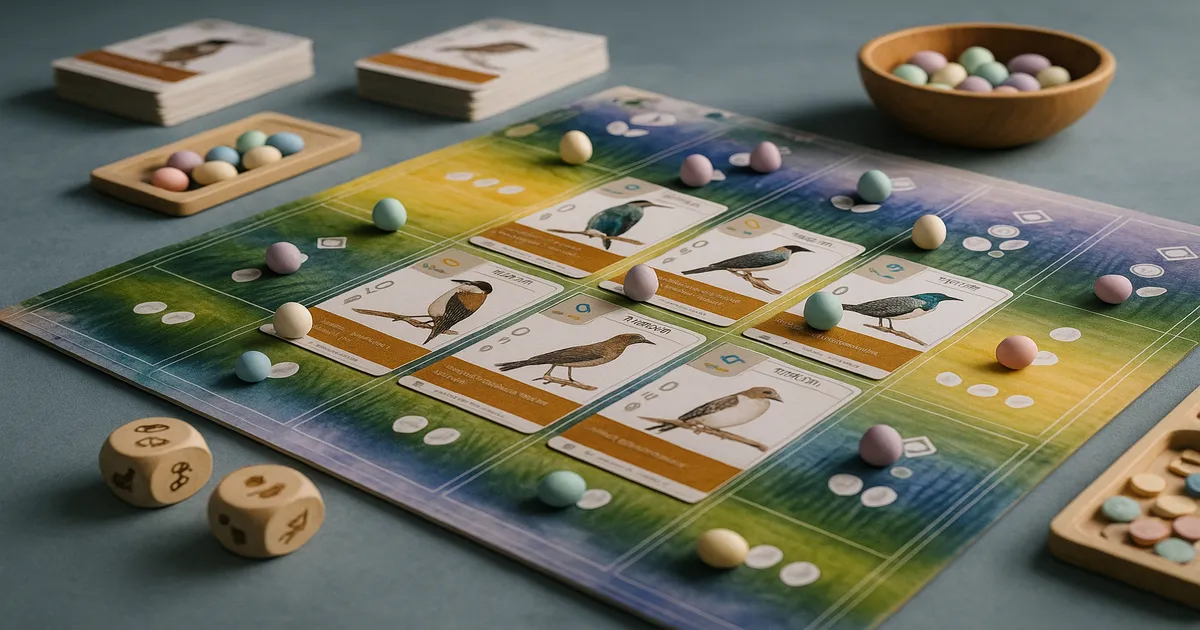
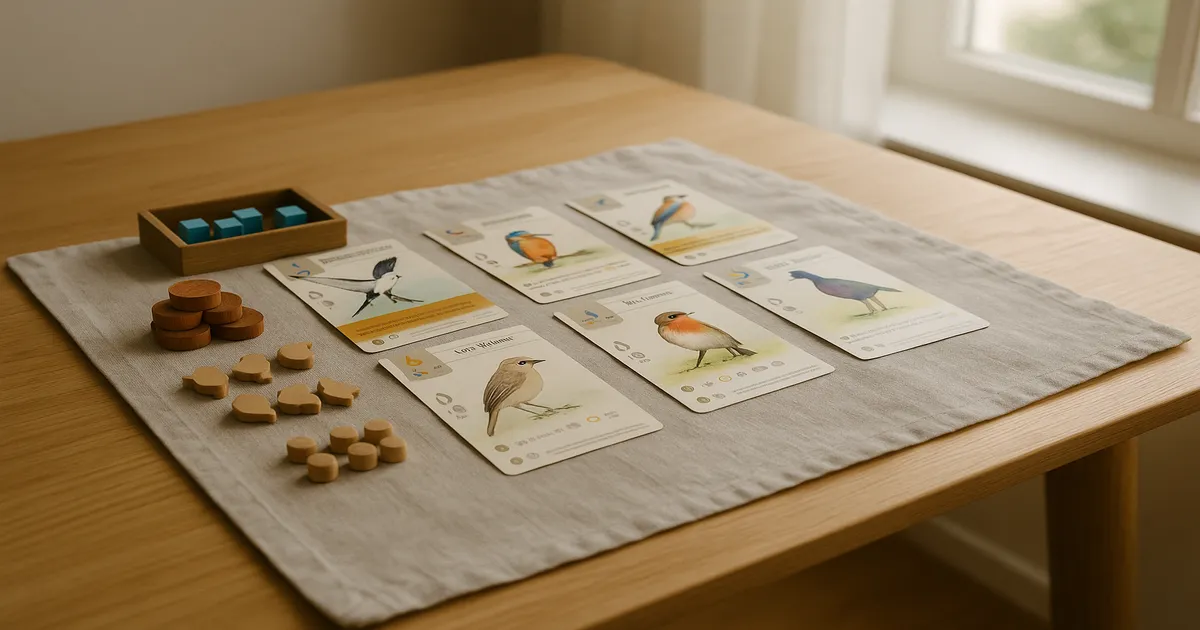
- 200+ bird cards featuring North and South American species
- Player boards with clear habitat iconography
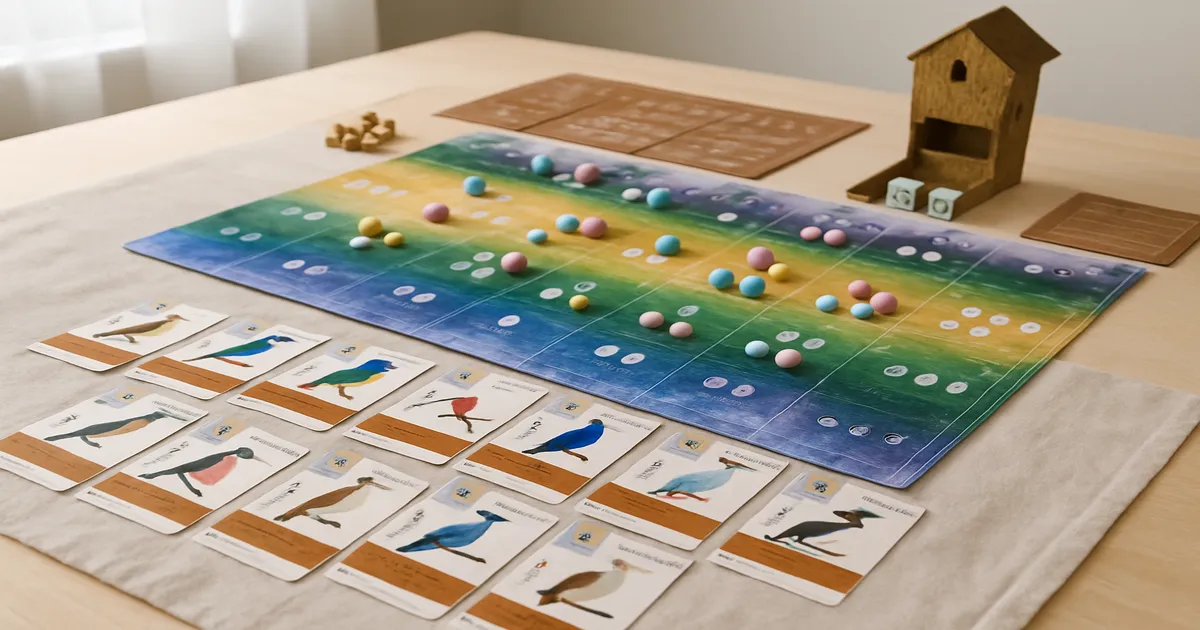
- Pastel plastic egg tokens (genuinely satisfying to handle)
- Wooden food tokens: worms, berries, seeds, fish, and rodents
- Custom food dice and birdfeeder dice tower
- Round-end goal tiles and bonus cards
- Automa cards for solo play
- Score pad and first-player marker
The art is painterly and naturalistic — not cartoony — which gives the whole table a calm, beautiful look. Every card carries real data: wingspan measurements, diet, nesting type, habitat. It’s the kind of thing that makes non-gamers stop and actually read the cards. The egg tokens alone have made grown adults audibly happy.
Setting Up Wingspan Americas
Shuffle the bird deck and deal three cards face-up to the central bird tray. Load the food dice into the birdfeeder dice tower and shake it — the dice visible in the tray represent available food. Each player gets a player board.
Deal each player two bonus cards; they keep one (the rulebook also covers a two-bonus-card variant). These secret objectives shape your entire game, so read them carefully before deciding.
Then deal each player five bird cards and five food tokens. Here’s the trade-off: you can keep all five birds but start with only one food token, or discard birds to gain more starting food. Most new players keep too many birds and can’t afford to play any of them in round one. My suggestion: keep three birds and take three food. It gives you real options on turn one.
Turn Structure: Your Four Actions Explained
Each turn you take exactly one action. No combining, no skipping ahead. This simplicity is what makes the game so accessible.
Playing a Bird Card
Choose a bird from your hand, pay its food cost (shown in the top-left corner), pay any egg cost — eggs come off birds already on your board, not from a central supply, which trips up a lot of new players — and place it in the matching habitat row. Some birds trigger a white “when played” power immediately.
Gaining Food: How the Birdfeeder Works
Take the forest action to gain food. You pull one die from the birdfeeder showing a food type you want. If all remaining dice show the same food type, you must reset the feeder — dump everything back in and re-roll. You can also voluntarily reset when taking this action if you don’t like what’s available. After taking food, activate forest birds from right to left.
Laying Eggs: The Grassland Action
Place egg tokens on your birds. The base action gives you two eggs to distribute across any birds with remaining capacity. Then activate grassland birds right to left. Eggs pull double duty: they’re currency (you spend them to play birds) and end-game scoring (1 point each), so managing your supply is one of the ongoing puzzles.
Drawing Bird Cards: The Wetland Action
Draw bird cards from the face-up tray or blind from the deck. The base action lets you draw one from the tray or two from the deck. Activate wetland birds right to left.
Activating Habitat Powers: Right to Left
This is the single most common rules mistake: powers always activate right to left, from your most recently placed bird back toward the first slot. Not left to right. The newer the bird, the sooner it activates. It matters because some birds chain together, and getting the order wrong changes everything.
The Americas-Exclusive Mechanic: Pink Powers
What Are Pink Powers?
The original Wingspan has three power types: white (triggers when you play the bird), brown (triggers when you activate that habitat), and teal (triggers at round end). Wingspan Americas adds a fourth: pink powers, which trigger during other players’ turns.
How Pink Powers Change the Game
In a four- or five-player game, you might wait 15–20 minutes between your turns. Pink powers eliminate dead time. If your neighbor takes the grassland action, a pink-powered bird might hand you a free egg. If someone draws cards, you might draw one too. Everyone stays leaned in.
Stack two or three strong pink-power birds and you’re generating resources continuously — I’ve seen players barely need to take food actions because their pink birds were doing all the work. This strategy is noticeably weaker in two-player games (fewer opponent turns to trigger off) and genuinely dominant at four or five players.
How to Play Wingspan Americas: Round Structure and Scoring
The Four Rounds
The game runs four rounds with decreasing actions: 8, 7, 6, 5 — 26 total. That scarcity is intentional. By round four, every action has to count.
Round-End Goal Tiles
At the start of each round, a goal tile is revealed. At round end, players score based on who has the most of that attribute — eggs in grassland, birds with a certain trait, tucked cards, and so on. You don’t have to win a goal to benefit; most tiles award points on a sliding scale.
All Scoring Categories
- Bird card face values — each card is worth 1–9 points
- Round-end goals — scored at the end of each round
- Bonus cards — secret objectives, scored at game end
- Eggs on birds — 1 point each
- Tucked cards — 1 point each
- Cached food — 1 point per token cached on birds
Expect final scores in the 60–100+ range. Bonus cards are often the difference between a 70-point game and a 95-point game — players who build around them consistently outscore those who don’t.
Common Mistakes New Players Make
Activating powers left to right. Write “right to left” on a sticky note if you have to. It’s intuitive to go left to right, it’s wrong, and it changes your chains significantly.
Misunderstanding egg costs. Eggs come off your birds, not from a shared supply. No eggs on your birds means you can’t play a bird that costs eggs — even if there are eggs sitting in the box.
Missing pink power triggers. New players often miss these entirely because they’re not used to paying attention during other people’s turns. Designate someone to remind the table until it becomes habit.
Hoarding cards instead of playing birds. Drawing feels productive. It isn’t, unless you can play what you draw. Unplayed birds score zero. I’ve watched players draw 30 cards over a game and end up with a hand full of birds they couldn’t afford.
Neglecting bonus cards. Your bonus card is your roadmap. If you’re not actively building toward it, you’re leaving 5–15 points on the table every game.
Strategy Tips for Wingspan Americas
Early game: Let your bonus card tell you which habitat to develop first. If it rewards wetland birds, build your wetland row. If it rewards food-caching birds, hunt for those immediately. One strong habitat built efficiently beats spreading thin across all three.
Mid game: Place birds so their powers chain together. A bird that gives food when activated, followed by a bird that lets you lay an egg when you gain food — that’s a two-for-one every time you take that action. Also watch the round-end goal tiles. If you’re losing a goal race badly, pivot rather than grinding for second.
Late game: Five actions in round four sounds like plenty. It’s not. Playing a high-value bird (6–8 points) is almost always better than spending two actions gathering resources you won’t use. Stack eggs on your highest-capacity birds — some hold four to six eggs, which is meaningful end-game scoring.
Wingspan Americas vs. Base Wingspan
| Feature | Base Wingspan | Wingspan Americas |
|---|---|---|
| Bird Region | Primarily North America | North & South America |
| Pink Powers | Absent | Core new mechanic |
| Standalone | Yes | Yes |
| BGG Complexity | ~2.4 | ~2.4 |
| Combine with others | Yes | Yes |
The pink power mechanic is the real differentiator. If you’ve played the base game and found it a little low-interaction, Americas fixes that. If you’re brand new to Wingspan, either is a fine starting point — but Americas is the better pick if you’re regularly playing with four or five people.
Similar Games Worth Considering
- Everdell — engine building with woodland creatures, BGG weight ~2.8; very similar satisfaction curve
- Cascadia — lighter tile-placement nature game, great for players who want something simpler
- Viticulture Essential Edition — also Stonemaier, more player interaction, BGG weight ~2.9
- Ark Nova — the natural next step for players who want a heavier animal/nature game, BGG weight ~3.7
If you’re planning to combine Wingspan Americas with the base game or expansions, it’s worth sleeving the cards to protect them — the decks see a lot of shuffling. (Mayday Games Standard Card Sleeves)
Frequently Asked Questions About How to Play Wingspan Americas
Can you play Wingspan Americas without owning the base Wingspan game?
Yes, absolutely. Everything you need is in the box. That said, the bird cards from all Wingspan products are compatible, so owning both gives you a much larger card pool to play with.
What is a pink power and when does it trigger?
Pink powers are exclusive to Wingspan Americas. They trigger during other players’ turns — for example, gaining a free food token whenever another player takes the forest action. They’re the mechanic that makes Americas feel more interactive than the base game.
How does the birdfeeder dice tower work?
When you take the forest action, you pull one die showing a food type you want. If all remaining dice show the same food type, you must reset the feeder — put all dice back in and re-roll. You can also voluntarily reset on your forest action if you don’t like what’s available.
How long does a game of Wingspan Americas take?
Typically 40–70 minutes. Two experienced players can finish well under an hour; a full five-player game with newer players might stretch to 90 minutes. The decreasing turn counts in later rounds keep things moving regardless.
What’s the best habitat to build first?
It depends on your bonus card — but grassland is a strong default for new players. Eggs are both a resource and a scoring mechanism, so a solid egg engine makes everything else easier. Forest is a good early focus if your bonus card rewards predator or food-caching birds. Wetland tends to be more of a mid-game priority once you’ve got the resources to actually play what you draw.