Quick Answer: Great Western Trail is a heavy euro where 1–4 players drive cattle herds from Texas to Kansas City, building a deck of diverse cattle cards and hiring workers along the way. Your turn boils down to four steps: move your cattleman, take a location action, use auxiliary actions, and eventually deliver your herd in Kansas City for money and VP. The rules are genuinely learnable in one session — it’s the strategy that keeps you coming back.
If you’ve ever searched for how to play Great Western Trail and felt a little intimidated by the table full of tiles, tokens, and a sprawling board, you’re not alone. This is one of Alexander Pfister’s most celebrated designs — consistently ranked in BGG’s top 50 all-time — and it earns its BGG weight of around 3.7/5. But here’s the thing: the turn structure is actually quite clean. The depth comes from the decisions within that structure, not from memorizing a dozen special rules.
Let’s break it all down.
What Is Great Western Trail?
Published in a revised Second Edition by eggertspiele (distributed by Plan B Games) in 2021, Great Western Trail casts players as cattle ranchers driving herds from Texas up to Kansas City. You’ll hire cowboys, builders, and engineers, place buildings along a shared trail, and push your locomotive up the railroad to unlock ongoing bonuses. It’s thematically coherent in a way that heavy euros often aren’t — the mechanics actually feel like what they’re supposed to represent, which is rarer than it should be.
Core mechanics at a glance:
- Deck building — start with a weak cattle hand, upgrade it across multiple drives
- Hand management — diversity of breeds matters more than quantity
- Point-to-point movement — your cattleman moves forward along a shared trail
- Light worker placement — cowboys, builders, and engineers drawn from a shared pool
- Engine building — buildings, station upgrades, and objectives compound over time
If you enjoy games like Brass: Birmingham or Terraforming Mars, this belongs in your collection. It rewards players who like juggling multiple scoring paths and optimizing over a long arc. Casual gamers will likely find it overwhelming — that’s not a knock, it’s just genuinely a heavy game. Solo mode was added in the Second Edition if you want to learn the systems at your own pace.
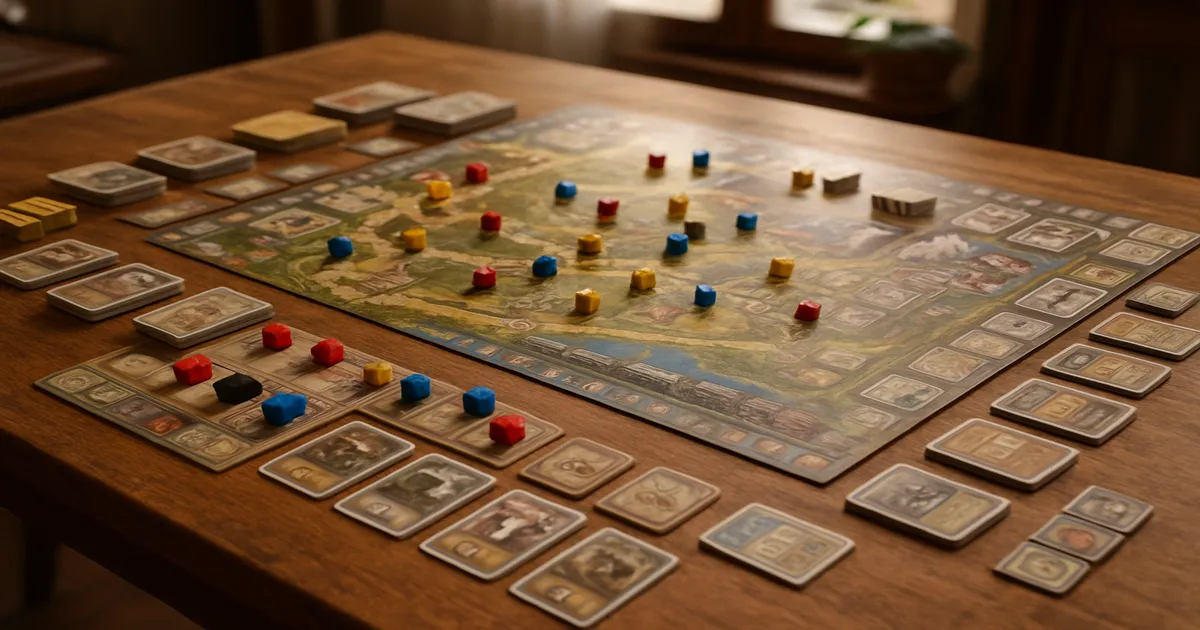
Components: What’s in the Box
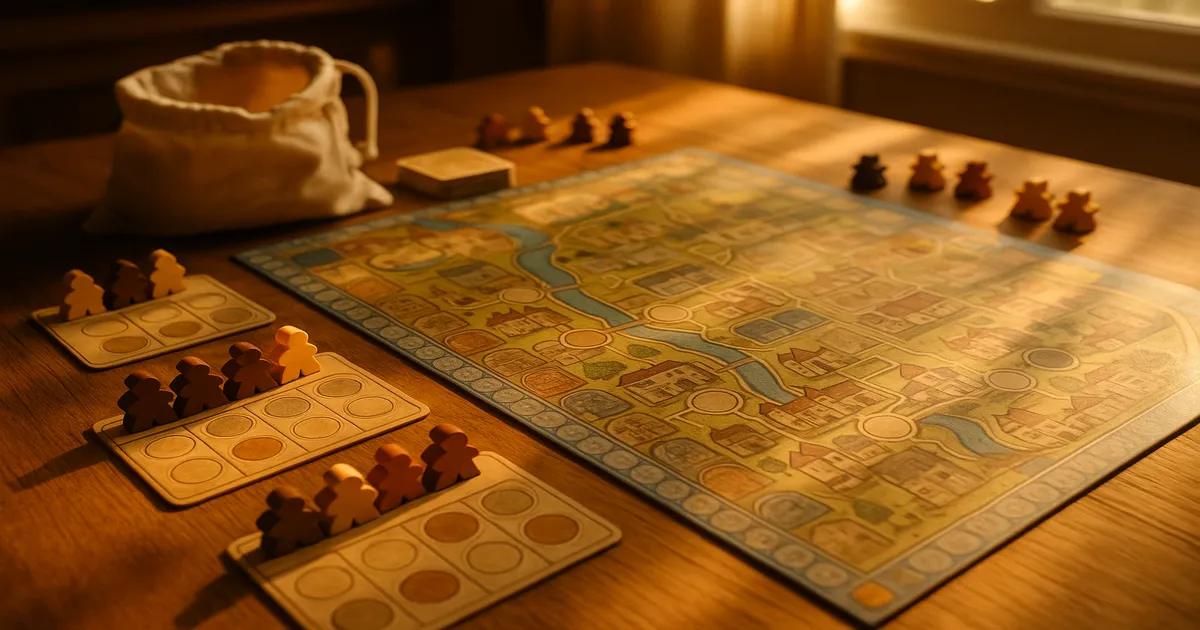
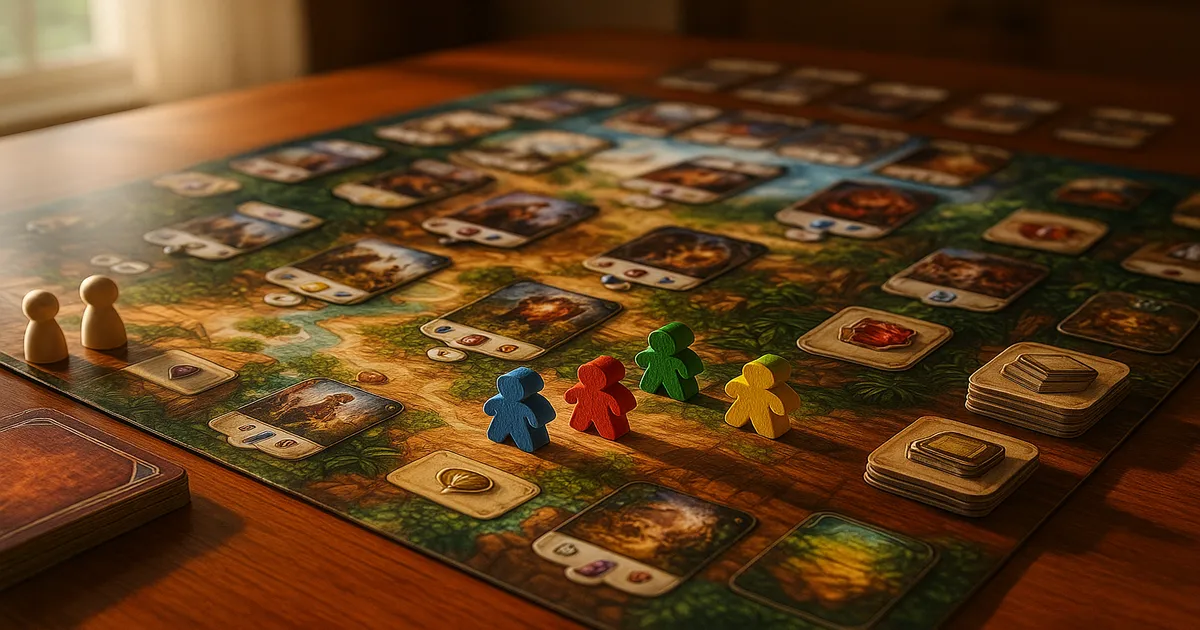
The Second Edition is a clear upgrade from the original — thicker cardboard, revised iconography, and much better player aids. The cattle cards have distinct artwork that makes breeds easy to identify at a glance. Wooden worker discs are fine functionally, but plenty of players swap in custom meeples for a nicer table feel.
Money tokens are cardboard, which is the one area worth upgrading immediately. A set of poker chips makes the whole experience feel more tactile and cuts down on fumbling. The board itself is large and visually busy — clear a full dining table before you set up.
The double-sided board adds meaningful replayability out of the box, and the iconography overhaul alone makes the Second Edition worth it for new buyers. First Edition players often had to cross-reference the rulebook constantly; the revised player aids largely solve that problem.
How to Play Great Western Trail: Turn Structure Explained
This is the core of the game, and it’s simpler than it looks.
Step 1 — Move Your Cattleman Along the Trail
Move your cattleman pawn forward along the trail — you choose how many spaces. Moving fewer spaces means more actions per drive but slower progress to Kansas City. Rushing ahead means fewer actions but more total deliveries. This tension never goes away, even after dozens of plays.
Step 2 — Take the Location Action
Whatever location you land on, you take its action:
- Neutral locations (A–F): Draw cattle cards, hire workers, discard hazards, and more
- Your own buildings: Take the action for free
- Opponent’s buildings: Take the action, but pay that player 1 coin
- Hazard tiles: Pay a fee or face a penalty (certain workers mitigate these)
- Teepee tiles: Trigger certificate or objective bonuses
Step 3 — Use Auxiliary Actions
This is the step new players most often forget, and it’s one of the most powerful parts of the game. After your main action, you can spend workers to take additional minor actions: draw cards, advance your train on the railroad, gain certificates, and more. Skipping these consistently is a significant strategic loss — treat them as part of your turn, not an afterthought.
Step 4 — Arriving in Kansas City (Delivery Phase)
When your cattleman reaches Kansas City, you trigger a delivery:
- Reveal your current hand of cattle cards
- Count the number of different breeds — this determines which delivery cities you can reach
- Choose a city, earn money and/or VP
- Collect any station bonuses you’ve unlocked
- Discard your entire hand and draw a new starting hand
- Advance your train engine on the railroad
The key insight: it’s breed diversity, not card count, that determines delivery value. A hand of four different breeds beats a hand of four identical cards every single time.
Workers, Buildings, and the Railroad
The Three Worker Types
- Cowboys let you buy and improve cattle cards, upgrading your deck’s quality and diversity
- Builders let you construct buildings on the trail, generating passive income and VP
- Engineers advance your train on the railroad, unlocking station master tiles with ongoing bonuses
Neglecting any one of these creates a bottleneck. In my experience, the train is the one most new players ignore — and it’s the one that hurts them most. Station tiles that pay out on every delivery compound dramatically over the course of a game.
Building Placement on the Trail
Buildings near the start of the trail get visited more often — by you and by opponents who’ll pay you 1 coin each time. That passive income adds up. Buildings near Kansas City are visited less frequently and generally aren’t worth the placement cost. Some buildings have multi-part actions that players only half-use. Read them carefully.
The Railroad Track
Each time you arrive in Kansas City, you advance your train. Unlocking station tiles gives you bonuses that trigger on future deliveries — extra money, certificates, VP, and more. The per-delivery bonus tiles are especially strong. Prioritize those when you can reach them.
How to Win Great Western Trail: Scoring and Strategy
All the Ways to Score VP
- Buildings placed on the trail
- Station upgrades on the railroad
- Completed objective cards
- Certificates (converted to VP at game end)
- Hazard tiles collected
- Remaining money (converted at a poor ratio — spend it before the game ends)
The game rewards balanced play. Hyper-specializing into one scoring path is almost always weaker than maintaining a rough balance across several.
End-Game Triggers
The game ends when a player completes their 6th delivery, the cattle market empties, or certain building or objective conditions are met. New players consistently underestimate how fast this can happen — especially at lower player counts. Start watching the trigger conditions from mid-game onward.
Common Mistakes That Cost You the Game
- Skipping auxiliary actions — these aren’t optional extras, they’re central to your turn
- Confusing quantity with diversity — four of the same breed is basically worthless at delivery
- Ignoring the train track — I’ve seen this sink more first-time players than anything else
- Flooding your deck with cheap cattle — a bloated deck means inconsistent hands; be selective
- Rushing down the trail — the mid-trail locations are genuinely powerful, don’t blow past them
Strategy Tips
Early on, your first worker hire matters more than it seems. An early cowboy lets you improve your cattle deck right away; an early builder lets you claim a prime trail location before opponents do. Neither is universally correct — read the table.
Mid-game, aggressively remove weak starting cattle from your deck whenever you get the chance. A lean deck of high-quality cards delivers far better than a bloated one. This is probably the single most impactful strategic concept in the game.
The “short loop” strategy — deliberately moving only a few spaces per turn to cycle through the early trail repeatedly — lets experienced players take far more total actions per game. It feels counterintuitive, but it works. And don’t reflexively avoid opponent buildings; if the action is strong, paying 1 coin is often worth it.
How Does Great Western Trail Compare to Similar Games?
vs. Brass: Birmingham — Both are heavy euros with strong engine building, but Brass has more direct player interaction through network blocking. GWT’s deck building is central to the experience; Brass has none. If you want both mechanics together, GWT is the pick.
vs. Terraforming Mars — Also deck building plus engine building, but built around card drafting and tableau management rather than movement. GWT feels more dynamic turn-to-turn; TM can feel like a long optimization puzzle. They scratch related but distinct itches.
| Game | Weight | What It Shares | Key Difference |
|---|---|---|---|
| Viticulture: Essential Edition | ~2.9/5 | Worker placement, theme | Much more accessible |
| Concordia | ~3.0/5 | Hand management, movement | No deck building; hand is your action menu |
| Wingspan | ~2.5/5 | Engine building | Significantly lighter |
| Clans of Caledonia | ~3.4/5 | Multi-path scoring, similar weight | Market-driven, no movement mechanic |
What makes GWT genuinely distinctive is the combination of deck building and point-to-point movement — that pairing is rare. The trail as a shared resource creates natural player interaction without direct conflict.
Expansions and Standalone Variants
Texas (Expansion) adds new buildings, additional objective cards, and a Texas starting region that changes how early drives play out. Solid for players who’ve gotten comfortable with the base game and want more variability.
New Zealand (Standalone) replaces cattle with sheep and adds a sea route mechanic. It plays a touch lighter than the base game and has its own distinct feel.
Argentina (Standalone) is the one most experienced GWT players point to as the best standalone: new map, gaucho theme, and enough mechanical twists to feel fresh without losing what makes GWT great.
Start with the base Second Edition — it’s the most complete and best-supported version. Once you’ve played it a dozen times and want more, Argentina is the obvious next purchase.
Frequently Asked Questions About How to Play Great Western Trail
How long does a game of Great Western Trail take?
Expect 75–150 minutes depending on player count and experience level. Two experienced players can finish in under 90 minutes. Four players with at least one newcomer? Budget closer to two and a half hours.
What’s the best player count?
Most experienced players prefer two or three. At two, the game moves quickly and every decision feels impactful. At four, downtime increases noticeably and the trail gets congested — still fun, but a different experience.
What’s the difference between First and Second Edition?
The Second Edition has thicker cardboard, clearer iconography, improved player aids, a double-sided board, and an integrated solo mode. The core rules are largely the same. If you’re buying new, there’s no reason to hunt down the First Edition.
Is Great Western Trail hard to learn?
It’s a heavy game, so yes — there’s a real learning curve. The turn structure itself is simple (move, act, auxiliary actions, deliver), but understanding why to make certain decisions takes a few plays. Most people find it clicks around game two or three. Teaching it with the quick-reference cards and a patient first game helps enormously.
How does the Kansas City delivery work?
When your cattleman reaches Kansas City, reveal your current hand and count how many different breeds you have. That number determines which delivery cities you can reach — more diverse breeds unlock higher-value cities. Earn money or VP from your chosen city, collect station bonuses, discard your entire hand, draw a new starting hand, and advance your train. The whole sequence resets your drive and is the heartbeat of the game.