Quick Answer: “Scythe Brawlhalla” isn’t a single game — Scythe is a diesel-punk strategy board game by Stonemaier Games, and Brawlhalla is a free-to-play platform fighter by Ubisoft. They have nothing to do with each other. This article covers both so you can find what you’re actually looking for.
If you searched “how to play Scythe Brawlhalla,” you’ve hit a weird search artifact that mashes two completely unrelated games together. Jump to whichever one you actually want: Scythe the board game or Brawlhalla the video game.
Scythe or Brawlhalla — Which One Are You Looking For?
What Is Scythe?
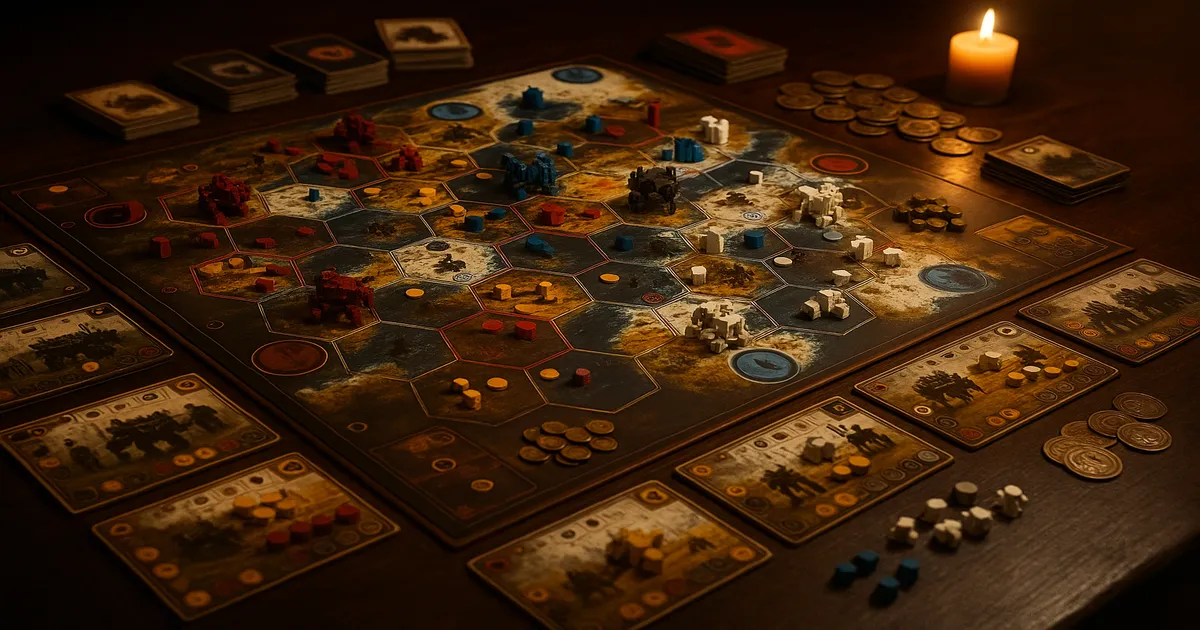
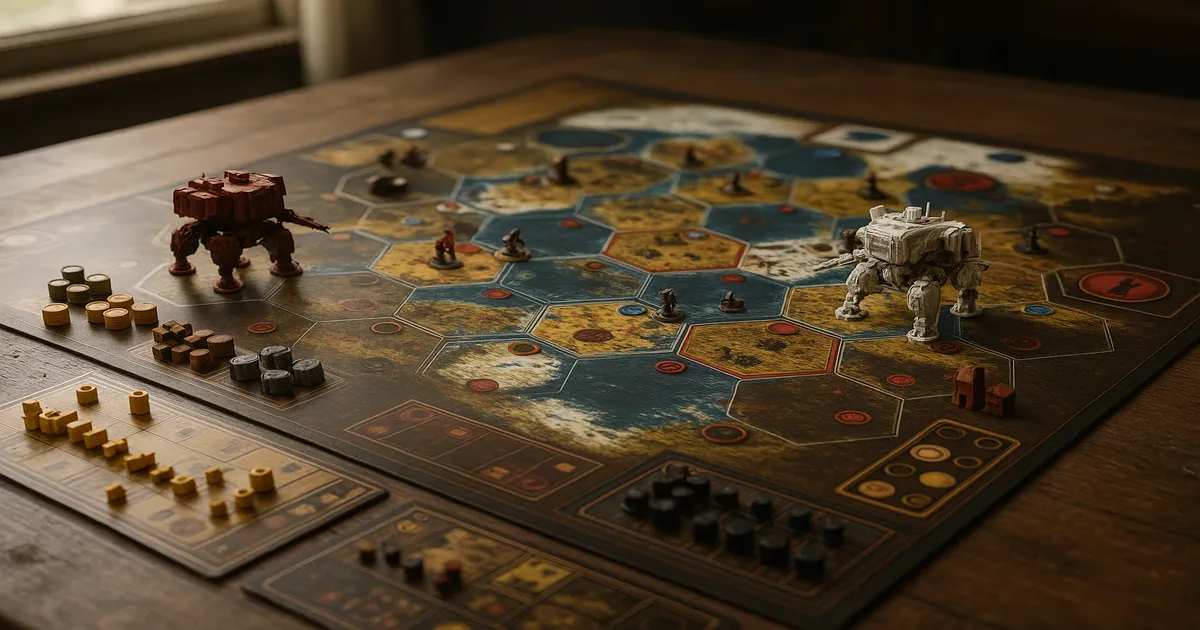
Scythe is a medium-heavy strategy board game for 1–5 players (90–115 minutes, BGG weight 3.4/5) set in an alternate-history 1920s Eastern Europe where rival factions pilot massive diesel-punk mechs while their workers farm the land. It’s been sitting in BoardGameGeek’s top 20 for years, and a big part of that is Jakub Różalski’s artwork, which is genuinely stunning.
What Is Brawlhalla?
Brawlhalla is a free-to-play 2D platform fighter from Blue Mammoth Games, published by Ubisoft. It’s available on PC, PlayStation, Xbox, Switch, iOS, and Android with full crossplay. Think Super Smash Bros., but free, with crossover skins from Adventure Time, WWE, and Kung Fu Panda.
Why These Are Two Separate Games
There’s no crossover, no shared universe, no collaboration — nothing. “Scythe Brawlhalla” appears to be an autocomplete quirk or data artifact. Both games are worth your time, just for completely different reasons.
How to Play Scythe: Game Overview and Setup
Theme and Setting
Scythe drops you into a dieselpunk Eastern Europe where five factions are fighting for territory around a mysterious Factory. The tension between pastoral farming and looming mechanical warfare isn’t just flavor — it’s baked into every mechanic. You’ll spend as much time managing workers and resources as you will threatening people with mechs.
What’s in the Box
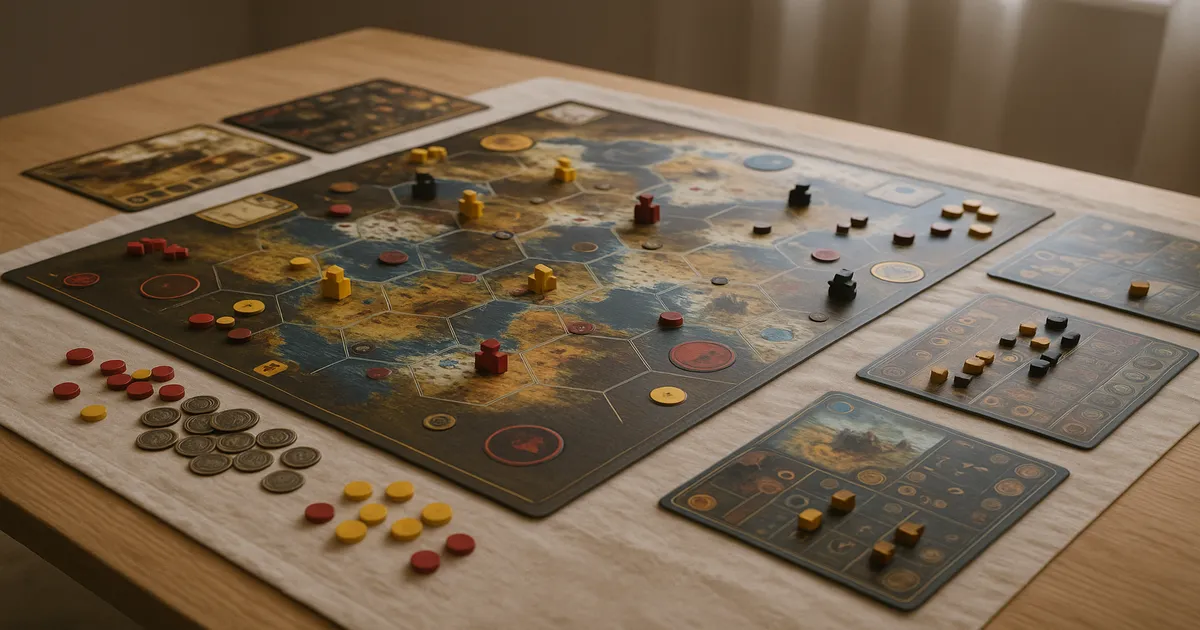
The retail edition (Scythe) packs in genuinely impressive components:
- 1 large modular hex board
- 5 asymmetric Faction Mats and 5 asymmetric Player Mats
- Faction-specific mech and character miniatures (no painting required)
- Resource tokens (Wood, Metal, Oil, Food), Combat Cards, Objective Cards
- Power and Popularity dials, coins in three denominations
- Encounter Cards and Automa cards for solo play
The miniatures are a cut above what you’d expect at this price point. They look great on the table straight out of the box.
One thing worth doing before your first game: sleeve the cards. There aren’t a huge number of them, but the Encounter and Combat Cards get shuffled constantly.
Setup
Each player gets a randomly assigned Faction Mat (your starting position, special abilities, and mech powers) paired with a separately randomized Player Mat (your action pairings and starting resources). That random combination is a core feature — it’s what makes every game feel different. Place your character and workers on your faction’s starting hexes, set your dials to their starting values, and deal each player one Objective Card.
Scythe Turn Structure: How a Round Works
The Action Pawn Rule
Your Player Mat has four sections, each pairing a top action with a bottom action. On your turn, move your action pawn to any section except the one you used last turn. That’s the only restriction — but it shapes every single decision you make.
Top Actions (Move, Bolster, Trade, Produce)
- Move — Move up to two units one hex each
- Bolster — Gain Power or draw Combat Cards
- Trade — Spend coins to gain two resources of your choice
- Produce — Generate resources on hexes where your workers are located
Top actions are generally free but require your units to be in the right places.
Bottom Actions (Deploy, Build, Enlist, Upgrade)
These cost resources, and they’re where the real engine-building happens:
- Deploy — Place a mech on a hex with a worker, unlocking a mech ability
- Build — Construct a structure (Mill, Mine, Armory, or Monument) for ongoing bonuses
- Enlist — Gain a one-time bonus and an ongoing bonus triggered by opponents’ actions
- Upgrade — Improve a top or bottom action using Oil
Taking both a top and bottom action on the same turn is the whole game. Players who only take one action per turn fall badly behind, fast.
Encounter Cards
When your character moves onto a hex with an Encounter token, draw and resolve an Encounter Card. These present narrative choices with different resource tradeoffs. Don’t skip them — new players forget this constantly.
Combat, Stars, and How to Win Scythe
How Combat Works
When two players’ units occupy the same territory, combat happens. Both players secretly choose how much Power to spend and how many Combat Cards to play, then reveal simultaneously. Highest total wins. No dice, anywhere. Combat is a calculated resource expenditure, not a gamble — which is why threatening combat is often more useful than actually doing it.
Stars: Your Victory Milestones
Each player races to place all 6 of their Stars by hitting milestones like:
- Winning combat (max 2 Stars this way for most factions)
- Maxing out Power or Popularity
- Completing all upgrades, deploying all mechs, building all structures, or enlisting all recruits
- Completing an Objective Card
Saxony is the exception — they can place unlimited combat Stars, which makes them play very aggressively.
End-Game Scoring
The game ends immediately when any player places their 6th Star. Then everyone scores coins based on their Popularity tier multiplied against territories controlled, resources on those territories, structures built, and mech/worker pairs. Popularity sits at tier 1, 2, or 3 — moving from tier 2 to tier 3 can swing 10–15+ coins. It’s not a stat to ignore.
Here’s something new players consistently miss: the person who triggers the end game doesn’t automatically win. Ending the game at the wrong moment can hand victory to someone who’s been quietly stacking territories and resources while you were chasing Stars.
Scythe Faction Guide
The Five Base Factions
- Rusviet (Red) — Can repeat the same action section on consecutive turns, making them uniquely flexible
- Crimea (Yellow) — Can spend Combat Cards as wild resources
- Nordic (Blue) — Workers cross rivers freely; strong at worker production
- Polania (White) — Character and mechs move through rivers; draws two Encounter Cards and picks one
- Saxony (Black) — Unlimited combat and Objective Stars; relentlessly aggressive
Each faction unlocks four mech abilities as you deploy, and they’re genuinely game-changing — not minor tweaks. Read your Faction Mat carefully before your first turn.
A Note on Pairings
Some Faction/Player Mat combinations are considered stronger than others. Rusviet + Industrial is famously powerful — some groups house-rule it out entirely. The random pairing system creates great replayability, but it also means you need to adapt your strategy to what the combination gives you rather than playing the same way every game.
Common Mistakes New Scythe Players Make
Only taking top actions. The bottom row is where your engine lives. If you’re not deploying mechs, building structures, and upgrading regularly, you’re playing a much weaker game than you need to.
Fighting too early. Early aggression usually hurts the attacker more than the defender. Combat drains Power and Combat Cards, and losing costs you a worker. The threat of combat is often more valuable than actual combat.
Ignoring Popularity. New players treat it as an afterthought. The difference between tier 2 and tier 3 scoring can decide close games entirely.
Not using Objective Cards. They’re consistently underused. Check yours at the start of each game — the conditions are often things you’d hit naturally anyway.
Scythe Expansions Worth Getting
Invaders from Afar is the first expansion to grab. It adds two new factions (Albion and Togawa), bumps the player count to 7, and both factions play very differently from the base five.
The Wind Gambit adds airships with asymmetric abilities and resolution tiles that change end-game conditions — great for groups that have played the base game a lot. The Rise of Fenris is an 8-episode legacy-style campaign that digs into the lore behind the Factory. It’s excellent, but save it until your group knows the base game well.
If you want to keep your components organized — and with Scythe, you really do — a dedicated insert makes setup and teardown dramatically faster.
Games Similar to Scythe
| Game | Weight | If You Like… |
|---|---|---|
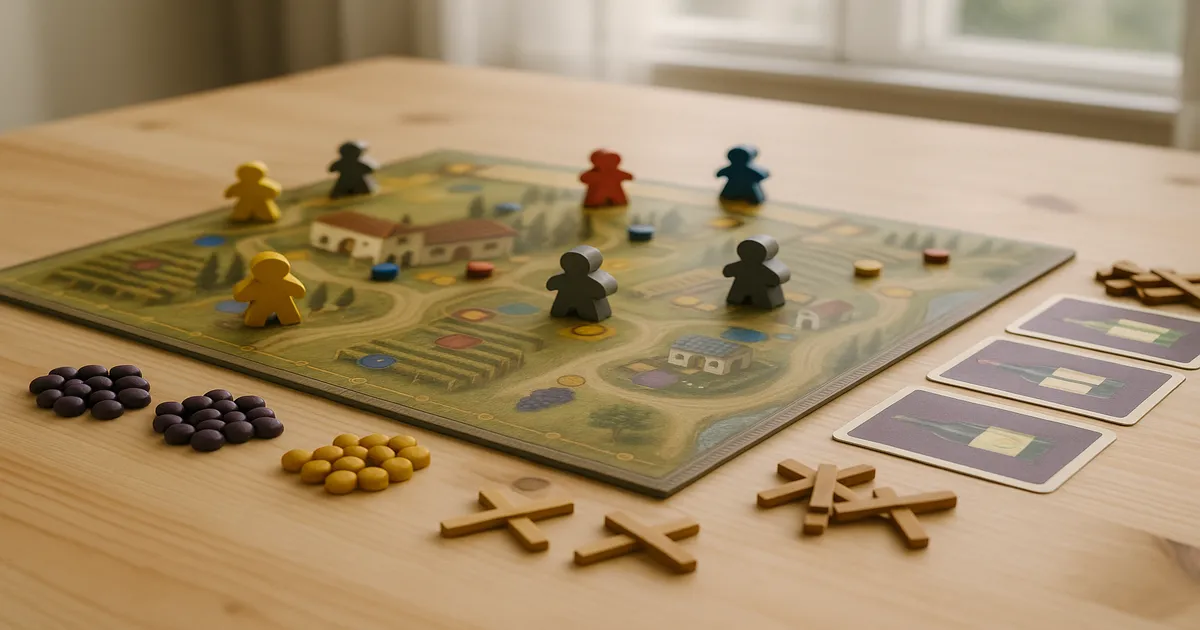
| Viticulture (Stonemaier) | 2.9/5 | Scythe’s designer, lighter weight |
| Wingspan (Stonemaier) | 2.4/5 | Engine-building, lower conflict |
| Root | 3.0/5 | Asymmetric factions, faster play |
| Blood Rage | 2.9/5 | Miniatures, more combat focus |
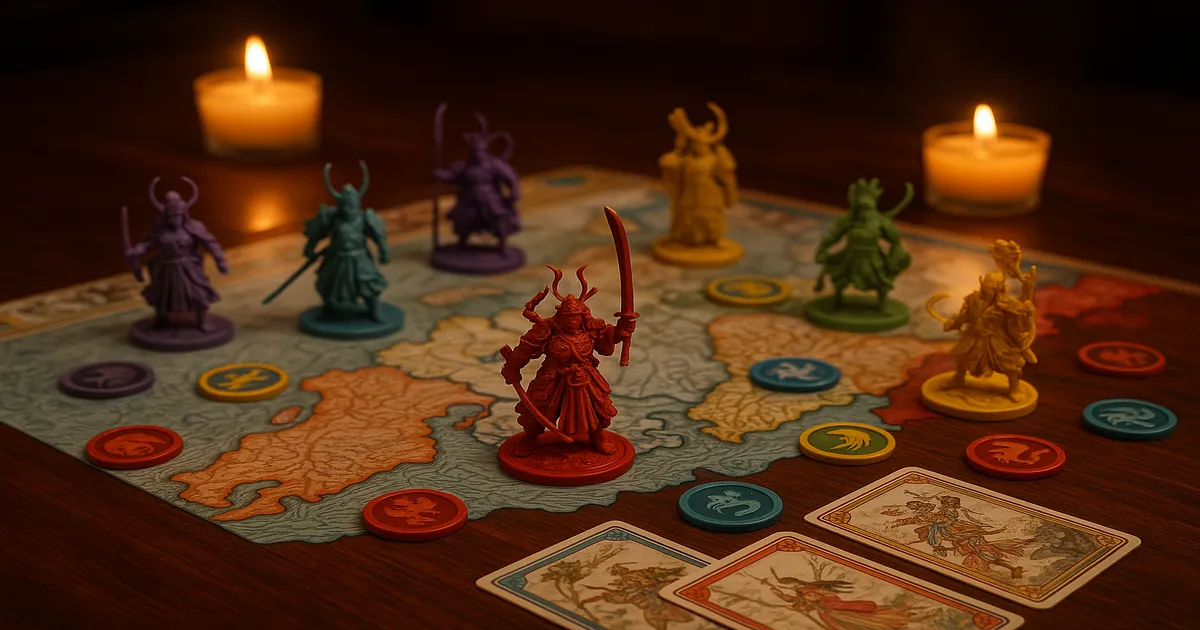
| Rising Sun | 3.2/5 | Asymmetric factions + negotiation |
| Terraforming Mars | 3.3/5 | Engine-building, longer games |
Most of these scratch a different itch rather than the same one. Scythe’s combination of Różalski’s art, the action-pawn restriction, optional-but-threatening combat, and the faction asymmetry system makes it genuinely hard to replace.
How to Play Brawlhalla: A Separate Game Entirely
What Kind of Game Is It?
Brawlhalla is a 2D platform fighter — same genre as Super Smash Bros. — where you knock opponents off the stage instead of depleting a health bar. It’s free across PC, PlayStation, Xbox, Switch, iOS, and Android, with crossplay between all platforms.
Core Mechanics
Characters accumulate damage percentage as they take hits. Higher damage means more knockback, making you easier to KO. You play as Legends — 60+ original characters, each with two weapons from a shared pool and four stats: Strength, Dexterity, Defense, and Speed.
Weapons spawn on the stage during the match. Each Legend can only effectively use their two designated weapon types. Every Legend also has Signatures — three unique special moves with cooldowns. The directional dodge system is your main defensive tool, but it has a recovery window, so don’t spam it.
Game Modes
- Stock — Set number of lives; last player standing wins
- Timed — Most KOs in the time limit
- Ranked 1v1 / 2v2 — Competitive ladder with ELO-based matchmaking
- Party modes — Brawlball, Kung Foot, and others for casual play
Tips for New Players
Don’t spam Signatures. Experienced players will punish you for throwing them out raw. Learn your Legend’s two weapons first, spend time in training mode building even basic 2–3 hit combos, and control center stage — pushing opponents to the edges limits their options and gives you more room to work.
Frequently Asked Questions
Is “Scythe Brawlhalla” a real game?
No. They’re two entirely separate games with no connection. Scythe is a strategy board game by Stonemaier Games; Brawlhalla is a free-to-play platform fighting video game by Ubisoft. The combined phrase is a search artifact — there’s no collaboration or crossover between them.
How do you win Scythe?
The game ends when any player places their 6th Star. Everyone then scores coins based on their Popularity tier multiplied against territories controlled, resources on those territories, structures built, and mech/worker pairs. Most coins wins — and it’s often not the person who triggered the end game.
Can you repeat the same action in Scythe?
No — with one exception. You must move your action pawn to a different section of your Player Mat each turn. The exception is Rusviet, whose faction ability lets them ignore this restriction entirely. It’s a significant advantage and part of why that faction is considered powerful.
Is Brawlhalla free, and what platforms is it on?
Yes, completely free with cosmetic-only purchases. It’s available on PC (Steam), PlayStation 4/5, Xbox One and Series X/S, Nintendo Switch, iOS, and Android — with crossplay across all platforms.
What’s the best faction for beginners in Scythe?
Nordic or Polania. Nordic’s worker production is intuitive and strong. Polania’s river movement and double Encounter card draw give you flexibility without needing deep mechanical knowledge. Avoid Rusviet/Industrial on your first few games — that combination is strong enough to distort the learning experience for everyone at the table.