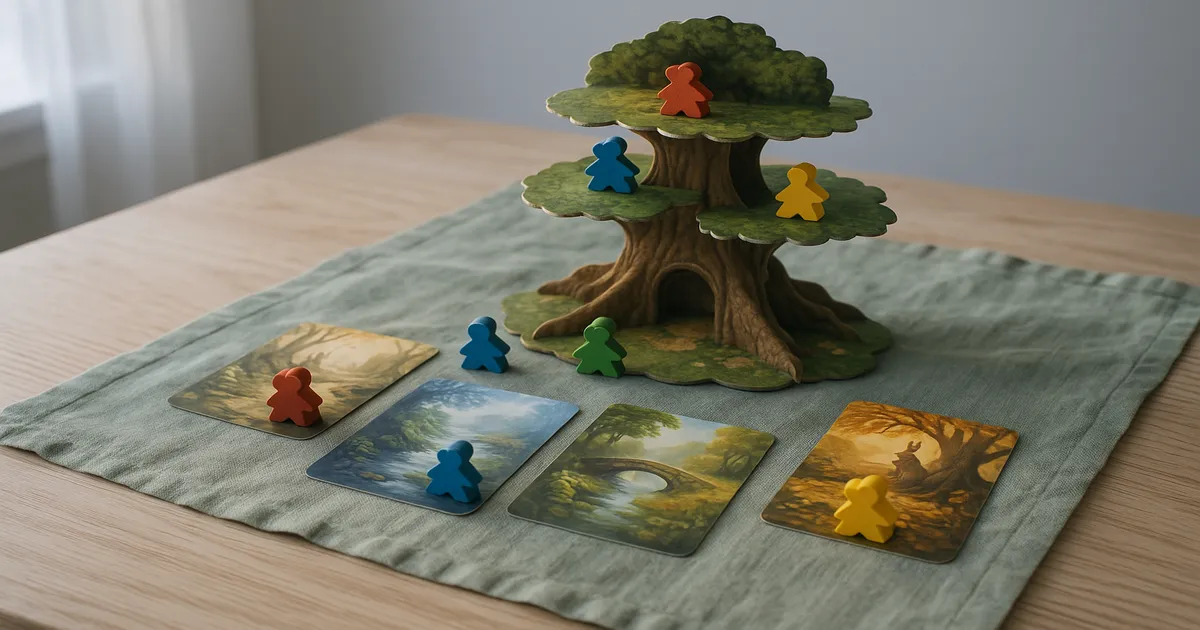
Quick Answer: Everdell Silverfrost is a mini-expansion for Everdell (base game required) that adds frost-themed critter and construction cards, frost tokens, and a tactical disruption mechanic to the existing worker placement and card engine-building system. It plays 1–4 players in roughly 45–90 minutes and shuffles cleanly into your existing game without overhauling the core rules.
If you’ve been wondering how to play Everdell Silverfrost, here’s the short version: it’s still Everdell, just with a winter coat on. The core turn structure doesn’t change, but the new frost cards and tokens add a layer of tactical disruption that rewards players who know when to use them. This guide covers everything from setup to strategy — with a base game recap for anyone who needs a refresher.
What Is Everdell Silverfrost?
Everdell Silverfrost is a mini-expansion published by Starling Games that layers a frost and winter theme onto the base game. You’re getting new critter and construction cards, frost tokens, new events, and a freezing mechanic that lets you disrupt opponent plans in ways the base game never allowed.
- Players: 1–4
- Play time: ~45–90 minutes
- Age: 13+
- BGG weight: Base Everdell sits around 2.8/5; Silverfrost nudges that up slightly
- MSRP: Typically $20–$35 (check current pricing before buying)
Do You Need the Base Game?
Yes — Silverfrost is not standalone. You need the Everdell base game to use it. Think of it like Mistwood: a small box that integrates into your existing game rather than bolting on an entirely new board or system.
Everdell Base Game Recap
Worker Placement, Hand Management, Card Engines
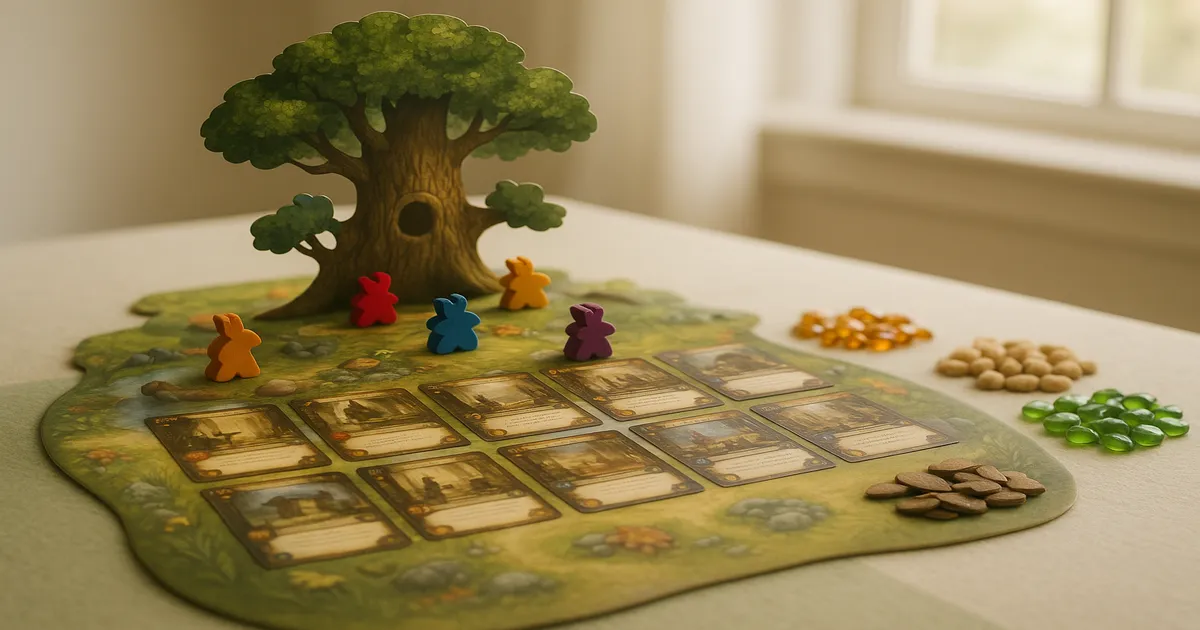
Everdell is a worker placement game where you’re building a city of up to 15 cards — a personal tableau of critters and constructions whose abilities ideally chain together. You place workers on the central Ever Tree board to gather resources, then spend those resources to play cards from your hand.
The rule new players forget most often: if you own a construction, you can play its paired critter for free. That single rule is the backbone of every efficient city in the game, and it’s just as relevant when Silverfrost is in the mix.
Resources and Your City
Four resources drive everything: twigs, resin, pebbles, and berries. Different cards cost different combinations, and managing your resource flow is where most of the real decision-making lives. Your city caps at 15 cards — that limit bites harder than it looks when you’re eyeing a shiny new Silverfrost card in the late game.
The Four Seasons
The game moves through Spring → Summer → Autumn → Winter. When you’ve placed all your workers, you “journey” to the next season — recalling workers, gaining seasonal bonuses, and drawing new cards. Timing that journey well is one of Everdell’s most underrated skills, and Silverfrost doesn’t change that.
Scoring
At game end, you score points from cards in your city, completed events, journey tokens, and any bonus cards collected. Most points wins.
What Everdell Silverfrost Adds
New Cards: Winter Critters and Icy Constructions
Silverfrost adds a set of frost-themed cards — ice harvesters, frost mages, frozen dens — each with abilities that interact with both the new frost system and your existing card pool. They shuffle into the meadow deck rather than forming a separate pile, so they appear organically during play. That’s intentional, and it’s the right call.
Frost Tokens
Frost tokens (pale blue or white, matching the expansion’s winter palette) are a new supply element. Certain cards let you gain them; others let you spend them to trigger special abilities. They sit alongside the standard four resources rather than replacing them — an additional layer, not a substitution.
The Frost Mechanic: Tactical Freezing
This is the genuinely new thing Silverfrost brings. Certain frost cards let you “freeze” locations — temporarily locking down a high-traffic worker spot at exactly the wrong moment for your opponent. It’s a disruption tool, not a full overhaul of the game’s economy. Used well, it’s nasty. Used carelessly, it’s a wasted card.
New Events
Silverfrost adds new basic and special events tied to its frost-themed cards, giving you additional point-scoring paths — but only if your city is built to claim them. Check the exact card counts and event details in the official rulebook; those specifics can vary and the rulebook is the authority.
Meadow Integration
The meadow is Everdell’s shared 8-card market, and Silverfrost cards go straight into it. No separate frost market, no parallel system — the new cards just show up the way any other card would. That clean integration is a big part of why Silverfrost feels like a natural extension rather than a tacked-on module.
How to Play Everdell Silverfrost: Setup
What’s in the Box
- Silverfrost critter and construction cards
- Frost tokens (pale blue/white wooden or cardboard pieces)
- New event cards
- Rules insert
The card quality matches the base game’s linen finish, and the artwork carries the same richly painted woodland style — just shifted to a cool blue and silver winter palette. It looks great on the table.
Shuffling In
- Separate the Silverfrost critter and construction cards from the event cards.
- Shuffle the critter and construction cards into the main Everdell card deck.
- Set up the meadow as normal — draw 8 cards face-up from the combined deck.
Don’t keep Silverfrost as a separate draw pile. The organic discovery through the meadow is the whole point.
Frost Tokens and Events
Add frost tokens to the general supply where everyone can reach them. Place the new Silverfrost event cards alongside the existing basic and special events, following the standard event setup rules.
First Game Advice
Play at least one full game of base Everdell before adding Silverfrost. The frost mechanic isn’t complicated, but you’ll get far more out of it once you already have a feel for city-building and journey timing. Teaching new players? Run the base game first, full stop.
Turn Structure: How Silverfrost Fits In
Your Three Options (Unchanged)
On your turn, you do exactly one of these — same as always:
- Place a Worker on an available location to gain resources or draw cards
- Play a Card from your hand into your city (paying its cost or using a free critter chain)
- Prepare for Season — journey to the next season, recall workers, gain bonuses
Silverfrost doesn’t add a fourth option or a separate frost phase. It fits inside the existing structure without disrupting it.
When Frost Abilities Trigger
Frost abilities primarily trigger when you play a frost-themed card, or as ongoing abilities that activate at specific moments — some cards fire when you journey, for instance. Frost tokens are spent during your turn as part of activating those abilities. The trigger timing is usually printed clearly on the card itself, so read each one carefully before you play it.
Common Mistakes When Playing Everdell Silverfrost
Base game errors that carry over:
- Ignoring the free critter rule. If you own a construction, its paired critter is free. Build around this.
- Playing every interesting card instead of committing to a direction. Unfocused cities score poorly.
- Hoarding resources. They don’t carry over meaningfully — spend them.
- Forgetting end-of-season card draws when you journey.
Silverfrost-specific mistakes:
- Leaving Silverfrost cards as a separate pile instead of shuffling them in.
- Misapplying frost token timing. Read the rulebook insert before your first game, not during it.
- Skipping frost abilities because they seem fiddly. Freezing a key location at the right moment is genuinely powerful — don’t leave that on the table.
- Stalling your city waiting for frost cards that aren’t showing up in the meadow. Build what’s available.
- Forgetting the new Silverfrost events exist. Check the event board at the start of each season.
Everdell Silverfrost Strategy
Commit to a Direction Early
By the end of Spring, you need a clear plan for your city — production engine, construction chains, critter combos, whatever. Vague cities score poorly. This is true in base Everdell and doubly true when you’re also managing frost tokens.
Use Frost Disruption for Tempo, Not Just Points
The frost mechanic’s real value is tempo. Freezing a high-traffic location right before your opponent needs it — forcing them into a suboptimal journey or a wasted turn — is worth more than the points on the card. Players who treat frost abilities as a passive bonus miss most of their value. Hold them until they actually hurt someone.
Build Production First, Then Layer Frost On Top
Frost abilities cost resources to activate. That means they reward players who already have stable income — not players scrambling to pay for their next card. Get your production base sorted first, then use frost as a weapon.
Don’t Sleep on Silverfrost Events
Events in Everdell offer disproportionate point value relative to the cost of qualifying for them. If frost-themed events are on the board, it’s often worth orienting your city to claim them.
Solo Play
Solo Everdell is genuinely good, and Silverfrost adds interesting puzzle elements to it. In solo mode, lean into the frost mechanics aggressively — they raise your score ceiling and give you more decision points per turn, which is exactly what makes solo play satisfying.
How Silverfrost Compares to Other Everdell Expansions
| Expansion | Type | Key Addition | Complexity Added |
|---|---|---|---|
| Pearlbrook | Large | River board, Ambassadors, Adornments | Medium |
| Spirecrest | Large | Weather cards, Big Critters, Discoveries | High |
| Bellfaire | Medium | Player powers, Fairgrounds board | Low–Medium |
| Newleaf | Medium | Train station, Visitors | Low–Medium |
| Mistwood | Mini | Rugwort villain, new cards | Low |
| Silverfrost | Mini | Frost mechanics, winter cards | Low–Medium |
Mistwood and Silverfrost are the closest comparisons — both small-box add-ons that shuffle into your existing game. Mistwood introduces Rugwort, a villain mechanic that creates a threat element. Silverfrost adds resource disruption through frost. They push different buttons, and honestly you could run both at once without much trouble.
Spirecrest shares thematic DNA with Silverfrost’s environmental focus, but it’s a full large-box expansion with considerably more rules overhead. If you want winter flavor without a big learning curve, Silverfrost is the right call. (Everdell Mistwood)
Is Silverfrost a Good First Expansion?
It’s a solid choice after three or four base game sessions. The frost mechanics feel like a natural extension at that point rather than an extra rulebook to memorize. I wouldn’t hand it to someone who’s never played Everdell — but for players who know the game and want something new, it’s low-risk and genuinely adds texture.
If you’re planning to play Silverfrost regularly, it’s worth sleeving your cards to protect them — the meadow deck gets shuffled a lot. (Mayday Games Premium Card Sleeves)
Frequently Asked Questions
Do you need the base game to play Everdell Silverfrost?
Yes, absolutely. Silverfrost is not standalone — you need the Everdell base game. Beyond that, no other expansions are required. It integrates directly with the base game and works fine without Pearlbrook, Spirecrest, or anything else.
What do frost tokens do in Everdell Silverfrost?
Frost tokens are a new resource introduced by Silverfrost cards. You gain them through specific card abilities and spend them to activate frost effects — including the freezing mechanic that lets you lock down opponent locations. Exact placement and removal rules are in the Silverfrost rulebook insert.
Is Everdell Silverfrost compatible with other expansions?
Generally yes. Silverfrost cards shuffle into the meadow deck regardless of what other expansions are in play. That said, combining multiple expansions adds complexity, so it’s worth reading through interaction rules before mixing Silverfrost with larger expansions like Spirecrest. The BoardGameGeek forums are a good resource for reported edge cases.
Is Everdell Silverfrost good for beginners?
Not as a first game. The base game has enough going on that adding Silverfrost creates unnecessary noise for new players. Get comfortable with the free critter rule and journey timing first, then add Silverfrost. At that point it’ll feel like a natural extension rather than extra homework.
How do you shuffle Silverfrost cards into the meadow deck?
Separate the critter and construction cards from the event cards. Shuffle the critter and construction cards into the main Everdell deck, then draw 8 cards face-up as normal to form the meadow. Event cards go alongside the existing events per standard setup. Don’t run Silverfrost as a separate draw pile — organic discovery through the meadow is how it’s designed to work.