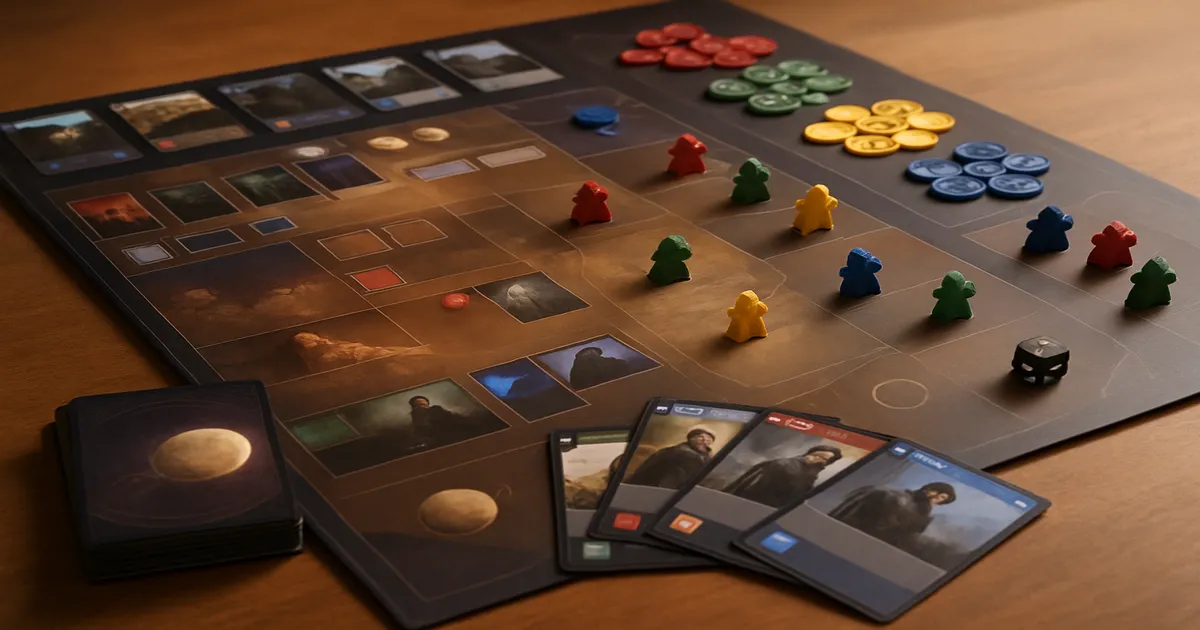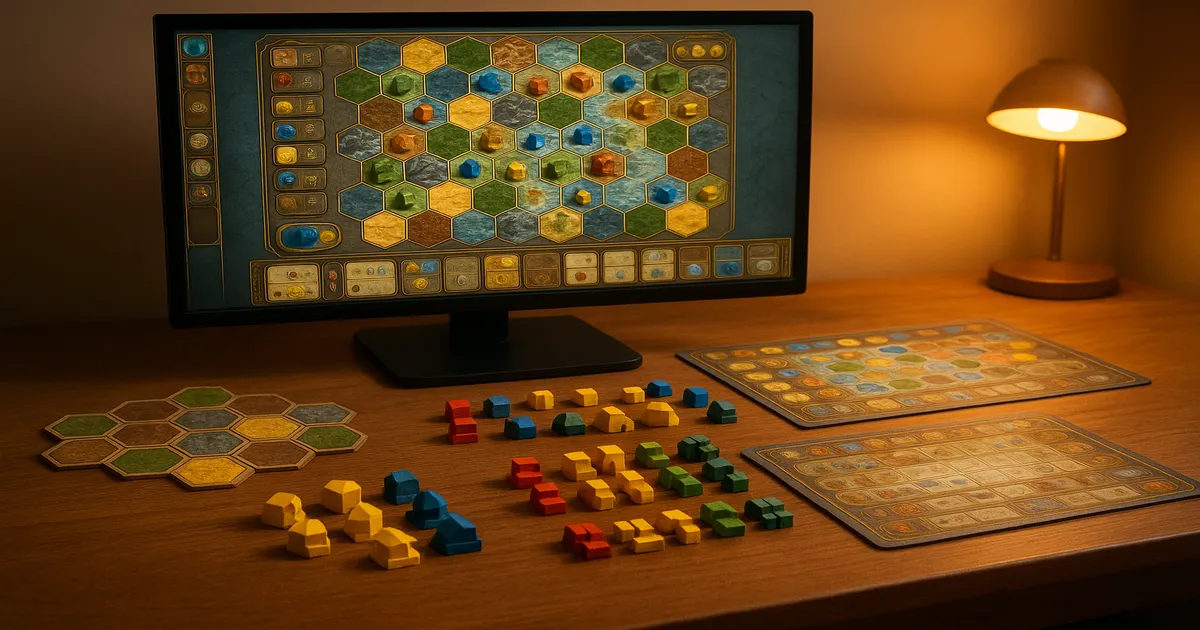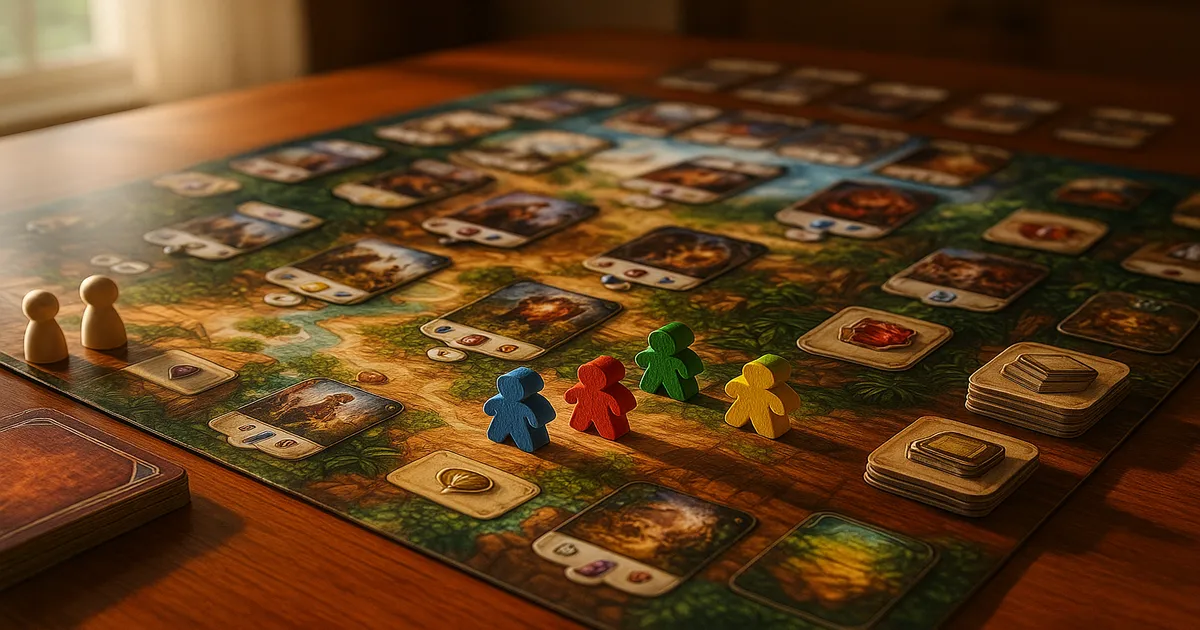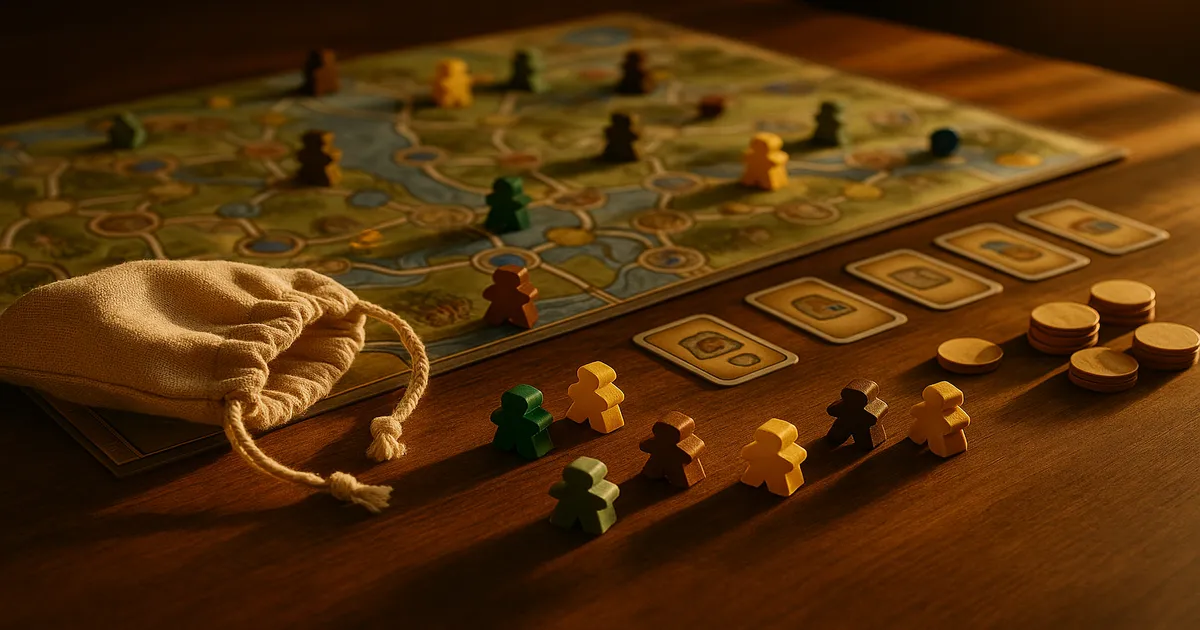
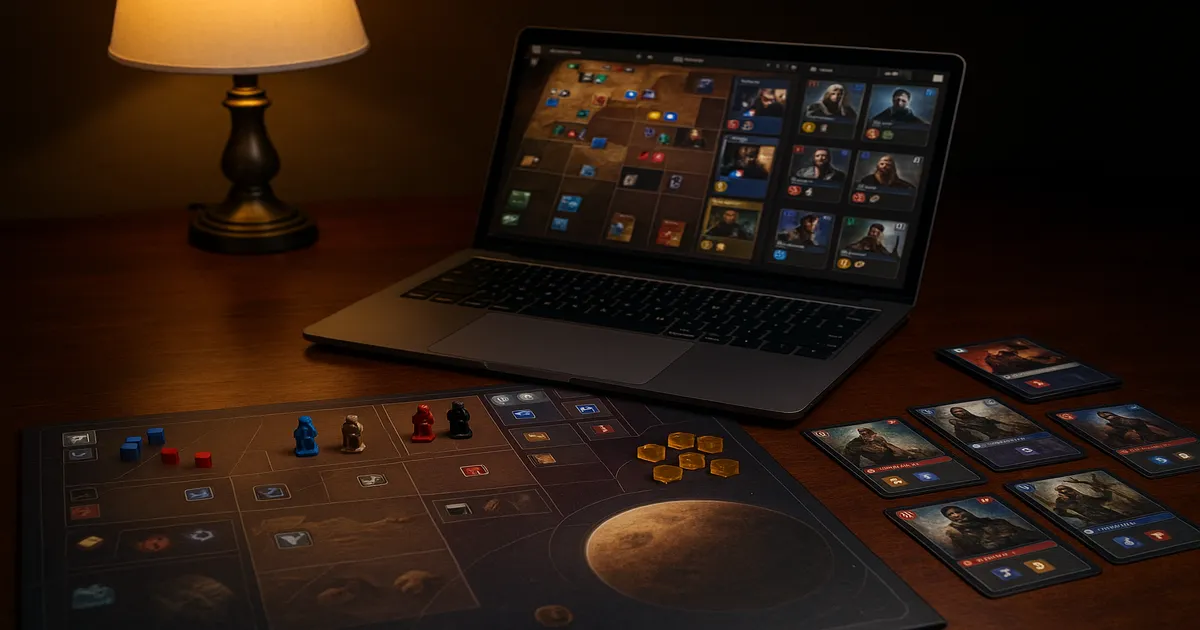
Quick Answer: You can play Dune Imperium Uprising online on two platforms — Board Game Arena (free at the basic tier, browser-based, great for async multiplayer) and the Dire Wolf Digital app (polished UI, AI opponents, tutorial mode). Uprising is fully standalone, so you don’t need the base game. Both digital versions auto-enforce the rules, which makes them genuinely excellent for learning.
Dune: Imperium – Uprising (1–6 players, 60–120 minutes, BGG weight ~3.0/5.0) is one of the best heavy games to learn digitally, and figuring out how to play Dune Imperium Uprising online is easier than you’d think. The rule that trips up almost every new player — you can only place a worker on spaces matching your card’s icons — is enforced automatically. You literally cannot make that mistake online even if you try.
Which Platforms Let You Play Dune Imperium Uprising Online?
Two platforms, and they serve genuinely different needs.
Board Game Arena (boardgamearena.com) is browser-based, works on desktop and mobile, and requires no download. It supports both real-time and async play, and the community is large enough that finding an open table is rarely a problem. The basic tier is free and gives you full access to Uprising — a premium subscription unlocks cosmetic extras and some stats, but you don’t need it.
Dire Wolf Digital is the publisher’s own adaptation. It has polished animations, a proper tutorial mode, and AI opponents you can actually practice against. It’s more of an app experience than BGA’s functional-but-clean interface, and it may require a purchase depending on the platform — check current pricing on Steam or your relevant app store.
If you’re learning the game solo, start with Dire Wolf’s tutorial. If you want to play with friends or find pickup games with strangers, BGA is where the multiplayer community lives.
What Is Dune Imperium Uprising? A Quick Overview
The Hybrid Deck-Building and Worker Placement Engine
The reason this game sits above 8.0 on BGG isn’t the Dune license — it’s the mechanic. Uprising combines deck-building with worker placement in a way that creates constant tension: the cards in your hand each round determine which board spaces you’re even allowed to visit. You’re not just building an efficient deck; you’re building a deck that unlocks the actions you actually want to take. These two systems push against each other in a way that never gets old.
Uprising was designed by Paul Dennen and published by Dire Wolf Digital. It’s a standalone game — you don’t need the original Dune: Imperium to play it. The core engine is the same, but Uprising adds sandworms, dreadnought miniatures, CHOAM contracts, asymmetric leaders, and support for up to 6 players (the base game caps at 4). The two games are cross-compatible if you own both physically, but online you’re playing one or the other.
What’s New in Uprising
The sandworm mechanic is the headline addition. Tokens accumulate on spice spaces over time, and players who invest in the right cards can “ride” worms for powerful effects — it’s easy to ignore and a significant mistake to do so. Dreadnoughts are massive combat units that genuinely change how conflicts play out. CHOAM contracts add variable objectives that shift the strategic calculus from game to game. At 6 players, the game gets louder and more chaotic in a way that mostly works.
How to Set Up and Start a Game Online
Board Game Arena
- Create a free account at boardgamearena.com
- Search for “Dune Imperium Uprising” in the game library
- Click Create a Table — set it to private (friends only) or public
- Configure player count, async vs. real-time, and any expansion options
- Share the table link or wait for players to join
- Any player can start once the table is full
BGA works fine on mobile. I’ve taken async turns on my phone dozens of times without issue.
Dire Wolf Digital
Download the app (Steam or mobile), create an account, and launch Uprising. From the main menu you can start a solo game against AI, run through the tutorial, or set up online multiplayer. Do the tutorial first — it’s genuinely good, even if you’ve already played the physical version.
Async vs. Real-Time Play
For groups spread across time zones, async is the obvious answer — BGA sends notifications when it’s your turn, and you can take days to finish a game. For a focused game night, real-time keeps the energy up. Honest take: async is better for learning, because you have time to actually read the board before committing. Real-time is more fun once you know what you’re doing.
Core Rules: How to Play Dune Imperium Uprising Online
The Agent Phase
Play one card from your hand. The icons in the top-left corner of that card are your Agent icons — you may place one of your Agent tokens on any unoccupied board space whose icon matches. Then execute that space’s effect. If you have no Agents left, or choose not to place one, you move straight to the Reveal phase.
The Reveal Phase
Flip all remaining cards in your hand face-up simultaneously. Each card contributes Persuasion (used to buy new cards from the Imperium Row) and Swords (used in combat), plus any printed bonuses. This is not just passing — it’s often where you generate the bulk of your buying power for the round. Players who rush to Reveal early often find themselves unable to buy anything meaningful.
Combat
After all players have Revealed, combat resolves. Your strength is deployed troops plus Swords generated this round, plus any Intrigue cards you choose to play now. Rewards are tiered — first place gets the best prize, second often gets something meaningful, and in larger games there’s sometimes a third-place reward. Troops are removed after combat regardless of outcome.
End of Round and Victory
Players draw back up to 5 cards and a new conflict card is revealed. The game ends when any player reaches 10 Victory Points, triggering a final round. Whoever has the most VPs when that round ends wins. Tiebreaker is spice, then Solari.
Uprising-Specific Mechanics to Know
Sandworms: Every time a player visits a spice space and collects nothing (because it’s empty), a sandworm token is placed there. Once enough accumulate, players with the right cards can trigger a worm ride for a powerful effect. I’ve watched new players go entire games without touching this mechanic and then wonder why their spice economy collapsed.
Dreadnoughts: Accessed through specific board spaces and cards, dreadnoughts count as multiple troops in combat and are much harder to overcome than regular units. If an opponent gets them on the board and you haven’t planned for it, you’ll concede conflicts you expected to win.
CHOAM Contracts: Variable objective cards that give you specific goals for bonus rewards. They make each game feel different — sometimes they align beautifully with your leader, sometimes you have to decide whether to chase them or ignore them entirely.
Faction Influence Tracks: Four factions — Bene Gesserit, Emperor, Spacing Guild, and Fremen — each have an influence track. Advancing unlocks bonuses and eventually an Alliance token, which generates ongoing VP. Each faction has a different flavor: Fremen rewards combat and spice, Spacing Guild gives card draw and flexibility, Emperor provides Solari economy, Bene Gesserit focuses on card manipulation and intrigue. The digital UI keeps all four tracks visible at all times, which helps more than you’d expect.
Common Mistakes New Online Players Make
Misunderstanding card icons. The digital version prevents illegal placements mechanically, but understanding why you can’t visit a space helps you plan better hands and buy better cards. This is the #1 conceptual mistake even when the software is doing the enforcement.
Treating Reveal as just passing. It’s not. Timing your Reveal is a real strategic decision — go too early and you’re broke, go too late and you’ve left Agents on the table.
Neglecting faction tracks. New players love combat and spice. Faction tracks feel slow and abstract. But Alliance tokens are among the most efficient VP sources in the game, and the incremental bonuses compound over multiple rounds. Pick one or two factions and push them.
Hoarding Intrigue cards. They’re meant to be played. Sitting on five of them while losing combat after combat is a trap. Also: there’s a real difference between “when you play this card” (Agent phase trigger) and “when you reveal this card” (Reveal phase trigger). Missing this costs resources.
Strategy Tips for Winning Online
Keep your deck thin. A focused 12-card deck almost always beats a bloated 20-card one. Prioritize economy in rounds 1–3, then pivot to combat power and VP cards mid-game. Cards that synergize with your leader are usually worth more than raw stat cards.
Block contested spaces. High-value spaces go to whoever gets there first. Placing on a space your opponent desperately needs — even at some cost to yourself — is legitimate strategy. The Spacing Guild track space is chronically underused by new players and quietly generates card draw all game.
Read the conflict card before committing troops. A conflict offering 2 VPs for first place warrants a different investment than one offering spice. Second-place rewards are consistently underrated — winning second consistently often outperforms fighting for first every time.
For async play on BGA: use the game log religiously. With days between turns, it’s easy to forget what you were building toward. And if you want to accelerate your improvement, BGA lets you watch replays of completed games — an hour watching a strong player’s decisions is worth more than three mediocre games played on autopilot.
Board Game Arena vs. Dire Wolf Digital
| Board Game Arena | Dire Wolf Digital | |
|---|---|---|
| Cost | Free (basic tier) | May require purchase |
| AI opponents | No (basic tier) | Yes, multiple difficulty levels |
| Tutorial | No | Yes |
| Async play | Excellent | Limited |
| Multiplayer community | Large | Smaller |
| Interface | Functional, clean | Polished, animated |
BGA is the right choice for playing with friends across time zones, finding pickup games, and long-term async campaigns. Dire Wolf is better for learning solo or if you want a more immersive single-player experience. My recommendation: run through Dire Wolf’s tutorial first, then move to BGA for multiplayer.
If you end up loving the digital version and want to bring it to the table, the physical edition is worth owning. For a game with this many cards, good sleeves are worth the investment. (Dragon Shield Matte Standard sleeves) And if you’re playing the physical version with the full 6-player count, a dedicated insert helps keep setup manageable. (Folded Space Dune Imperium insert)
Frequently Asked Questions
Do you need the base Dune Imperium game to play Uprising online?
No. Uprising is fully standalone. You don’t need to own or have played the original Dune: Imperium to play on BGA or Dire Wolf Digital.
Is Dune Imperium Uprising free to play on Board Game Arena?
Yes — the basic tier is free and gives you full access. A premium BGA subscription adds cosmetic and quality-of-life features but isn’t required.
How many players can play Dune Imperium Uprising online?
Uprising supports 1–6 players. The original Dune: Imperium caps at 4, so the expanded count is one of Uprising’s headline features. Both BGA and Dire Wolf Digital support the full range.
How long does an online game take?
Real-time games run roughly 60–120 minutes depending on player count and experience. Async games on BGA typically wrap up in 3–7 days if everyone takes turns promptly.
Is the Immortality expansion available on BGA?
The Immortality expansion (which adds the Tleilaxu faction) is cross-compatible with both the base game and Uprising physically. For BGA specifically, check the table options when creating a game — digital expansion support can lag behind physical releases, and availability may have changed since this was written.