Quick Answer: Castles of Burgundy is a 2–4 player medieval euro game (60–90 minutes, BGG weight 3.0) where you roll two personal dice each turn and use each die to take one action — drafting hex tiles from a central board or placing them onto your personal estate. The dice don’t determine how well you do; they determine which numbered spaces you can interact with. Most victory points after five phases wins.
Castles of Burgundy has sat in the BGG Top 20 for over a decade, and honestly, it deserves every spot. Learning how to play Castles of Burgundy takes about twenty minutes. The strategic depth keeps you coming back for years. Designed by Stefan Feld and first published in 2011, it’s one of those rare games where the rules are clean but every single turn demands a real decision.
What Is Castles of Burgundy?
Theme and Setting
You’re a medieval aristocratic prince in the Burgundy region of France, developing your estate along the Moselle River. That means constructing buildings, farming land, raising livestock, mining silver, and trading goods. The theme is light — this is fundamentally a puzzle game — but it gives the tile types a satisfying logic that makes the whole thing click.
Game at a Glance
- Players: 2–4 (solo variant included in the Anniversary Edition)
- Play time: 60–90 minutes; experienced 2-player games run closer to 45
- BGG weight: 3.0/5 — medium-heavy, but the complexity comes from decision density, not complicated rules
Original Edition vs. Anniversary Edition
The original Ravensburger/alea edition from 2011 is cheap (~$40–50) and completely playable, but the components are notoriously fiddly. The hex tiles are tiny, the art is functional rather than beautiful, and the box insert is a disaster. The 2023 Anniversary Edition from Awaken Realms fixes all of that: larger tiles, improved iconography, a proper rulebook, and dramatically better table presence. Premium tiers even include 3D plastic castles. It’ll run you $100–150, and some old-school fans weren’t thrilled with the new art direction — but if you’re buying fresh, it’s worth serious consideration.
Components: What’s in the Box
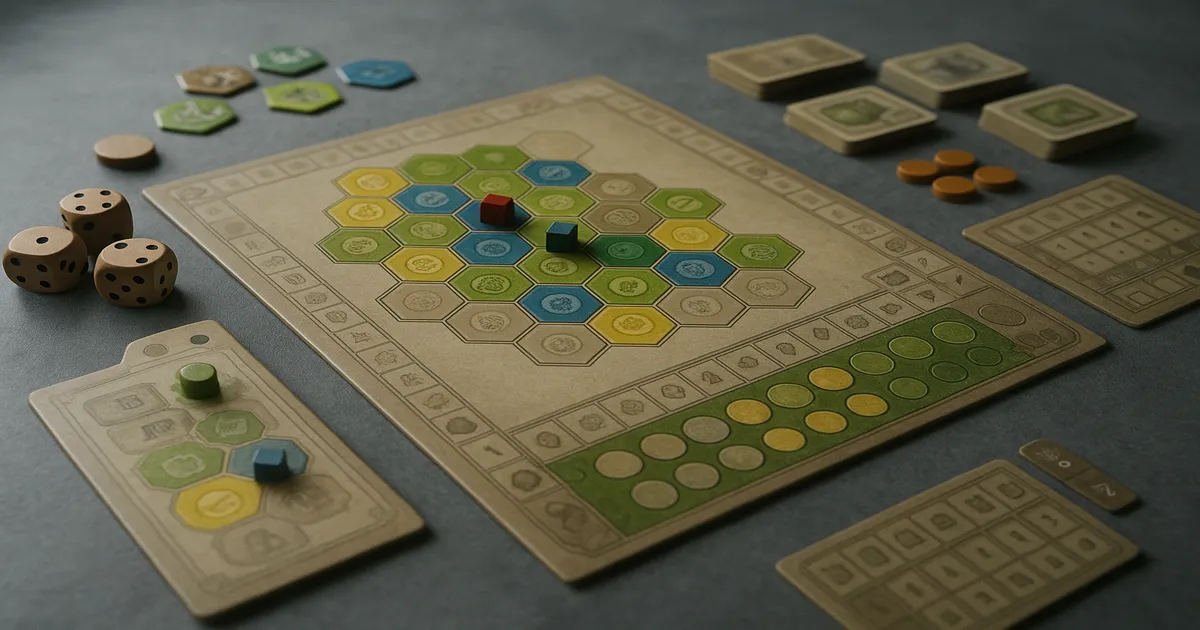
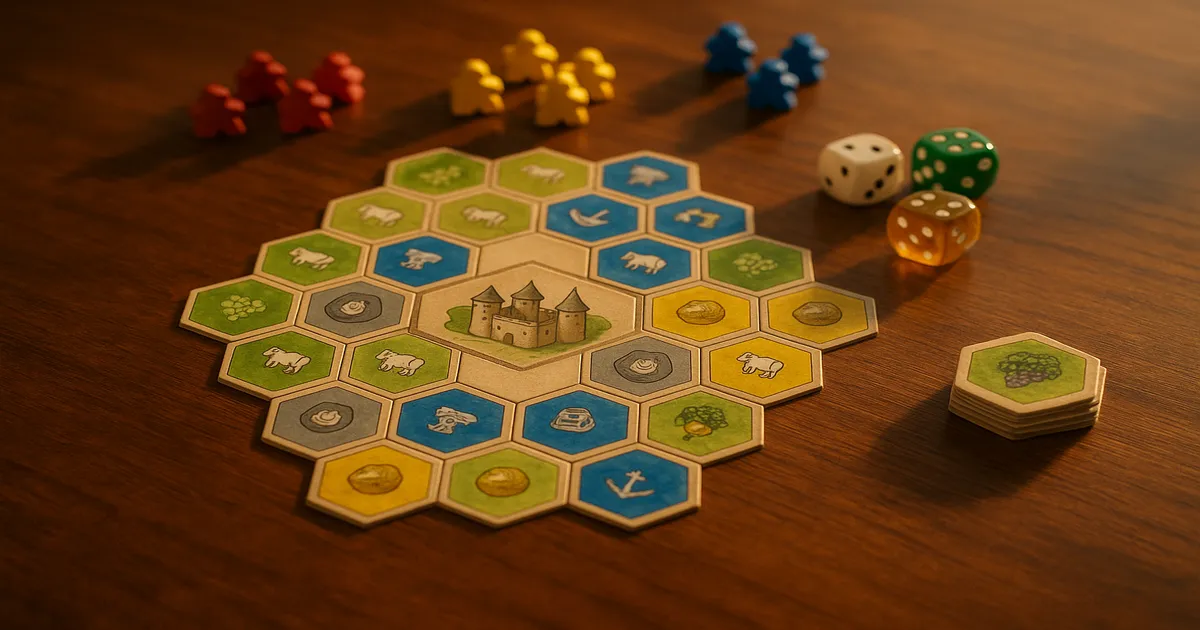
The central board has a ring of hex spaces numbered 1–6, where tiles get drafted each round. Each player gets a personal estate board — double-sided for variety — covered in numbered hex spaces where you’ll build your estate over the course of the game.
The tiles themselves are small cardboard hexagons in six colors, each representing a different tile type. In the original edition they’re genuinely hard to handle and read across the table. That’s the most common complaint you’ll hear, and it’s completely legitimate.
Each player also gets two personal dice in their color, plus worker tokens (small cardboard discs), silver tokens, and goods tokens (little barrels). The VP scoring track runs around the edge of the main board.
If you’re playing the original edition and the fiddly tiles are driving you crazy, laser-cut wooden organizers (Folded Space Castles of Burgundy Insert) are popular on Etsy and BGG’s marketplace. Upgraded acrylic player boards are also out there and make a real difference at the table.
How to Play Castles of Burgundy: Turn Structure and Core Rules
The Central Innovation: Dice as Action Selectors
Here’s the thing most new players get wrong immediately: rolling a 1 is not bad. Rolling a 6 is not good. The dice don’t measure your success — they act as a menu, telling you which numbered spaces on the board you can interact with this turn. A 1 lets you interact with space 1; a 4 lets you interact with space 4. Full stop. Internalizing this reframe is everything.
Game Structure: 5 Phases, 5 Rounds Each
The game runs 25 rounds total — five phases of five rounds each. Certain scoring happens at the end of each phase. After all five phases, final scoring resolves and whoever has the most VP wins.