Quick Answer: Agricola Family Edition is a 1–4 player worker placement game where you build a medieval farm over 13 rounds by gathering resources, raising animals, growing crops, and feeding your family. Each turn you place family member pawns on action spaces, and whoever scores the most points after the final harvest wins. It plays in 45–75 minutes, has a BGG weight of around 1.8/5, and it’s genuinely one of the best gateway euro games you can buy right now.
If you’ve been wondering how to play Agricola Family Edition but found the original Agricola too intimidating — same. The original is a beast. This version keeps the satisfying farming puzzle intact and strips out the hundreds of cards and brutal food penalties that make the base game rough for casual nights.
What Kind of Game Is Agricola Family Edition?
It’s a euro-style worker placement game designed by Uwe Rosenberg and published by Lookout Games. You’re managing a small farm, expanding your house, fencing pastures, plowing fields, and feeding your family at regular harvest intervals. It’s competitive but not combative — you’re mostly racing to build the best farm, occasionally blocking opponents from key resources.
BGG weight sits around 1.8/5, recommended age is 8+, and a full game runs 45–75 minutes. The card-driven complexity of the original is gone, but the core tension — never having quite enough actions — is very much intact.
Components: What’s in the Box
- 1 main game board
- 4 individual farm boards (plus 1 solo board)
- Wooden resource tokens: wood, clay, reed, stone, food, grain, vegetables
- Wooden animal meeples: sheep, wild boar, cattle (in distinct shapes)
- Wooden family member pawns in 4 player colors
- Room tiles, fence pieces, field tiles, stable tokens
- 13 round/harvest cards
- Score pad and rulebook
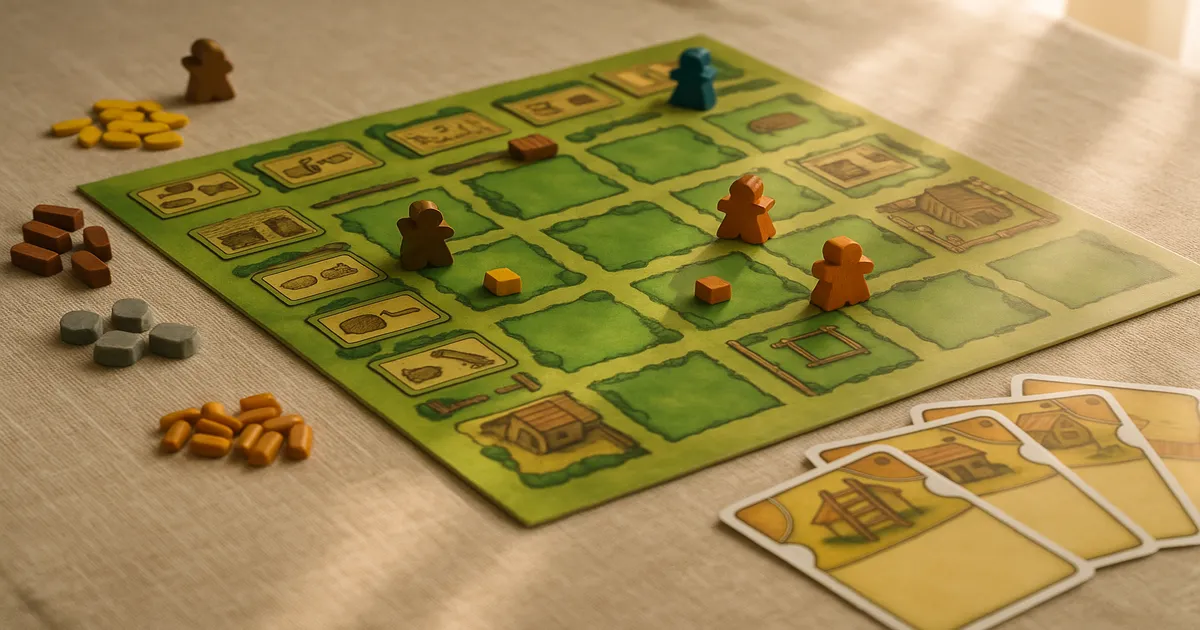
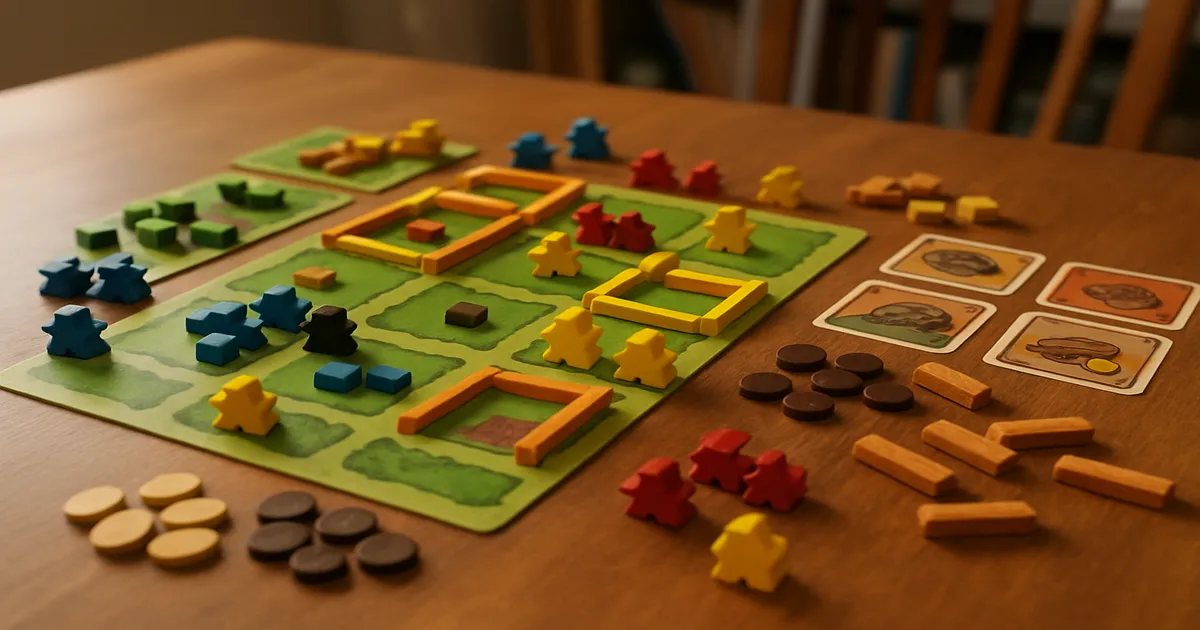
The animal meeples are genuinely charming — sheep, pig, and cow shapes are distinct enough that you never mix them up, and there’s something satisfying about a pasture full of little wooden pigs. The art is warm and pastoral, earthy browns and greens that feel inviting rather than sterile. By round 10, with everyone’s farm boards loaded up with wooden pieces, the table looks great. (Agricola Family Edition Lookout Games)
One honest criticism: the farm boards are thin and slide around. Functional, but a neoprene mat or even a damp cloth underneath helps. Small gripe for an otherwise solid production.
Compare that to the original Agricola, which ships with 169 occupation cards, 144 minor improvement cards, and enough text that setup alone takes 10–15 minutes. The Family Edition sets up in about 5 minutes. For family game nights, that difference matters more than people expect.
Game Setup
Place the main board in the center of the table. Sort the 13 round cards into their stage groups and stack them face-down in order — this controls which new action spaces appear as the game progresses. Place accumulating resource tokens on the appropriate board spaces.
Each player takes a farm board, which starts with a wooden house of two rooms and two family member pawns. Those two pawns are your workers for the first several rounds. Distribute starting food according to the rulebook (typically 2–3 food depending on player count and turn order). Later players get a small food bonus to compensate for going later — a clean little fairness mechanism.
How a Round Works
Reveal a New Action Card
Flip the top round card. This adds a new action space to the board, gradually expanding your options. Early rounds feel tight; by round 10 there’s a lot more to do and never quite enough workers to do it.
The Work Phase
Starting with the first player, each player places one worker on any available action space and immediately takes that action. Then the next player goes. You alternate one worker at a time until everyone has placed all their workers. Most spaces hold only one worker. That’s the whole tension of the game.
Return Home
Once all workers are placed, everyone retrieves their family members. Next round starts.
Harvest Phases
Harvests happen after rounds 4, 7, 9, 11, 12, and 13. Three things happen in order:
- Fields produce — grain and vegetable tokens yield from planted fields
- Animals breed — if you have 2+ of the same animal type and spare pasture capacity, you gain one offspring
- Feed your family — pay 2 food per family member, or lose points for any shortfall
Notice how harvests cluster at the end. Rounds 11, 12, and 13 each trigger one, so your food situation gets stressful fast in the final stretch. Plan ahead or suffer.
Key Action Spaces
Resource gathering: The Forest, Clay Pit, Reed Bank, and Quarry give wood, clay, reed, and stone respectively. Reed is the most contested — it’s required for room building and every renovation, so it disappears fast.
Food and farming: Fishing and Traveling Players give food directly. Plow Field adds a field tile to your board; Sow plants grain or vegetables into those fields. Note that Sow is a two-step process — you need grain or vegetable tokens in your personal supply before you can sow. New players constantly try to plant straight from the bank and get confused.
Building and expansion:
- Build Fences — creates pastures on your farm board to hold animals
- Build Stables — increases pasture animal capacity
- Renovate — upgrades your house from wood → clay → stone (always requires reed plus clay or stone)
- Family Growth — adds a new family member, but only if you have a pre-built empty room already waiting
The accumulation mechanic: When nobody claims a resource space, the tokens don’t disappear — they stack up. A forest space untouched for three rounds might have 6 wood sitting on it. Do you grab 2 wood now, or wait and take 6 later? The catch is your opponents are watching the same pile grow. Learning when to pounce is one of the more satisfying skills in the game.
Scoring in Agricola Family Edition
After the final harvest, score points for:
- Farmhouse rooms — more rooms score more; stone rooms score the most
- Family members — each worker scores points
- Grain and vegetables — both in fields and in storage
- Animals — sheep, wild boar, and cattle each score separately
- Fenced pastures and stables
- Plowed fields
One of the best simplifications in the Family Edition: no negative penalties for empty categories. In the original Agricola, having zero sheep costs you a point. Zero vegetables costs a point. Those penalties pile up and create real anxiety. Here, empty categories just score zero. It keeps the game from feeling punishing and lets new players focus on building rather than damage control.
Games are still close, though. Most finishes are decided by 3–8 points, so every category genuinely matters. A winning farm typically has a renovated house (clay or stone) with 4–5 rooms, 3–4 family members, animals across at least two types, several plowed fields with crops, and a couple of fenced pastures. The game rewards breadth — maxing one category while ignoring others rarely wins.
Common Mistakes New Players Make
- Forgetting accumulation — resources pile up on unclaimed spaces. This isn’t a variant; it’s how the game works, and ignoring it warps your whole strategy.
- Miscounting harvest food — it’s 2 food per family member, every harvest. With 4 family members, that’s 8 food. Do the math before the round, not during.
- Skipping the room before Family Growth — you cannot grow your family without an empty room already built. Build first, then grow.
- Taking animals with nowhere to put them — animals must go in fenced pastures (or one as a house pet). No space, no animals.
- Forgetting reed for renovation — clay alone won’t upgrade your house. You always need reed too.
- Playing the whole game with 2 workers — this is probably the single biggest mistake new players make. More workers means more actions, and the gap compounds over 13 rounds. Get to 3 workers by round 5–6.
Strategy Tips
Early game (rounds 1–4): Get a room built in rounds 1–2 if you plan to grow your family — and you should. Secure reed early because it’ll be gone constantly. Before the round 4 harvest, have a food plan: fishing is reliable, a planted grain field is better long-term. Plow at least one field so it can produce across multiple harvests.
Mid game (rounds 5–9): Grow to 3+ workers by round 7. Start fencing pastures — the animal breeding engine takes a few rounds to pay off, so earlier is better. Watch what your opponents are building. If everyone’s racing to stone, you might score more by dominating animals and fields instead.
Late game (rounds 10–13): Count food obsessively. Three harvests in three rounds will drain your supply fast. If you’re one renovation away from stone, it’s usually worth the resource push — stone rooms score significantly more. Fill any empty pasture space with animals to trigger breeding before the final harvest.
General principles: Reed is the most valuable resource in the game, full stop. More workers almost always wins. Blocking is real but shouldn’t be your primary goal — focus on your own farm first. And look at the scoring categories before you start playing, not after round 10.
How to Play Agricola Family Edition vs. the Original Agricola
| Feature | Family Edition | Original Agricola |
|---|---|---|
| BGG Weight | ~1.8 / 5 | ~3.64 / 5 |
| Player Count | 1–4 | 1–5 |
| Play Time | 45–75 min | 90–150 min |
| Occupation Cards | None | 169 |
| Minor Improvement Cards | None | 144 |
| Food Penalty | Moderate | Harsh |
| Scoring Penalties | None for empty categories | Yes |
| Recommended Age | 8+ | 12+ |
| Best For | Families, gateway gamers | Experienced hobbyists |
If you’re buying for a family, a mixed-experience game group, or someone new to euros — get the Family Edition. It teaches the genre’s core ideas cleanly and plays in under 90 minutes. If you’re already comfortable with heavier games and want the full depth, go straight to the Revised Edition, which cleaned up the original’s rules considerably.
Once the Family Edition feels comfortable, the original Agricola is the obvious next step. Caverna: Cave vs. Cave is a tight 2-player Rosenberg option if you want something focused. A Feast for Odin is the deep end of the pool — enormous, complex, and deeply satisfying when you’re ready for it.
Similar Games Worth Trying
- Stone Age — dice-based worker placement with a similar civilization-building feel; very accessible and a great first euro
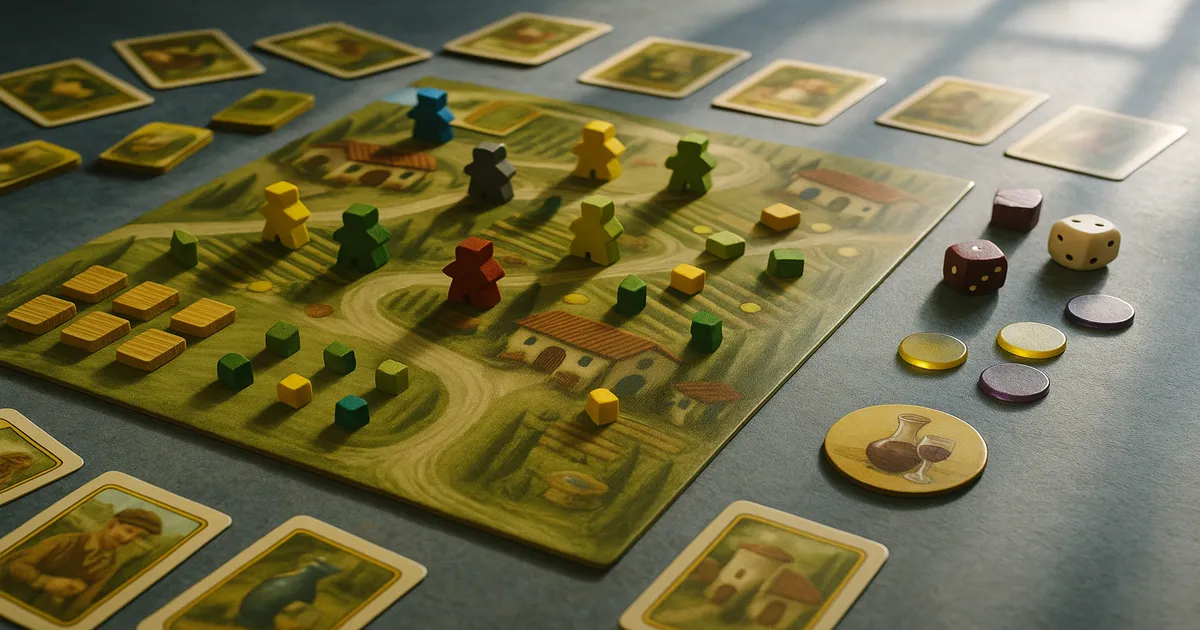
- Viticulture Essential Edition — wine-making theme, slightly heavier, excellent production, and one of the most beloved gateway euros around
- Wingspan — engine-building with birds; similar weight and audience, and the production quality is exceptional
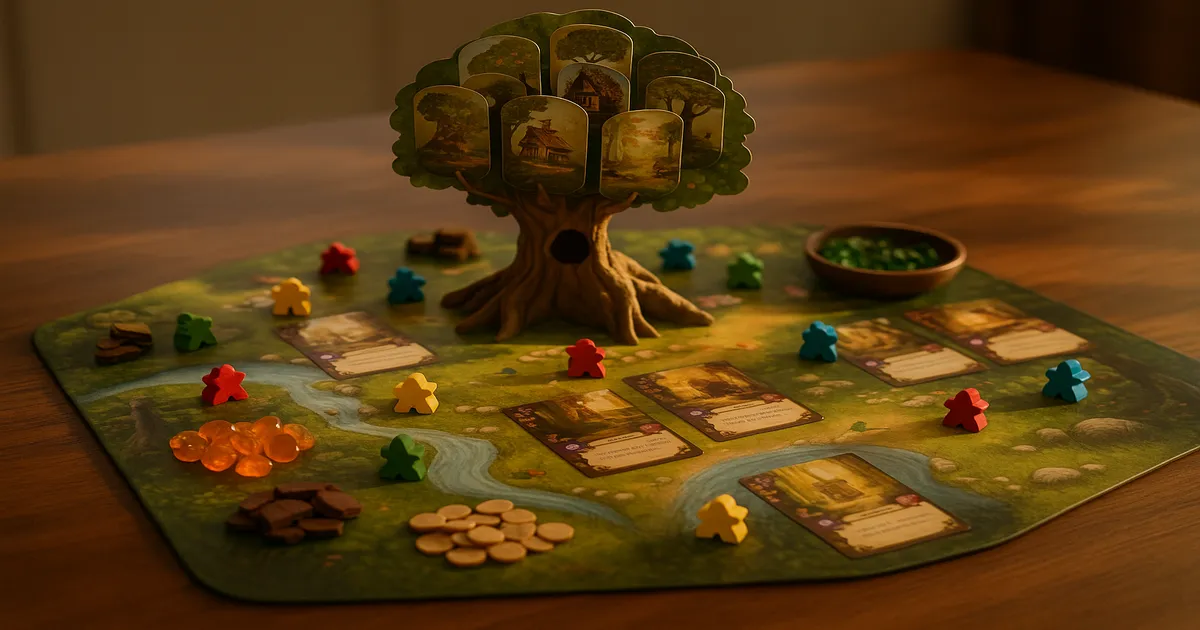
- Everdell — worker placement plus card engine building; beautiful components and a fantasy woodland theme
Frequently Asked Questions
How is Agricola Family Edition different from the original Agricola?
The Family Edition removes all occupation and minor improvement cards, which eliminates most of the original’s complexity and setup time. It also drops negative scoring penalties for empty categories and softens the food penalty system. The result plays in under 90 minutes and works for players as young as 8. The original is better suited to experienced hobbyists.
How many rounds are in Agricola Family Edition?
13 rounds total. Harvest phases occur after rounds 4, 7, 9, 11, 12, and 13 — so the final three rounds each trigger a harvest, which is where food management gets genuinely stressful.
Can you play Agricola Family Edition solo?
Yes. The box includes a dedicated solo board and solitaire rules. You’re playing against a target score rather than other players. It’s a solid puzzle and a good way to learn the game before teaching others.
How do you feed your family in Agricola Family Edition?
At each harvest, pay 2 food tokens per family member. Food comes from fishing, the Traveling Players action space, harvested grain and vegetables, and animal slaughter (though most players prefer to keep animals for breeding and scoring). If you can’t pay the full amount, you lose points — so always keep a buffer.
Is Agricola Family Edition good for beginners?
It’s one of the best gateway euros available. The farming theme makes the actions intuitive, the rules fit on a few pages, and the game teaches core worker placement concepts — scarcity, blocking, accumulation — without overwhelming new players. Most groups pick it up within the first round.