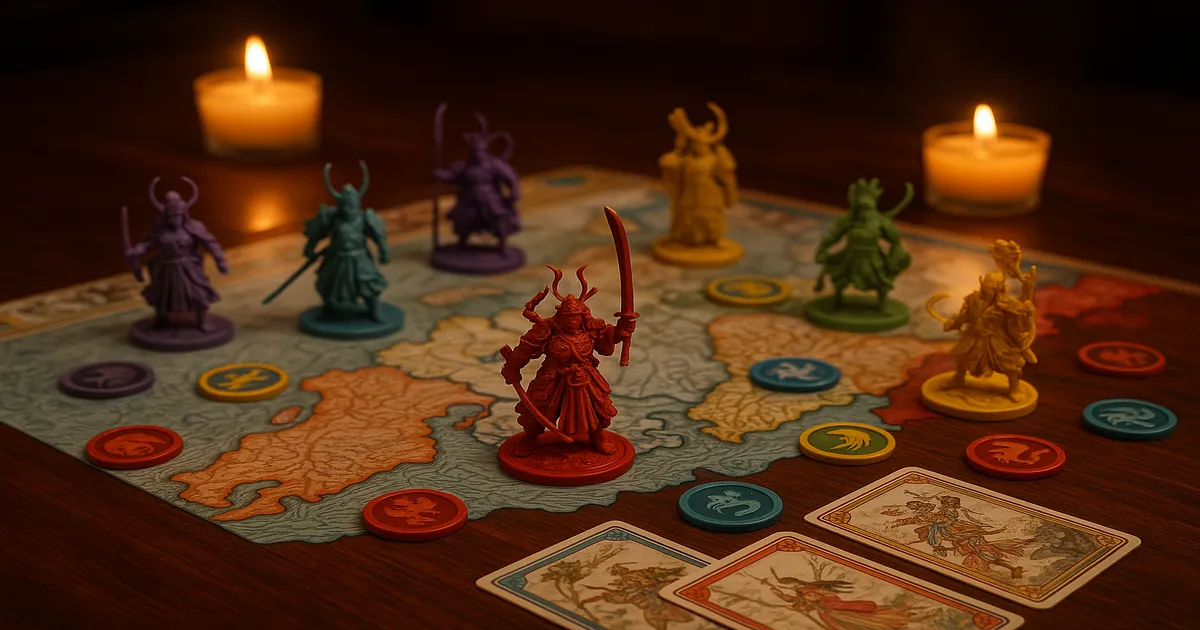
Quick Answer: Rising Sun is a negotiation-driven area-control game for 3–5 players where you guide a Japanese clan through three seasonal rounds — forming alliances, issuing Political Mandates, and fighting battles resolved through secret coin bidding rather than dice. The player with the most honor (victory points) at the end of Autumn wins. What makes it special is the diplomacy: alliances are real, betrayal is legal, and the table talk is half the game.
If you want to know how to play Rising Sun, here’s the good news: the core loop is more approachable than the box’s imposing miniature count suggests. Designer Eric M. Lang (also behind Blood Rage) built the game around a clever mandate system and a social layer that rewards reading people as much as reading the board. CMON published it in 2018 following a Kickstarter campaign that raised over $4 million. It plays 3–5, runs 90–120 minutes, and sits at a BGG weight of around 3.0/5.
Components and Setup
What’s in the Box
The retail edition is packed. Here’s what you’re working with:
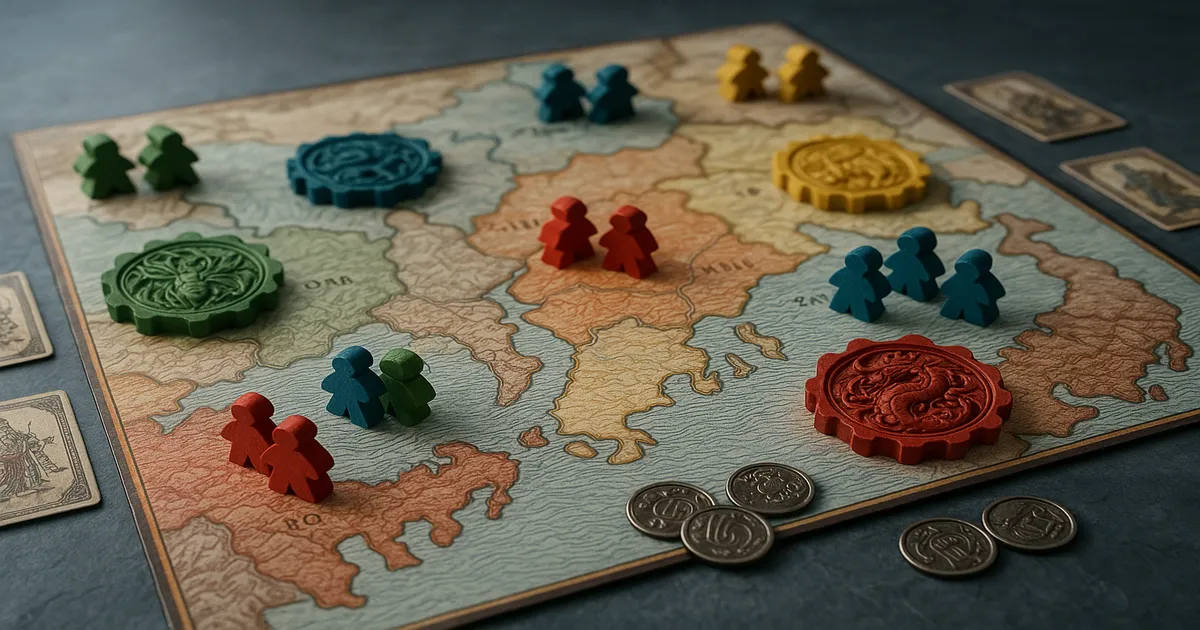
- 1 large game board depicting Japan’s provinces
- 5 clan screens (player dashboards that hide your resources)
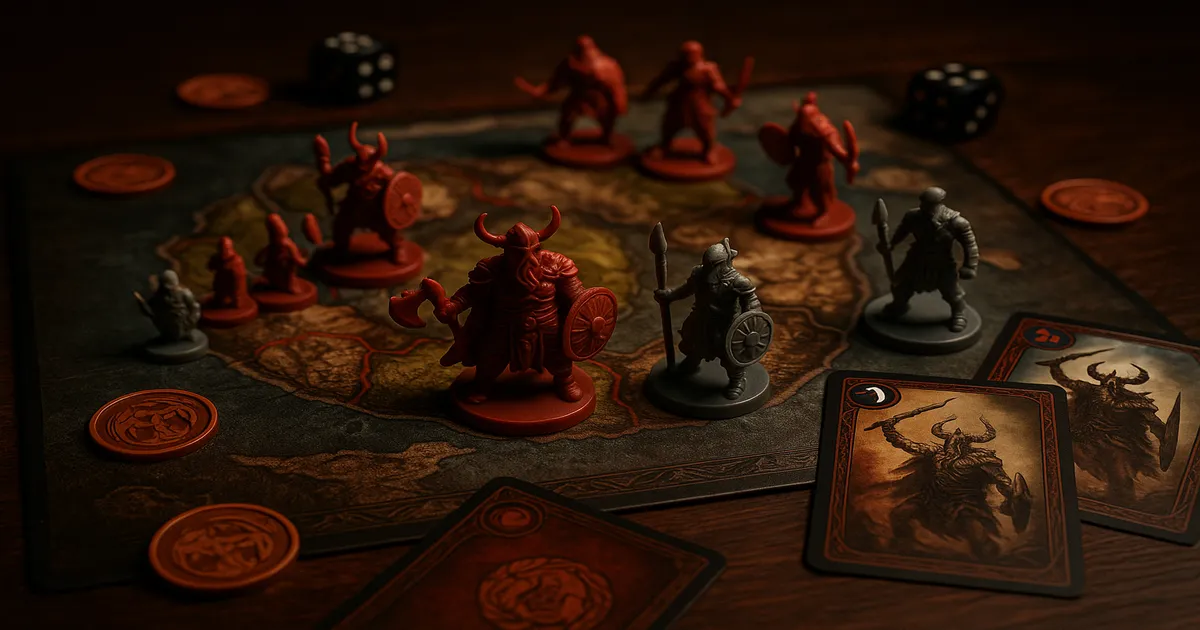
- Clan miniatures for each faction: Daimyo, Shinto, Bushi, and Stronghold pieces
- Monster miniatures (Oni, Kirin, Tengu, Dragon, and others)
- Political Mandate cards and Season cards
- Kami tiles (gods that grant seasonal bonuses)
- War advantage tiles
- Ronin tokens, coin tokens, honor markers, and province control markers
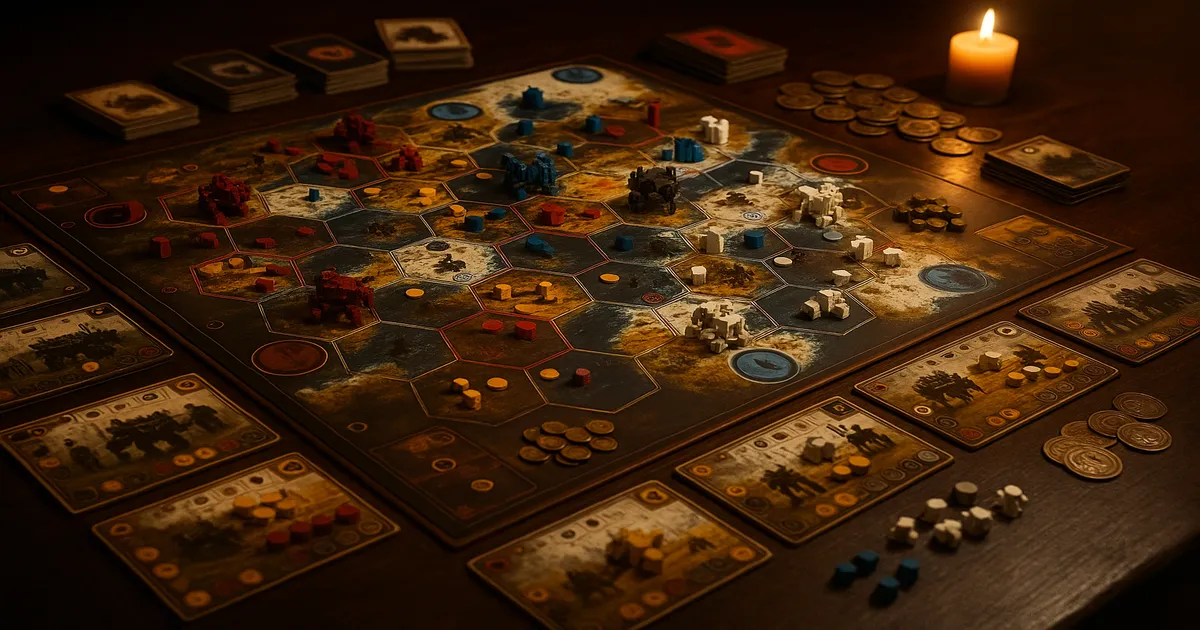
CMON makes some of the best plastic miniatures in the hobby, and Rising Sun is one of their crown jewels. The clan figures are distinct and characterful; the monster sculpts are genuinely impressive — the kind of thing that makes people stop mid-walk and ask what you’re playing. The art direction leans into traditional Japanese woodblock print aesthetics, with deep reds, golds, and blacks that give the table a striking visual presence.
If you picked up the Kickstarter edition, you got extra clans, additional monsters, and the Kami Unbound content. The retail box is complete and fully playable — don’t let the Kickstarter exclusives make you feel like you’re missing something essential.
Setting Up for Your First Game
- Lay out the board and place province tokens in their starting positions.
- Each player picks a clan, takes their screen, figures, and starting coins.
- Shuffle and place the Kami tiles around the board’s edges.
- Separate the Political Mandate cards by season and arrange them in order.
- Place honor markers at the starting position on the honor track.
- Set out the war advantage tiles where everyone can reach them.
- Read the first season’s scoring objectives aloud. This step is easy to skip and it will cost you.
How to Play Rising Sun: Turn Structure
The game runs three seasonal rounds — Spring, Summer, and Autumn. Each season follows the same four-phase structure.
Phase 1 — Tea Ceremony (Alliance Phase)
Every player forms an alliance with one other player at the start of each season. This isn’t just flavor. Allies share secondary benefits when Political Mandates are activated — if your ally takes a Recruit action, you also get to place a figure. That’s a genuine advantage, not a consolation prize.
The catch: alliances reset every season and carry zero binding protection. You can’t enforce one mechanically. The only thing holding it together is mutual interest and trust, which in a game with a Betray mandate is saying quite a lot.
Phase 2 — Political Phase and Mandate Cards
This is the engine of the game. Political Mandate cards are revealed one at a time. The active player — whoever currently controls the mandate — chooses one of the two actions on the card. Every other player takes the other action.
The key mandate types:
- Recruit — place new clan figures on the board
- Marshal — move figures between provinces
- Train — purchase upgrades (Virtue tokens)
- Harvest — collect coins from your controlled provinces
- Hire Ronin — buy Ronin tokens that each add +1 strength in battle
- Betray — remove one of your ally’s figures from any province
Yes, Betray specifically targets your ally. That’s intentional. More on this below.
Phase 3 — War Phase and Battle Resolution
After the Political Phase, War tokens flip on contested provinces and battles begin. No dice — ever. Instead, players secretly and simultaneously allocate coins across a menu of war advantages: Seppuku, Hostage, Hire Ronin, Imperial Poets, and others. Everyone reveals at once, resolves the advantages, then calculates force: number of figures plus Ronin tokens plus any monster bonuses. Highest force wins the province.
Losing isn’t necessarily bad, though. Seppuku converts your lost figures into honor points. Imperial Poets reward the loser directly. I’ve won games where I lost more battles than I won, because I was farming honor from defeats while my opponents burned coins fighting expensive wars over provinces neither of them needed.
Season End Scoring
After all battles resolve, score the season’s objectives. Some figures return to clan pools, alliances dissolve, and the next season begins. Autumn’s end-of-season scoring is the final scoring of the game — there’s no separate end-game tally.
How to Win: The Honor Track and Victory Points
Ways to Earn Honor
- Controlling provinces at season end
- Winning battles
- Completing seasonal scoring objectives
- Clan-specific abilities and Kami god bonuses
- Hostage-taking (earn honor for capturing enemy figures)
- Seppuku and Imperial Poets (earn honor from losing battles)
Why the Honor Track Position Matters
The honor track isn’t just a scoreboard — it breaks ties in province control scoring and interacts with several clan abilities. In close games, the player higher on the track often wins on tiebreakers alone. New players almost universally ignore this, and it bites them every time.
Read the Seasonal Objectives Early
Each season scores something specific: most figures in a region, most Ronin, most coins held, and so on. Read these at the start of the season and build toward them. Trying to react at the end is almost always too late.
Alliances, Betrayal, and Diplomacy
Alliances share Political Mandate secondary benefits — that’s the mechanical glue. Beyond that, they’re social contracts. You can promise anything: coins, safe passage, not contesting a province. None of it is enforceable. The game gives you every incentive to negotiate honestly and then every incentive to break that agreement.
The Betray mandate lets you remove one of your current ally’s figures from any province. New players are often genuinely shocked the first time it happens to them. Experienced players build their entire mid-season strategy around whether and when to use it. Timing is everything — Betray is most powerful right before the War Phase, when pulling a figure from a contested province swings the battle without costing you a single coin in bidding.
Form alliances with players who cover your weaknesses. If your clan struggles to generate coins, ally with whoever is running a Harvest-heavy strategy. Break alliances when the math changes — not out of spite, and not out of loyalty. Betraying someone who trusted you is only good strategy if it actually wins you points.
War Advantages and Battle Strategy
Key War Advantages Explained
- Seppuku — each of your figures lost in battle earns you honor
- Hostage — for each enemy figure you capture, earn honor
- Hire Ronin — add extra Ronin tokens to your force for this battle
- Imperial Poets — earn honor simply for losing the battle
Using Ronin and Monsters Effectively
Ronin tokens are flexible force you accumulate during the Political Phase and deploy in any battle. New players underrate them; intermediate players overvalue them. The key is buying Ronin when you know a specific battle is coming — not speculatively.
Monsters are force multipliers with special abilities, but their best function is often deterrence. Park a strong monster in a province and opponents will calculate twice before contesting it, which can save you the cost of a battle entirely.
Spread your war advantage bids. Going all-in on one advantage is predictable and easy to counter. Ronin plus one or two other advantages is usually the stronger play.
Common Mistakes New Players Make
Spending all your coins in the Political Phase. Coins fuel both mandate actions and battle bidding. Show up to the War Phase broke and you’ve already lost the battles before they start. Keep at least 3–4 coins in reserve heading into war, even if it means skipping a Harvest or Hire Ronin opportunity.
Treating your alliance like a friendship. It’s a seasonal business arrangement. Re-evaluate every round.
Forgetting alliance shared benefits. When your ally activates a mandate, you get the secondary benefit. This is easy to miss and it adds up fast.
Ignoring the losing-side war advantages. Seppuku and Imperial Poets exist for a reason. A well-timed Seppuku can turn a lost battle into a net honor gain.
Miscounting force. It’s the number of figures, not types. Count every Bushi individually.
Rising Sun Strategy Tips
Read the seasonal objectives the moment they’re revealed. Everything else — where you place figures, which mandates you care about, whether you pick a fight — should flow from those objectives. Playing on instinct while ignoring the scoring conditions is the most common way experienced players beat new ones.
Each clan has a unique ability that fundamentally changes optimal play. The Lotus clan plays completely differently from the Turtle clan. Before you try to play “generically well,” learn what your clan does and build around it. Generic play against someone who’s exploiting their clan ability will lose most of the time.
How Rising Sun Compares to Similar Games
Rising Sun vs. Blood Rage — Same designer, same publisher, similar production quality. Blood Rage runs on card drafting and rewards tight card synergies; Rising Sun is about mandate selection and table diplomacy. Blood Rage is faster to teach. Rising Sun has more social complexity. If your group is newer to the hobby, start with Blood Rage. If they’re comfortable with negotiation games, go straight to Rising Sun.
Rising Sun vs. Scythe — Scythe is a euro engine-builder wearing an area-influence costume. Direct combat is rare and costly; the tension is economic. Rising Sun is the opposite — conflict is central and diplomacy is messy. If your group hates direct confrontation, Scythe is the better fit. If they want to negotiate, scheme, and occasionally stab each other in the back, Rising Sun wins.
Rising Sun vs. Kemet — Kemet is faster, tighter, and more streamlined. It scratches the mythological area-control itch without the diplomatic layer. If you want a 75-minute game with Egyptian gods and no alliance table talk, Kemet is excellent. Rising Sun is the choice when you want the full social experience.
Frequently Asked Questions About How to Play Rising Sun
Can you betray an ally in Rising Sun?
Yes — and it’s not a rules violation, it’s a core mechanic. The Betray Political Mandate specifically targets your current ally’s figures. Alliances offer no binding protection; they’re social agreements backed only by mutual interest. Expect it to happen and plan accordingly.
How long does a game of Rising Sun take?
Most games run 90–120 minutes with players who know the rules. With new players, budget closer to 2.5 hours for the first session, including rules explanation. Five-player games consistently run longer than the box estimate.
Is Rising Sun good with 3 players?
It’s playable at 3, but the diplomacy system — which is the heart of the game — works best with more potential alliances and more political pressure. Four is the sweet spot. Five is the most chaotic fun. Three feels a little thin.
How hard is Rising Sun to learn?
Moderate. Budget 30–45 minutes for a first rules explanation. The individual mechanics aren’t complicated, but the interlocking systems — alliance benefits, mandate resolution, war advantage bidding — take a full game to internalize. Most groups feel comfortable by the end of the first season and confident by their second full game.
Do you need the expansions to enjoy Rising Sun?
Not at all. The base game is complete and fully satisfying on its own. The expansions add more clans, monsters, and content — worth considering after you’ve played a few times and want more variety. Don’t buy them before you’ve played the base game.