Quick Answer: Blood Rage is a 2–4 player area-control and card-drafting game set during Norse Ragnarök, designed by Eric M. Lang. Players control Viking clans competing for glory — and the central twist is that even losing battles and having your figures destroyed can score you points if you’ve built your strategy right. Learn the draft, and you’ll win; ignore it, and you won’t.
Blood Rage in a Nutshell
Here’s the most important thing to understand before you touch a single miniature: Blood Rage is not really a war game. It looks like one — enormous plastic monsters, Viking warriors clashing across a Norse map, a mechanic literally called Ragnarök. But the players who win treat it as a glory-scoring engine-builder where combat is just one of several tools.
That reframing changes everything about how you approach it.
Key Stats at a Glance
| Detail | Info |
|---|---|
| Designer | Eric M. Lang |
| Publisher | CMON |
| Players | 2–4 (best at 3–4) |
| Play Time | 60–90 minutes |
| Age Recommendation | 14+ |
| BGG Weight | 2.88 / 5 |
What’s in the Box
The retail box is packed. Here’s what you get:
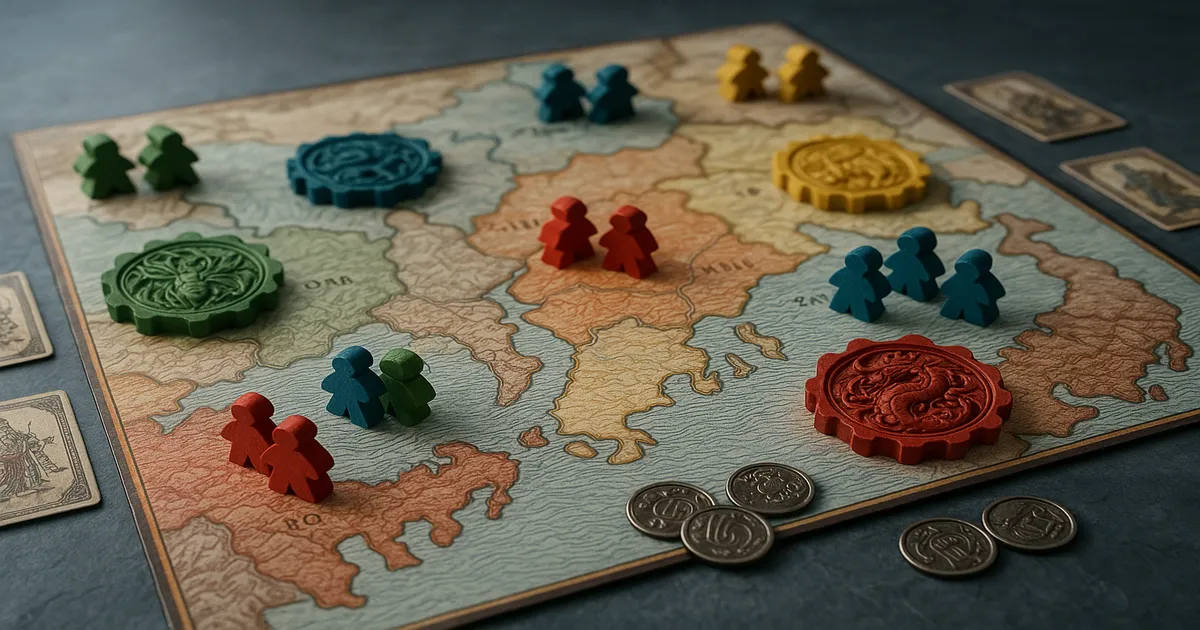
- 1 game board (the Norse provinces surrounding Yggdrasil)
- 4 clan sheets (Bear, Raven, Serpent, Wolf)
- 4 sets of clan figures — warriors, ships, and a leader per clan
- 8 monster figures (including Fenrir and Jörmungandr)
- 4 clan dashboards
- Three Age card decks plus clan-specific upgrade cards
- Ragnarök tokens, glory tokens, pillage tokens
- Rage, Axes, and STR tracking tokens
Miniature Quality and Table Presence
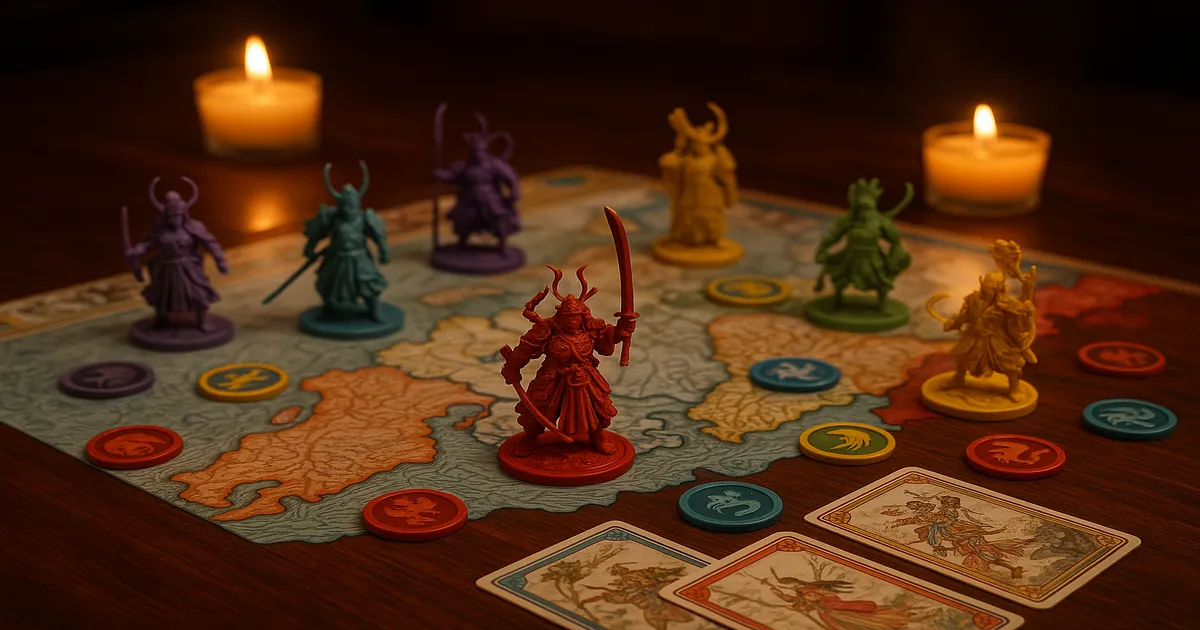
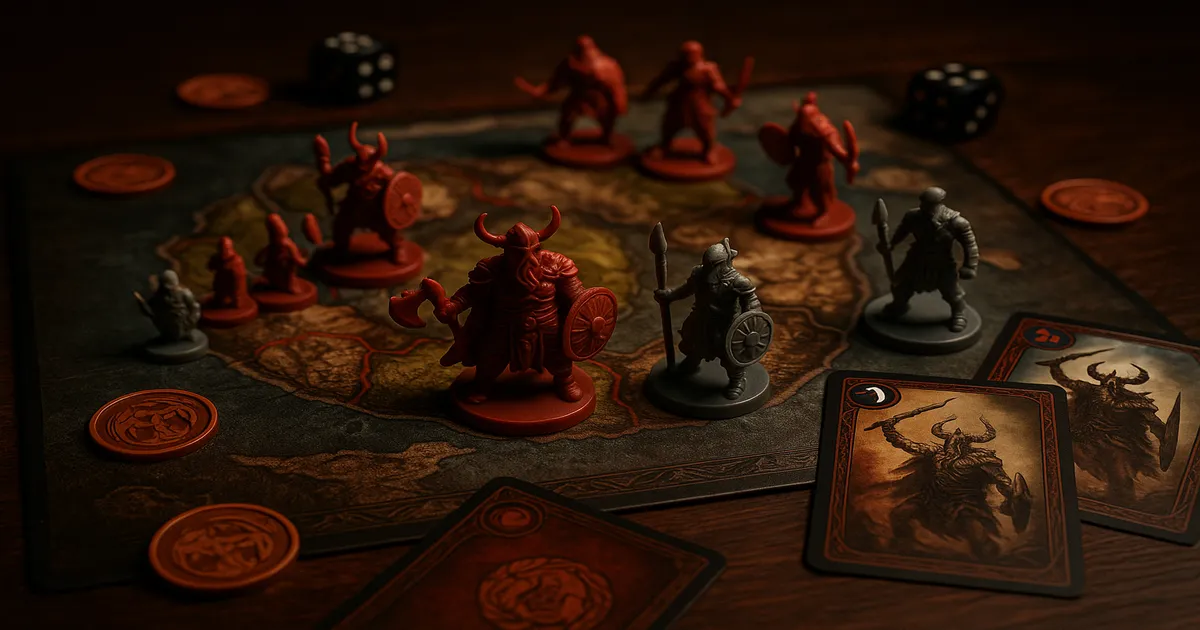
The miniatures alone justify half the price tag. The monster figures are showstoppers — Fenrir is enormous, Jörmungandr looks like it belongs in a museum display. Adrian Smith’s artwork throughout is dark and dramatic in exactly the right way. When this hits the table, people stop and stare. (CMON Blood Rage Retail Edition)
Retail vs. Mythic Edition
The retail edition is complete and fully playable. The Kickstarter Mythic Edition added exclusive monster figures and even more spectacular production values. If you find a Mythic Edition at a reasonable price, grab it — but don’t hold out for it. The core game is identical either way.
How a Full Game of Blood Rage Works
The Three Ages of Ragnarök
A full game runs through three Ages, each following the same six-phase sequence. The board shrinks as provinces get destroyed, the cards get more powerful, and the stakes escalate. After the third Age, you tally glory and crown a winner.
Phase 1: Gods’ Gifts — The Card Draft
Each player gets a hand of cards (8 cards in a 3-player game, 7 in a 4-player game) and the group runs a classic booster draft — pick one, pass the rest. There are four card types:
- Clan Upgrades — permanent boosts to your STR, Rage, or Axes stats
- Quests — secret objectives worth glory if completed
- Spells — one-time powerful effects
- Monsters — legendary creatures you can recruit to fight for you
This is the strategic core of the game. The draft is where Blood Rage is won and lost — everything else is execution.
Phase 2: Action Phase — Spending Rage
Players take turns spending Rage (your action points) on five possible actions:
- Invade — Place a figure from your reserve into any province or Yggdrasil
- March — Move all figures from one province to an adjacent one
- Upgrade — Play a Clan Upgrade card to permanently boost your clan
- Quest — Play a Quest card face-down to score later
- Pillage — Attempt to pillage a province, triggering battles if opponents are present
The phase ends when everyone has spent all their Rage or passed. Unused Rage is gone — there’s no banking it.
Phases 3–6: Wrap-Up
After the action phase, leftover hand cards are discarded (every card you don’t play is a wasted pick), completed quests are scored, one province gets wiped off the map by Ragnarök, and then all figures that died return to their owners’ reserves. Rage resets to your current Rage stat. Repeat for the next Age.
How to Win: Scoring Glory in Blood Rage
Glory comes from winning pillage battles, completing quests, playing certain upgrade cards, having figures destroyed in Ragnarök (with the right setup), and controlling Yggdrasil at the end of each Age.
Players who spend all their Rage picking fights will get beaten by players who drafted a coherent scoring engine. A well-built quest strategy can score 20+ glory in a single Age. Certain upgrade cards make dying in Ragnarök worth more than winning a battle. The draft is where you assemble your machine — the board is where you run it.
Don’t ignore Yggdrasil entirely, either. The center village scores glory at the end of each Age for whoever controls it. Even holding it once is meaningful.
How Battles Work in Blood Rage
Battles happen when a player takes the Pillage action in a province where opponent figures are present. You don’t fight just because someone moves into your space — the attacker has to actively choose to pillage.
Your battle strength is your clan’s base STR stat multiplied by the number of figures you have in the province, plus any monster STR contributions and card bonuses. Upgrades that boost your STR are multiplicative, which is why investing in them early pays off so well.
Both players secretly select a battle card from their hand, place it face-down, then reveal simultaneously. Real bluffing tension here — you might have a powerful combat card, but so might your opponent. Some cards reward losing on purpose, which makes the decision genuinely interesting. Losers send figures to Valhalla, where they’ll return at the end of the Age. Death is a temporary setback, not elimination.
Blood Rage Strategy: How to Play Well
Draft with a Plan
Decide on a strategy during Age 1 and draft toward it. “I’m building for Ragnarök deaths” and “I’m going heavy on quests” are both legitimate plans — but you need a plan. Grabbing whatever looks powerful in isolation leaves you with a hand full of cards that don’t support each other.
Denial Drafting
Sometimes the right pick isn’t the card you want — it’s the card your opponent desperately needs. If someone’s clearly building a combat-heavy STR strategy and a key upgrade comes around, take it even if you can’t use it. Passing it to them is often worse than the opportunity cost of not playing it yourself.
Clan Rundown
- Wolf Clan — aggressive, rewards direct combat; great for beginners
- Bear Clan — durable, strong in battles, hard to dislodge
- Raven Clan — flexible, strong in questing
- Serpent Clan — unique abilities around Yggdrasil control; trickier to pilot
Study your clan’s upgrade path before the game starts. Each clan’s ceiling depends entirely on which upgrades you draft.
A Few More Things Worth Knowing
Never waste Rage. If you end the action phase with unspent points, that’s a planning failure. Upgrade your Rage stat early if you’re consistently running out.
Quests are the most underrated path to glory. New players almost universally ignore them. Don’t. Draft them, protect them, build your board position around completing them.
Check the Ragnarök track at the start of each Age. If a province is getting destroyed, decide deliberately whether you want figures there — not because you forgot, but because you’re scoring glory from the destruction.
And don’t underestimate monsters as a deterrent. A monster sitting in a province with your warriors forces opponents to factor in that extra STR before picking a fight. Sometimes the best use of a monster is keeping opponents out without ever actually fighting.
Common Mistakes New Players Make
Treating the draft as an afterthought. The draft is the game. If you’re not thinking carefully about every pick, you’re already behind.
Hoarding Rage. Unused Rage at the end of the Action Phase is gone. Spend it all, every round.
Panicking when figures die. Death is temporary. Some of your best turns will involve deliberately sending figures to Valhalla.
Skipping clan upgrades. Spending all your Rage on invasions and ignoring upgrades is a trap. STR upgrades are multiplicative — boosting early makes every battle for the rest of the game more powerful.
Undervaluing quests. Draft them. Complete them. Win.
Expansions Worth Knowing About
5th Player Expansion (Dragon Clan) adds the Dragon Clan and full five-player support. The Dragon Clan plays distinctively from the base four. Worth adding once your group has the base game down.
Gods of Asgard adds Odin and Thor as powerful figures that can be invoked during play. They add unpredictability and spectacle in equal measure.
Mystics of Midgard adds mystic units with special abilities to each clan. Smaller expansion, but it adds meaningful tactical variety.
Start with the base game regardless — expansions add complexity, and the base game is excellent on its own.
How Blood Rage Compares to Similar Games
vs. Rising Sun — Rising Sun is the spiritual successor, set in feudal Japan, with alliance and negotiation mechanics layered on top. More complex, rewards deeper planning. Play Blood Rage first.
vs. Kemet — Very similar philosophy: death isn’t bad, glory-scoring wins games, upgrades matter. Kemet is slightly lighter and faster. If your group bounces off one, try the other.
vs. Scythe — Both have exceptional production, but they’re fundamentally different games. Scythe is an economic engine-builder where combat is almost a deterrent. Blood Rage is directly confrontational. Pick based on whether your group wants economic tension or Viking mayhem.
vs. Ankh: Gods of Egypt — Eric M. Lang’s most streamlined version of this formula. Same DNA, cleaner execution, shorter play time. If Blood Rage feels like too much for your group, Ankh is worth a look.
Frequently Asked Questions About How to Play Blood Rage
How long does Blood Rage take to play?
Most games run 60–90 minutes once players know the rules. Your first game will probably take closer to two hours as everyone works through the draft and battle mechanics. A 4-player game is noticeably longer than a 2-player game.
Is Blood Rage good with 2 players?
It works, and there are specific rules adjustments for it, but it’s a weaker experience than 3 or 4. A lot of the game’s tension comes from multi-player drafting decisions and the chaos of multiple clans competing for provinces. At 2 players, the draft and positioning become more predictable. Play at 3 or 4 whenever you can.
What happens to figures when they die?
They go to Valhalla — a temporary holding area. At the end of each Age, all figures in Valhalla return to their owner’s reserve and can be deployed again. Death is not elimination; it’s a brief timeout. With the right cards, getting figures killed is a deliberate scoring strategy.
How does the card draft work?
At the start of each Age, every player receives a hand of cards. Everyone simultaneously picks one card and sets it aside, then passes the remaining cards to the next player. Repeat until all cards are drafted. It’s the same format as a Magic: The Gathering booster draft. The cards you collect become your hand for that Age’s action phase.
Which clan is best for beginners?
Wolf Clan is the most intuitive starting point — its aggressive combat focus maps well onto what new players expect the game to be. Bear Clan is also forgiving because of its durability. Steer new players away from Serpent Clan until they’re comfortable with the basics; its Yggdrasil-focused strategy requires more board awareness to execute well.