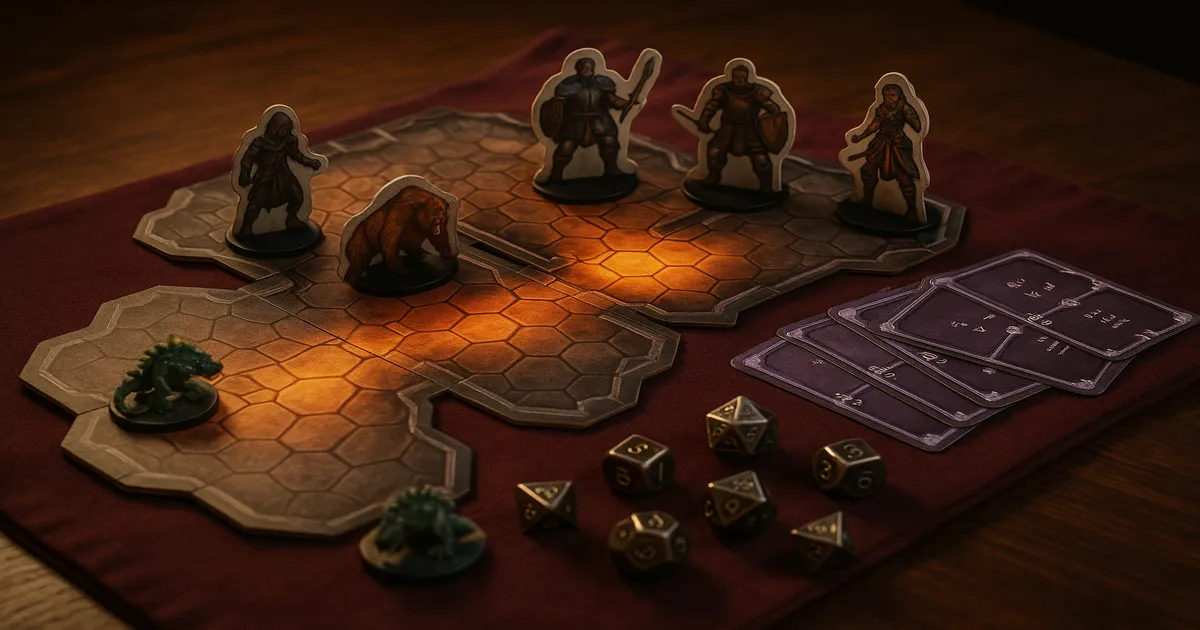
Quick Answer: Gloomhaven is a 1–4 player cooperative dungeon crawler where players secretly select two ability cards each round, using one card’s top action and the other’s bottom action to move, attack, and cast abilities. Monster behavior is handled by AI decks — no game master required. Complete scenario objectives across a branching 95-scenario legacy campaign that permanently changes based on your choices.
If you’ve been wondering how to play Gloomhaven and whether it’s worth the learning curve — it is, but go in with your eyes open. This is a BGG weight 3.9/5 game that held the #1 spot on BoardGameGeek for years, and it earned that ranking the hard way. Scenarios run 60–120 minutes, full campaigns stretch into the hundreds of hours, and the rulebook is not bedtime reading. But once the card system clicks, there’s genuinely nothing else like it in tabletop gaming.
What Is Gloomhaven?
Theme and Setting
You and your group are mercenaries working out of the grim fantasy city of Gloomhaven. No heroic prophecy, no chosen ones — you’re taking jobs, exploring ruins, and making morally questionable decisions in a world that doesn’t care whether you live or die. The tone is darker and more grounded than most dungeon crawlers, and it suits the mechanical tension perfectly.
What’s in the Box
The original edition is genuinely absurd in scope:
- 95 fully illustrated scenarios
- 17 playable character classes (7 available at the start, 10 more unlocked through play)
- 1,700+ cards across character, monster, item, and event decks
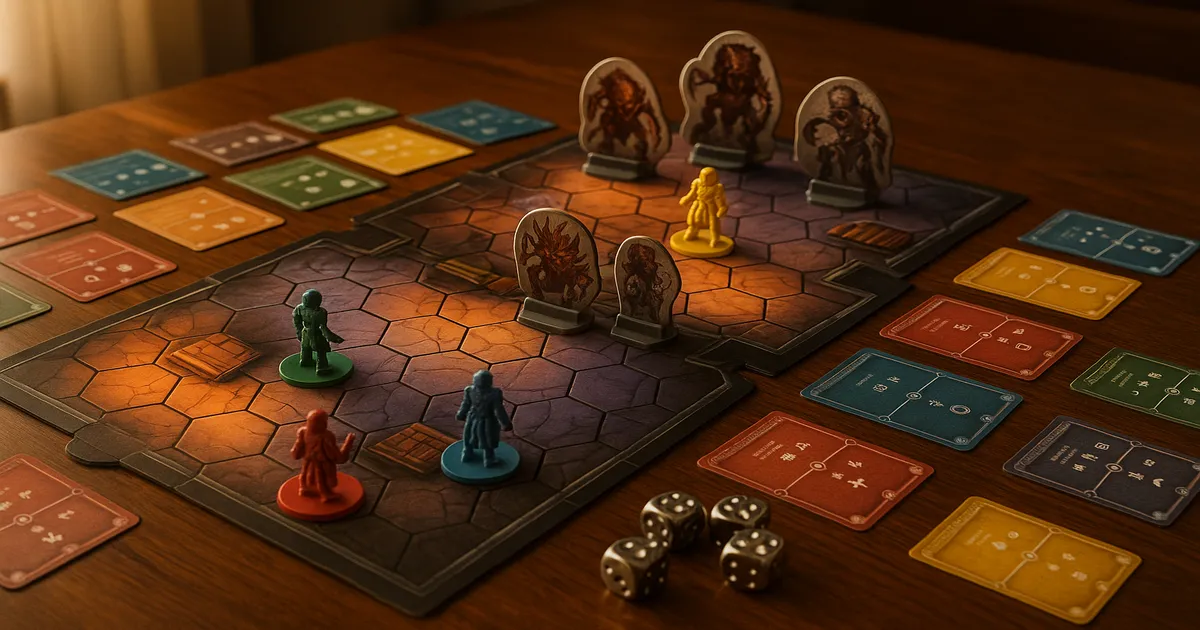
- 150+ miniatures
- Hundreds of double-sided map tiles
- A large campaign board with sticker sheets
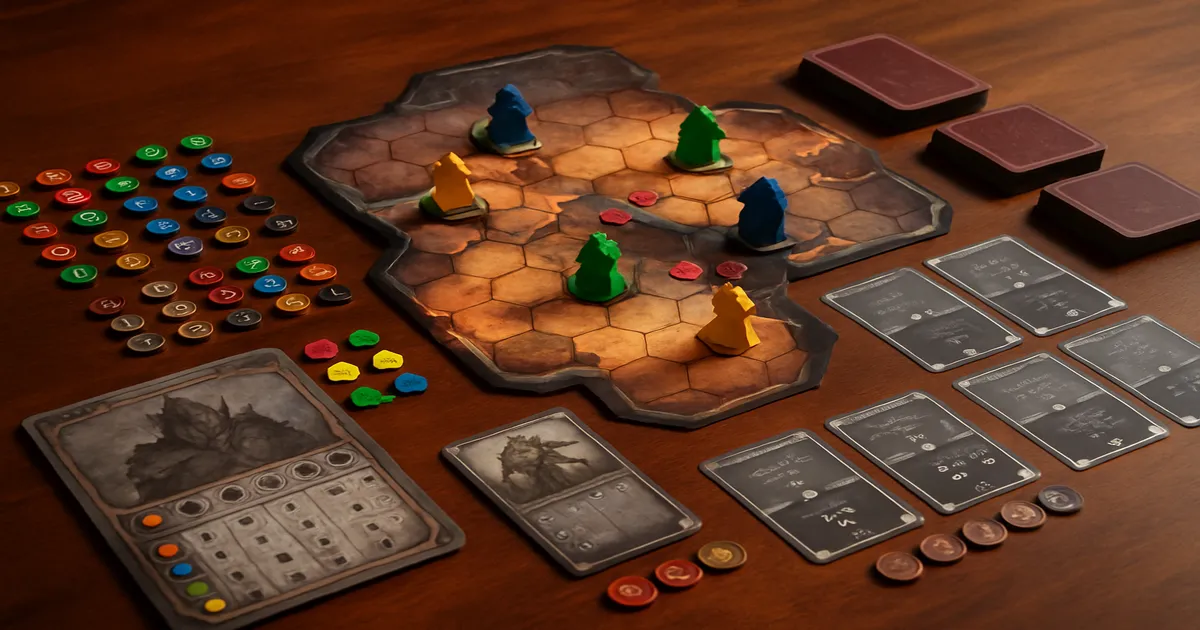
- Monster stat sleeves, condition tokens, element discs, and damage trackers
The box weighs around 22 pounds. You will need a dedicated shelf for this thing.
Component quality is solid overall. Map tiles are thick and durable. Cards hold up, though I’d sleeve them given the punishment a full campaign puts on cardstock. (Mayday Games Standard Card Game Sleeves) The miniatures are unpainted plastic — functional, and plenty of people paint them, but it’s absolutely not necessary.
The original insert, though? Notoriously terrible. It collapses, it won’t fit sleeved cards, and setup turns into a nightmare without a better solution. A third-party organizer is basically mandatory if you’re playing this long-term.
Which Edition Should You Buy?
The 2024 Second Edition tightens up component organization, clarifies several rules that tripped up the original, and refreshes some art. If you’re buying new today, it’s worth checking availability. The original is still perfectly playable — just budget extra time for setup.
Jaws of the Lion (2020) is a standalone spin-off designed as an entry point. Four classes, 25 scenarios, a built-in tutorial, and no loose map tiles — scenario maps are printed directly in the book. If you’re not sure whether Gloomhaven is for you, start there. More on this below.
How to Play Gloomhaven: The Card System
Choosing Your Two Cards
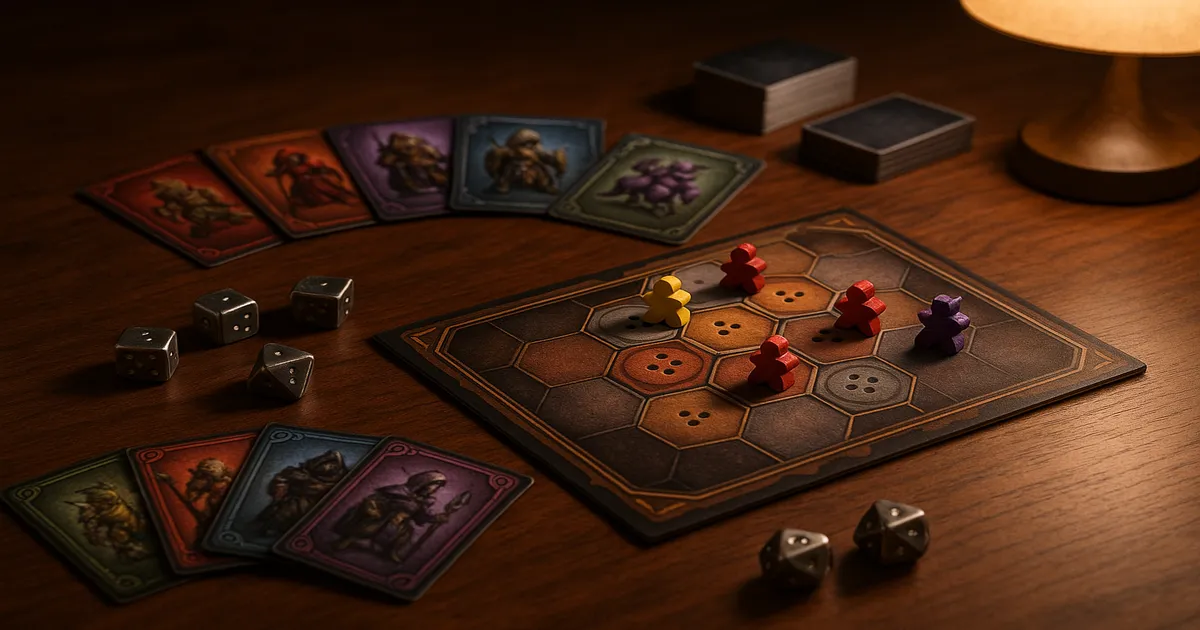
Each character class has a unique hand of roughly 10–11 ability cards. At the start of every round, all players simultaneously and secretly pick two cards. No dice, no random draws — your choices drive everything.
From those two cards, you use the top action of one and the bottom action of the other. That’s your whole turn. Movement, attacks, heals, and special abilities all live on these card halves.
Top actions are typically attacks or offensive abilities. Bottom actions lean toward movement, support, or utility — though this varies a lot by class. The interesting tension is that powerful cards often have a strong top and a strong bottom, so you’re constantly deciding which half to sacrifice.
Initiative
The initiative number printed on one of your chosen cards sets your turn order for the round. Lower numbers act earlier. You declare which card’s initiative you’re using when you reveal. This creates real strategic weight: sometimes you want to act fast to kill a monster before it swings; other times you want to act late so you can react to what the monsters do first.
Discarded vs. Lost Cards
This is one of the most important rules in the game, and it’s easy to blur early on.
- Discarded cards go to your discard pile and come back when you rest.
- Lost cards (marked with a burn icon) are flipped face-down and are gone for the rest of the scenario.
Many of the most powerful abilities require losing a card. Use them wisely.
One thing most new players miss: any card can always be used as a basic Move 2 (top) or Attack 2 (bottom), regardless of what’s printed on it. This fallback is easy to forget when you’re focused on the fancy abilities, but it matters a lot when your hand is running low.
Round Structure
Card Selection: All players choose two cards simultaneously, in secret. Discuss general strategy beforehand — you should — but don’t reveal your exact cards.
Revealing Initiative and Monster AI Cards: Everyone flips their cards. For each monster type on the board, a card is drawn from that monster’s action deck, defining what those monsters do this round. Turn order is sorted by initiative, with players and monsters interleaved.
Acting in Initiative Order: On your turn, perform your two chosen actions. Monsters act according to their AI card and the focus priority system — they move toward and attack the enemy they can reach most efficiently, not simply the nearest character. This is one of the most commonly misread rules in the game. Read the focus rules carefully.
Resting: When your hand gets low, you rest. Short rest: lose one card at random from your discard pile, recover the rest — fast, but you don’t choose what you lose. Long rest: lose one card of your choice, recover all others, heal 2 HP, but you skip your turn that round and act on initiative 99.
After all figures have acted, advance the round tracker, resolve end-of-round effects, and refresh spent cards. Some scenarios trigger events at specific round numbers, so don’t let the tracker slide.
The Campaign: Legacy Progression and Character Retirement
Gloomhaven’s campaign plays out on a large map board. Completing scenarios unlocks new ones — sometimes multiple options, sometimes with choices that lock others out. Stickers go on the board. Envelopes get opened. The world changes. It’s a proper legacy system, and it gives the campaign a sense of weight that most dungeon crawlers can’t touch.
Characters earn XP by performing specific flagged actions. Level up and you pick one new ability card from a pair — one or the other, not both. You’re building your deck over time, which means early choices have long-term consequences.
Gold tokens on the map are collected by moving onto the hex — they don’t auto-collect. At scenario end, gold converts to coins and gets spent at the Gloomhaven shop between sessions. The shop improves as city prosperity increases, so tracking that stat matters.
Every character starts with a hidden personal quest. When they fulfill it, they retire — triggering a world event, unlocking a new hidden class, and leaving your roster. Your next character starts at a level appropriate to your current prosperity, so you’re not starting from scratch. Retirement isn’t failure; it’s the intended cycle.
Common Mistakes New Players Make
Forgetting the Move 2 / Attack 2 fallback. It sounds minor until you’re low on cards and think you have no options.
Misreading monster focus. Monsters target the character they can most efficiently reach and attack — shortest path to attack range, not physical proximity.
Element timing. Elements are infused at the end of the turn they’re created. You can’t use fire you just generated until next round.
Burning loss cards too early. I’ve seen groups obliterate the first room with their best abilities and then limp through the rest of the scenario with nothing left. Save the big stuff.
Ignoring coordination. You can’t reveal your cards, but you can absolutely say “I’m going fast and hitting the north room” before you pick. Use that.
Neglecting prosperity and reputation. They compound over time. Ignore them early and you’ll feel it ten sessions in.
Strategy Tips
Treat your hand like a health bar. Every permanently lost card is one step closer to exhaustion. Plan your rest turns two or three rounds ahead, not when you’re already desperate.
Know when to rush the objective. Many scenarios don’t require killing everything. Identify the win condition early — a focused push often beats a full clear, especially when your tank can hold a doorway while the rest of the group finishes the job.
Muddle is underrated. It effectively halves monster damage output. If your class can apply it, apply it constantly.
Prune your modifier deck fast. Remove -1 and -2 cards through perks as quickly as you can. A clean modifier deck makes you dramatically more consistent. Bless cards — the ones that draw a 2x multiplier — are among the strongest effects in the game.
Starter Class Breakdown
- Brute: Frontline tank. Absorb hits, create space, let squishier allies work. Don’t overextend.
- Spellweaver: Fragile with a small hand, but her loss cards are devastating. Stay at range, manage your elements.
- Scoundrel: High damage rogue who needs adjacency bonuses. Coordinate with the Brute so you’re flanking the same targets.
- Cragheart: Versatile support/damage hybrid. Great in smaller groups. Watch your AoE — it hits allies too.
- Mindthief: High skill ceiling. Stun abilities are excellent; augment cards that modify your basic attack are the core of the strategy.
- Tinkerer: Often underestimated. Heals, traps, summons — shines in long scenarios where sustain matters more than burst.
How to Play Gloomhaven: Alternatives and Similar Games
Start with Jaws of the Lion
Honestly, if you haven’t played Gloomhaven before, start here. Jaws of the Lion has a BGG weight of around 2.5, a built-in tutorial that walks you through the rules over the first few scenarios, and four classes across 25 scenarios. The mechanics are identical to the base game — everything transfers. Most people who love Gloomhaven wish they’d started with Jaws of the Lion.
Frosthaven — The Direct Sequel
Frosthaven is Gloomhaven’s full sequel and even heavier (~4.0 BGG weight). It adds crafting, outpost building, and seasonal events alongside a new setting and new classes. Play Gloomhaven or Jaws of the Lion first — Frosthaven assumes you know what you’re doing.
Other Games Worth Exploring
| Game | Weight | Best For |
|---|---|---|
| Descent: Legends of the Dark | ~3.0 | App-driven play; more accessible, less strategic depth |
| Arkham Horror: The Card Game | ~3.5 | Card-driven co-op campaign; smaller footprint, horror theme |
| Mage Knight | ~4.3 | Solo-heavy, card-driven exploration; very complex, less narrative |
| Sword & Sorcery | ~3.5 | More forgiving dungeon crawl with soul mechanics and strong narrative |
What sets Gloomhaven apart from all of these is the combination of card-based initiative, GM-free monster AI, character retirement, and sheer campaign depth. No other game does all four at once.
Frequently Asked Questions About How to Play Gloomhaven
How long does a game of Gloomhaven take?
Individual scenarios run 60–120 minutes, with complex ones on large maps pushing longer. Add 15–30 minutes for setup and teardown. A full campaign across all 95 scenarios will take most groups well over 100 hours total.
Can you play Gloomhaven solo?
Yes, and it works well. Solo players control two characters simultaneously and follow the same rules as a multiplayer group. Many dedicated Gloomhaven players actually prefer solo — you control the pace, there’s no scheduling, and the game scales reasonably at two-character counts.
How does monster targeting work?
Monsters identify a “focus” — the enemy they can reach most efficiently to attack — and move toward that target. It’s not simply the nearest character; it’s the character reachable via the shortest path that puts the monster in attack range. This distinction matters a lot when positioning your party.
What happens when a character retires?
When a character fulfills their personal quest, they retire. This triggers a world event, unlocks a new hidden character class, and removes that character from your roster. You create a new character starting at a level appropriate to your current prosperity and keep going.
Is Gloomhaven: Jaws of the Lion a good place to start?
It’s the best place to start. The built-in tutorial eases you into the rules across the first several scenarios rather than dropping you into a 50-page rulebook. The mechanics are identical to the base game, so everything you learn transfers directly.