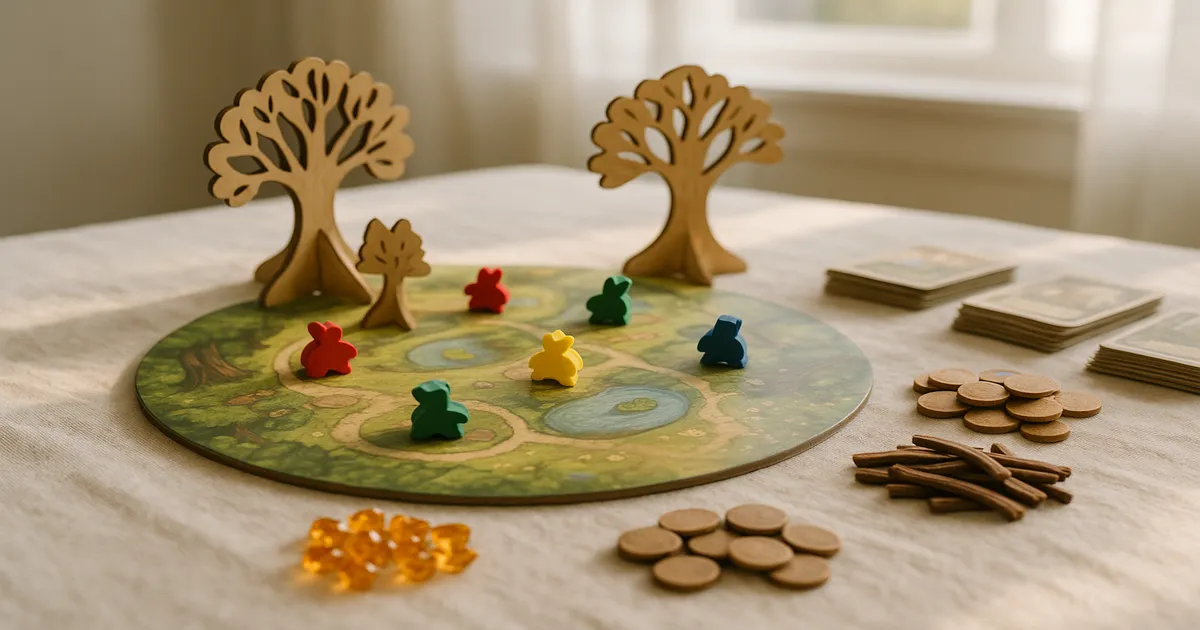
Quick Answer: The base game of Everdell is competitive, not cooperative. Official cooperative play requires the Newleaf expansion, which introduces scenario cards, shared objectives, and a threat mechanism that lets two players work together against the game. If you want to play Everdell duo cooperative, this guide covers the rules, setup, strategy, and the mistakes that’ll cost you a win.
If you’ve been searching for how to play Everdell duo cooperative, you’ve probably already noticed that the answers online are all over the place — and half of them don’t bother saying which version of the game they’re talking about. So let’s clear it up fast. The base Everdell game is a competitive worker placement game for 1–4 players (40–80 minutes, BGG weight 2.8/5, designed by James A. Wilson and published by Starling Games). There’s no cooperative mode in the box. The official co-op experience comes from the Newleaf expansion, and it’s genuinely one of the better two-player cooperative experiences at this weight class.
Can You Play Everdell Cooperatively?
Base Game vs. Newleaf
The base game includes a solo mode, which trips people up. But solo isn’t cooperative — it’s you against a dummy opponent called Rugwort. True cooperative play, where two people work together toward a shared goal, requires Newleaf. There are community-designed variants on BoardGameGeek if you want to hack something together without buying the expansion, but quality varies and none of them are official.
What “Everdell Duo Cooperative” Actually Means
Depending on what you own, this phrase could mean three different things: the Newleaf cooperative scenario mode, a 2-player competitive game you’re treating as a shared experience, or a BGG community variant. This guide focuses on the Newleaf cooperative rules — that’s what most people are actually looking for.
Everdell Core Rules: What You Need to Know First
The Four Seasons and How the Game Flows
Everdell runs through Spring, Summer, Autumn, and Winter. Each season you have a limited number of workers to place, and when you run out of useful moves, you Prepare for Season — recalling your workers, gaining new ones, and drawing cards. The game ends after Winter, and whoever (or whatever team) has the most victory points wins.
Your Three Choices Each Turn
On your turn, you do exactly one of three things:
- Place a Worker — send a meeple to a location on the Ever Tree board, a forest tile, or a card in another player’s city to gain resources, draw cards, or trigger abilities.
- Play a Card — pay the resource cost and add a card from your hand or the meadow to your city.
- Prepare for Season — recall all your workers, gain new workers per the season track, draw cards, and advance the season marker.
That’s it. The elegance is in how those three simple actions interact with each other over four seasons.
Resources, Cards, and Building Your City
Four resource types: Twigs, Resin, Pebbles, and Berries. Buildings lean on Twigs and Resin; Critters usually cost Berries. Your city holds a maximum of 15 cards — which sounds generous early on and feels brutally tight by Autumn.
The rule new players miss most often: many cards come in Critter/Construction pairs. If you have the building in your city, the paired critter is free. This is the engine of efficient play. Ignoring it is the single biggest mistake beginners make, and it’ll cost you games.
How Everdell Duo Cooperative Works in Newleaf
What Newleaf Adds
Newleaf introduces Cooperative Scenario Cards, Visitor Cards, and Train Car Meeples as a new worker type. The scenario cards define your objective and the threat you’re playing against — encroaching development, seasonal disasters, resource scarcity, that kind of thing. Each scenario has its own difficulty level, so there’s real variety across multiple plays.
You’ll need both the base game and Newleaf to play cooperatively.
Shared Goals and the Win Condition
Both players are building toward a combined score threshold or a specific scenario objective — you’re not comparing your city to your partner’s. You’re pooling your efforts against a target the game sets. This changes everything about how you approach card selection and resource management.
The Threat Mechanism
Every scenario puts some kind of pressure on the players. A development track might advance each season and trigger a loss if it reaches a certain point. Resources might become scarce. The exact mechanism varies, but ignoring it is always a mistake. I’ve watched plenty of co-op games where one player gets laser-focused on their city while the threat track quietly marches toward a loss condition. Don’t be that player.
Resource Sharing and Communication
Unlike competitive Everdell, you can openly discuss resources and coordinate who takes what. Some scenarios let you pass resources to your partner directly. Communication becomes a genuine mechanic here, not just a courtesy — and it’s one of the things that makes the two-player cooperative experience feel distinct from the competitive game.
Winning and Losing Together
You win as a team if you hit the scenario’s score target or complete its objective before the game ends. You lose together if the threat condition triggers or you run out of seasons without meeting the goal. No partial credit, which makes the shared victory feel genuinely earned.
Setting Up Everdell for Two Players Cooperatively
What You Need
- Base game: Ever Tree, 128 city cards, forest location tiles, wooden resource tokens, meeples, event cards, meadow cards
- Newleaf: Cooperative Scenario Cards, Visitor Cards, Train Car Meeples, additional resource tokens and city cards
Setup Step by Step
- Assemble the Ever Tree and place it in the center of the table (the instruction sheet is clear; it takes about five minutes the first time).
- Shuffle and place 8 forest location tiles face-up near the board.
- Shuffle the city card deck and deal 8 cards face-up to form the meadow.
- Set out resource tokens and victory point tokens within reach of both players.
- Each player takes starting resources and cards per the setup guide — Newleaf scenarios specify any modifications.
- Select your cooperative scenario card and follow its additional setup instructions.
Start with the introductory scenario on your first cooperative game. Newleaf labels these clearly. The co-op mode has real teeth even at easier difficulty levels, so resist the urge to jump ahead.
Plan for at least a 3×4 foot table with Newleaf in play. The Ever Tree alone takes up serious real estate. The cards are linen-finished and hold up well, but if you’re playing regularly, sleeving is worth it. (Mayday Games Premium Card Sleeves Standard USA)
Cooperative Strategy: How to Win as a Duo
Divide Card Types Between Players
The most effective structural decision you can make early: one player focuses on Governance and Production cards (resource generation, engine pieces), the other takes Destination and Traveler cards (special actions, scoring opportunities). You’ll build complementary engines instead of two half-finished versions of the same thing.
One Player Goes Wide, One Goes Deep
A heuristic that works consistently — one player builds a broad city with many cheap and mid-cost cards for coverage and event eligibility, while the other builds fewer but more powerful synergistic cards. Wide gives you points through quantity and events; deep gives you points through high-value combos. Together, you cover both.
Build Toward Shared Events
Events are high-value and require specific city compositions. Because you’re pooling scores in co-op, both players should know which events are achievable and actively build toward them. Don’t let events sit unclaimed because “that’s your partner’s job.”
Communicate Before Every Season Change
Before either player Prepares for Season, take 60 seconds to align. What are your priorities next season? Who needs which resources? Are there meadow cards you both want? This brief check-in is worth more than any individual tactical decision you’ll make that turn.
Common Mistakes When Playing Everdell Cooperatively
Rules Errors
- Forgetting Critter/Construction pairs — always check if you have the paired card before paying full price.
- Treating Prepare for Season as a free action — it’s your entire turn. You can’t place a worker and then prepare in the same turn.
- Meadow replenishment timing — the meadow refills to 8 cards after a card is taken, not at the start of the next turn.
- Ignoring the 15-card city limit — plan your city with the end in mind. Running out of space with great cards in hand is genuinely painful.
Cooperative-Specific Pitfalls
- Building the same card types as your partner — you’ll both end up with weak, redundant engines.
- Ignoring the threat track — whatever pressure mechanism your scenario uses, it will punish you if you ignore it.
- Playing too independently — co-op Everdell rewards explicit coordination. If you’re not talking, you’re leaving points on the table.
Components and Table Presence
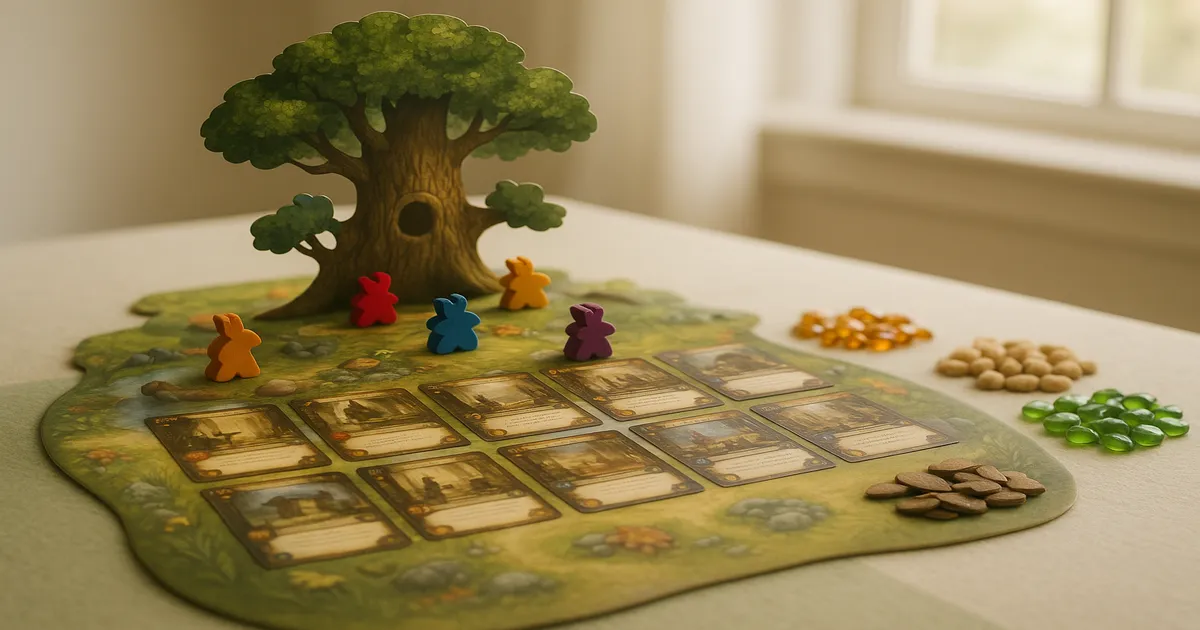
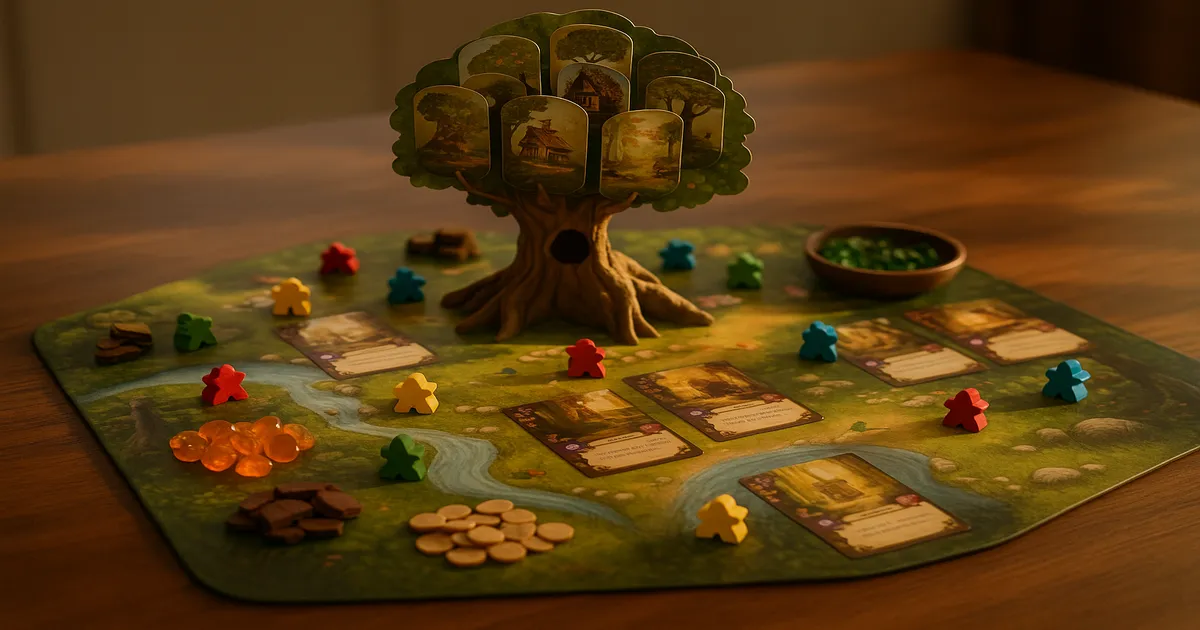
The 128 unique city cards are the heart of the game — no two are identical, and each one features Andrew Bosley’s gorgeous painterly art. The wooden resource tokens are chunky and satisfying to handle. The Ever Tree is genuinely iconic; I’ve had non-gamers ask about it from across the room before we’d even finished setting up.
Newleaf matches the base game’s production quality perfectly. The insert in the base game is functional but tight — once you add Newleaf, you’ll almost certainly want an aftermarket organizer. The full setup with both boxes on the table is a beautiful display.
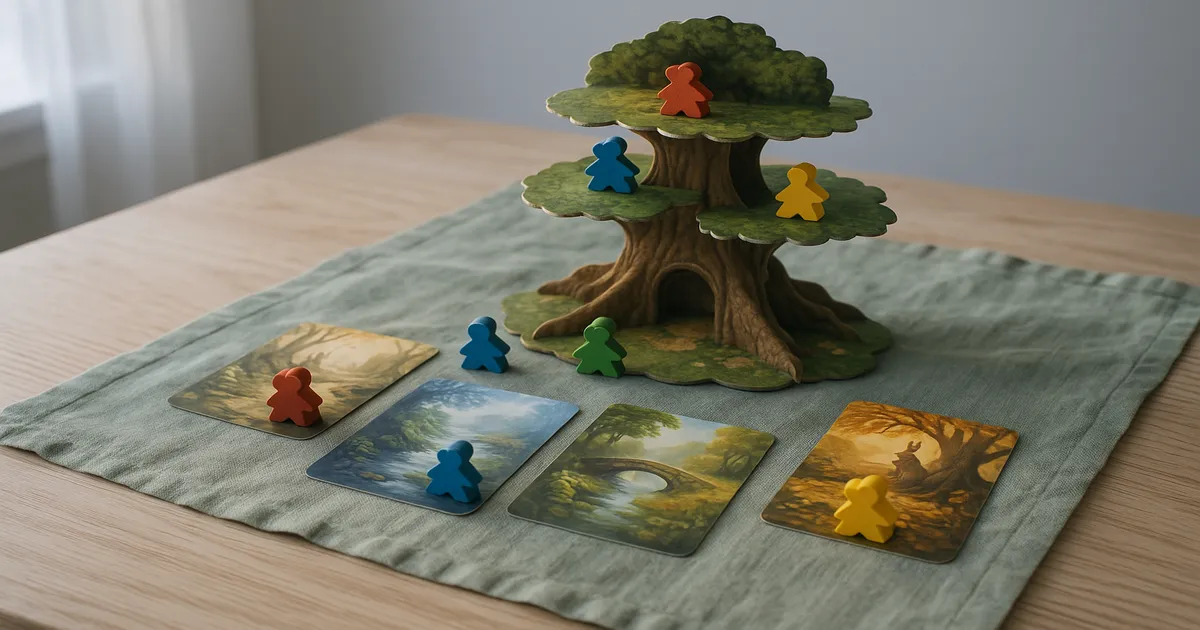
One honest note on the Ever Tree: it’s a visual centerpiece, not a gameplay necessity. The game would function fine with a flat board. But it transforms Everdell from “a good game” to “an experience,” and in cooperative mode specifically, having a shared physical focal point that both players are building around adds something real to the feel of the session.
How Everdell Duo Cooperative Compares to Similar Games
Wingspan is simpler and faster to learn — card drafting and engine building without worker placement. For couples who want something lighter, Wingspan wins on accessibility. For couples who want more decision weight and a more immersive theme, Everdell is the better pick.
Cascadia (BGG weight ~1.8) is a tile-laying game with a nature theme — excellent for two players and much easier to learn. Great entry point if Everdell feels like too much to start with.
Spirit Island is significantly more complex — genuinely challenging and asymmetric, but a steeper climb. If you and your partner are experienced cooperative gamers looking for something harder, it’s worth the investment.
Everdell sits in a sweet spot: complex enough to feel rewarding, accessible enough that a motivated newcomer can grasp it in one session. The theme — woodland creatures building a city together — maps perfectly onto the cooperative experience. It’s one of the few games where the theme and the mode feel genuinely aligned.
Frequently Asked Questions
Can you play Everdell cooperatively without buying an expansion?
Not officially. The base game includes a solo mode against a dummy opponent, but there’s no built-in cooperative mode. You need the Newleaf expansion for official co-op rules. Community-designed variants exist on BoardGameGeek if you want to experiment first.
Is Everdell good for 2 players cooperatively?
It’s genuinely excellent at two. The game scales well to two players in competitive mode, and the cooperative mode in Newleaf was clearly designed with a duo in mind. The communication and coordination elements shine at two players in a way they can’t at higher counts.
How do you win Everdell cooperative mode?
Each scenario card sets a specific objective — usually a combined score threshold both players must reach together, or a narrative goal that must be completed before a certain season ends. You win by meeting that objective before the threat condition triggers or the game runs out of seasons. Read your scenario card carefully at setup; each one is different.
Is Everdell too complicated for beginners?
It has a learning curve — plan for your first game to be a teaching game where you’re not playing optimally. BGG weight 2.8/5 means medium complexity, not heavy. Most people grasp the core turn structure within a few rounds. The cooperative mode actually helps beginners because you can talk through decisions openly without worrying about giving away strategy.
Which expansion should you buy first for cooperative play?
Newleaf is the only answer if cooperative play is your primary goal — it’s the expansion that adds the official cooperative mode. If you’re happy playing competitively and just want more content, Pearlbrook is the most commonly recommended first expansion for its relatively modest complexity increase. But for co-op specifically, Newleaf is the one.