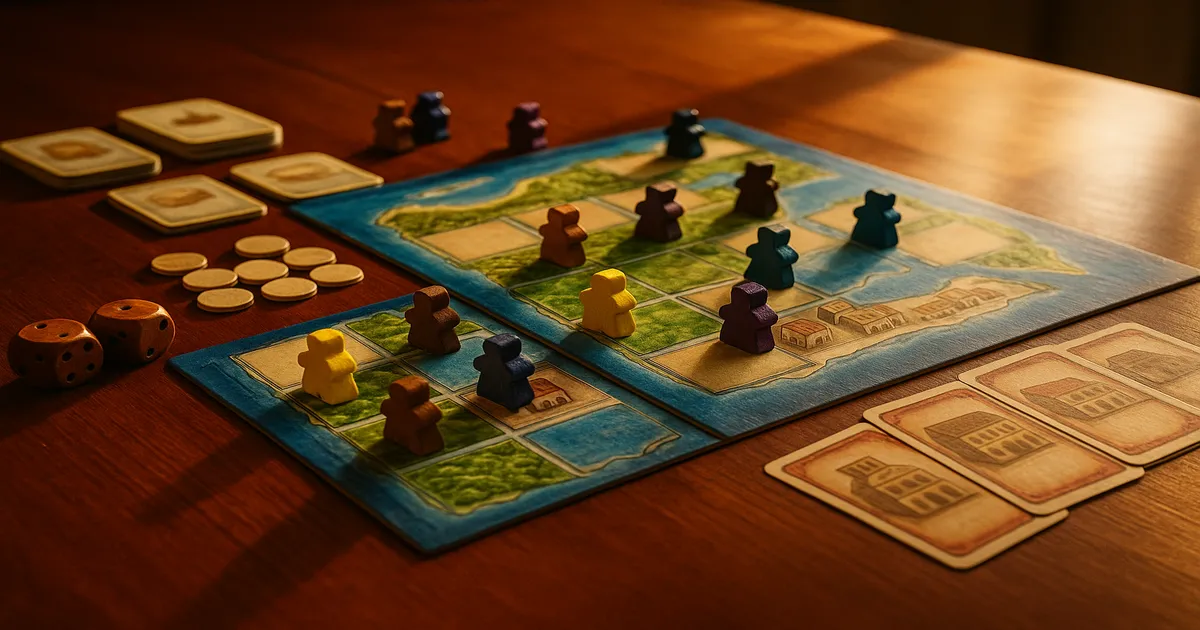
Quick Answer: Concordia is a medium-heavy Roman economic euro game for 2–5 players designed by Mac Gerdts (published by PD-Verlag in 2013). On your turn, play one card from your hand to take an action, then eventually play your Tribune card to retrieve everything and start again. The twist that makes it special: the cards you buy to take actions are also your entire scoring engine at game end.
Concordia sits in the top 50 games of all time on BoardGameGeek — and has for years — for good reason. Learning how to play Concordia takes about 20 minutes, but the strategic depth underneath that simple surface takes much longer to fully appreciate. This guide covers everything from the basic rules to scoring, common mistakes, and how to actually win.
2–5 players | 90–120 minutes | BGG weight ~3.0/5
How to Play Concordia: The Short Version
What Kind of Game Is It?
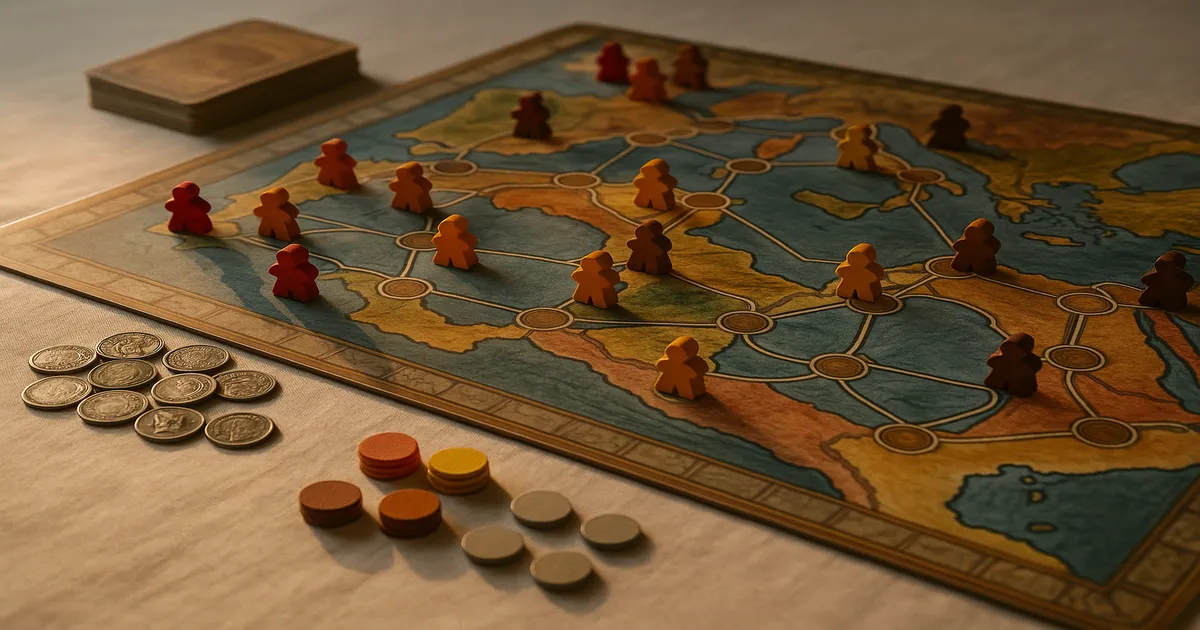
You’re playing as a Roman merchant family, sending colonists across a Mediterranean map to build trade networks and cities. It’s an economic engine-builder with hand management at its core — no dice, almost no luck, zero direct conflict. You’re competing for territory and card purchases, but nobody’s attacking anyone.
The Core Loop
Play one card, take its action, repeat until your hand is mostly spent. Then play your Tribune card to retrieve all your played cards (and collect coins in the process). At game end, score points based entirely on the personality cards in your deck.
That’s genuinely it. The elegance — and the depth — comes from the fact that every card does double duty: it gives you an action and determines how you score at the end.
Components and Setup
What’s in the Box
- Double-sided game board (different maps for different player counts)
- Personality cards (the central market deck)
- Starting hand cards (identical set for each player)
- 15 wooden city markers per player (called “houses”)
- Land and sea colonist pawns per player
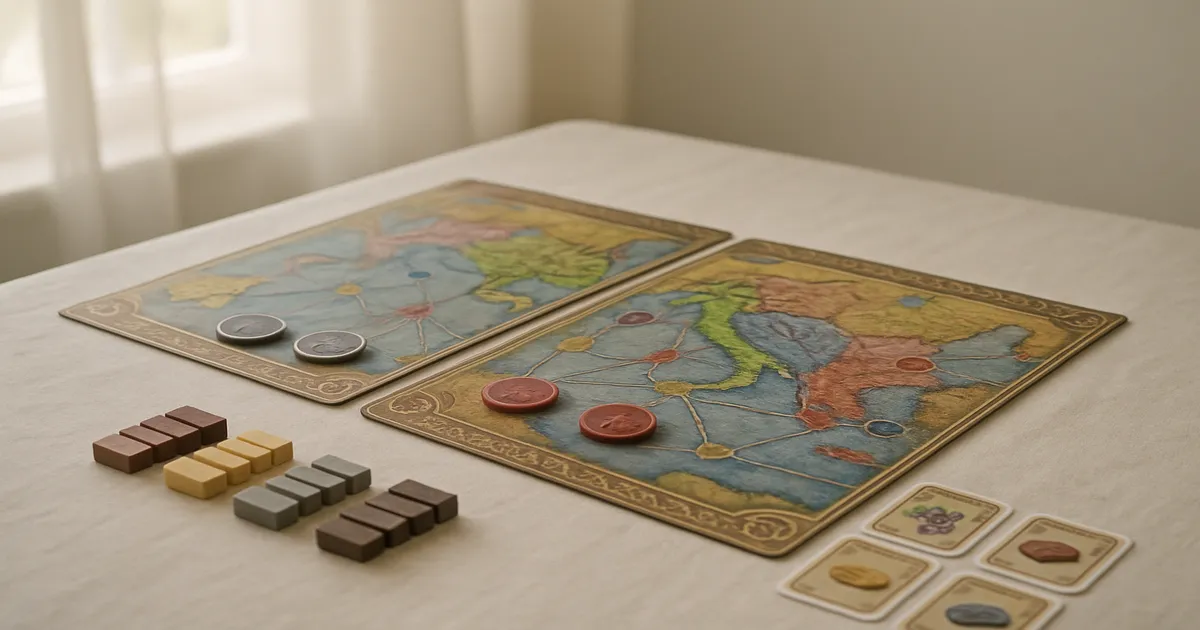
- Resource tokens: brick, food, wine, cloth, tools
- Coin tokens
- Bonus markers (used with the Prefect action)
- Rulebook
Component Quality
Honestly, the components are functional rather than impressive. The cardboard resource tokens get the job done, but most players swap them out after a few plays. The card artwork is genuinely lovely — clean classical iconography that also serves a gameplay function, which is exactly what you want in a design like this.
Worth considering: wooden resource tokens make a real difference to the table feel, and the personality cards get shuffled constantly, so sleeves are a good call. A proper insert helps too, since the box has a lot of small components that migrate everywhere.
Setup
Each player gets an identical starting hand of seven action cards and places their starting colonists on the board at designated starting cities. The personality card market is laid out face-up in a row. Setup takes 10–15 minutes once you know what you’re doing.
Turn Structure
One Card, One Action
Your entire turn is: play one card from your hand, do what it says. No sub-phases, no complex sequencing. This deceptive simplicity is what makes Concordia so easy to teach and so hard to master.
The Seven Starting Cards
Every player begins with the same seven cards:
- Architect — Move one colonist along the map and optionally build a house in a new city. Your main expansion tool.
- Prefect — Activate a province: every player collects resources from cities they own there. Yes, opponents benefit too.
- Mercator — Trade goods at the market and optionally draw a personality card.
- Consul — Draw two personality cards from the market display, keep one, return the other.
- Senator — Take a personality card from the market AND gain bonus resources. Stronger than Consul in some situations.
- Colonist — Move ALL of your colonists simultaneously. Great for repositioning.
- Tribune — Retrieve all your played cards, gain one coin per card retrieved, and optionally place a new colonist on the board.
Tribune Timing: The Most Important Decision in the Game
The Tribune is the only way to get your cards back. Once you’ve played a card, it sits in your discard pile until you Tribune — which means every card you play is one fewer option available, and at some point you have to spend a whole turn just resetting.
Here’s what most new players miss: you get one coin per card retrieved. Tribune with ten cards in your discard pile and you pocket ten coins. That’s serious buying power. Tribune too early with only four cards and you’ve left value on the table.
The tension is real in both directions. Tribune too late and you’re stuck playing cards that don’t help you. Tribune too early and you’re broke. Watching your hand size — and your opponents’ — is where the game actually lives.
How Scoring Works in Concordia
Everything Resolves at the End
Zero points are scored during play. This trips up almost every new player. You can have a massive city network and feel like you’re winning, then lose badly because your card deck doesn’t support your board position. Scoring is entirely card-driven.
The Six Roman Gods
Each personality card belongs to one of six Roman gods. At game end, you score for each card of that god type you own, multiplied by what that god measures:
| God | What It Scores |
|---|---|
| Vesta | Fixed baseline points (everyone starts with one) |
| Jupiter | Points per personality card in your deck |
| Saturnus | Points per land region where you have at least one city |
| Mercurius | Points per type of good your cities produce |
| Mars | Points per city you have on the board |
| Venus | Points per province where you have the most cities |
Why Your Action Cards Are Also Your Scoring Engine
This is the design’s master stroke. When you buy a Mars card, you get a useful action and you’re investing in your end-game score. A player with three Mars cards scores three times as much per city as a player with one. Every purchase is simultaneously a tactical and strategic decision — there’s no separating the two.
How the Game Ends
The game triggers when either the personality card market is exhausted or any player places their last house. After the triggering turn, everyone finishes the current round so all players get equal turns. Then scoring happens.
Strategy: How to Actually Win
Early Game — Stake Territory and Pick Your Gods
Expand fast. The map fills up, and colonists who move early claim the most valuable provinces. Within your first few rounds, you should have a rough idea of which two or three gods you’re building toward — look at what’s available in the card market and what your opponents are grabbing.
Saturnus and Mercurius are consistently undervalued by beginners. Geographic spread and good diversity are easier to build toward than new players expect, and the scoring payoff is strong.
Mid Game — Prefects, Blocking, and Tribune Discipline
Time your Prefects to collect resources right before you need them for city-building. Don’t hoard resources you won’t use for three more turns. And don’t ignore the blocking game: placing a colonist in a key city before an opponent reaches it costs you very little but can completely derail their strategy.
A useful rule of thumb: Tribune when you have three or fewer genuinely useful cards left in hand, unless something urgent forces you to act sooner.
Late Game — Count the Scores
All information in Concordia is public, so you can actually count everyone’s score before the game ends. Do it. If you’re ahead, accelerate the end — buy out the market or push to place your last houses. If you’re behind, slow things down and keep buying cards.
Commit to a Strategy
A focused two- or three-god strategy almost always beats a scattered one. Buying one of every god type feels satisfying but scores poorly. Commit early, stay consistent, and watch the market to make sure opponents don’t buy out the card types you need.
Common Mistakes New Players Make
Ignoring scoring while playing. By far the most common error. Expansion without a card strategy just sets up a beautiful board position that loses at scoring. Before every card purchase, ask: what god is this, and what will it score me?
Forgetting the Tribune coin bonus. A bigger discard pile at Tribune time means more money. This isn’t a minor detail — it’s often the difference between affording a key card and missing it.
Over-expanding without resources. Colonists don’t score points; houses do. If you can’t build a house when your colonist arrives, you’ve wasted tempo. Plan your resource pipeline.
Misreading the Prefect. All players collect from the province you activate — not just you. Experienced players activate provinces where their own presence is strongest and opponents’ is weakest.
Buying cards without a plan. A diverse mix of gods with no focus is a losing deck. Pick your gods and stick to them.
Skipping Senator and Consul turns to expand faster. A powerful deck pays dividends for the entire game. Investing in cards early is almost always correct.
Not watching the end-game trigger. If an opponent is down to two houses, the game could end in two turns. Don’t get caught mid-build with no scoring position.
Misreading Venus. Venus scores for provinces where you have the most cities — not just any presence. You need to actually contest and win a province for it to pay off.
How Concordia Compares to Similar Games
| Game | Weight | Key Difference |
|---|---|---|
| Brass: Birmingham | Heavier | More direct conflict, industrial theme, network dependency |
| Wingspan | Lighter | Nature theme, more forgiving, lower strategic ceiling |
| Terra Mystica | Much heavier | Asymmetric factions, more confrontational, far more rules |
| Viticulture | Lighter | Worker placement, more accessible, wine theme |
| Navegador | Similar | Mac Gerdts rondel mechanic instead of cards; colonial theme |
Navegador and Antike are both Mac Gerdts designs worth exploring if you love Concordia — they use a rondel for action selection rather than hand management, which gives them a different feel while keeping that same “elegant system, deep play” quality.
Who Should Play Concordia
Play it if you enjoy economic euros, like hand management, want depth without excessive rules overhead, or prefer low-conflict games that reward long-term thinking.
Skip it if you want direct combat, need scoring feedback during the game, or are playing with a group that finds medium-weight games too demanding.
Expansions Worth Knowing About
Concordia Venus
Adds the Venus god card and a team play variant. It’s widely considered the best expansion and the one most experienced players recommend first — meaningful new strategic options without complicating the core rules. Also sold as a standalone.
Concordia Salsa
Brings new maps and a Forum mechanic that adds an additional action layer. It’s a bigger change to the base experience — better for groups who’ve played the base game many times and want something new to chew on.
Smaller Maps
The smaller map sets — Britannia/Germania, Gallia/Corsica, Aegyptus/Creta, and Balearica — are great for lower player counts and shorter sessions. Balearica in particular is excellent for two players who want a tighter, faster game.
Frequently Asked Questions
How long does a game of Concordia take?
Expect 90–120 minutes with players who know the game. First plays often run longer — 2 to 2.5 hours isn’t unusual while everyone’s learning the card actions and scoring system. Turns are genuinely simple, so it moves faster than you’d expect once the rules click.
How does scoring work in Concordia?
No points are scored during play. At game end, you score based entirely on the personality cards in your deck. Each card belongs to a Roman god, and each god scores based on a specific condition — cities on the board, land regions reached, types of goods produced, and so on. Highest total wins.
What does the Tribune card do?
It retrieves all your previously played cards back into your hand and gives you one coin for each card retrieved — which is a significant economic benefit. You can also optionally place a new colonist on the board. It’s the only way to recycle your hand, which makes its timing one of the most important decisions in the game.
Is Concordia good for 2 players?
Yes, genuinely. The double-sided board keeps the game tight at two, and the direct competition for the card market and territory is sharp. Many players actually prefer it at two or three for the cleaner strategic read. The Balearica map is specifically designed for two players and is excellent.
What’s the difference between Concordia and Concordia Venus?
Concordia Venus is an expansion (also sold as a standalone) that adds the Venus god card — which scores for provinces where you have the most cities — plus a team play variant and additional maps. The base rules are identical; Venus just adds new strategic layers. Most experienced players consider it an essential upgrade.