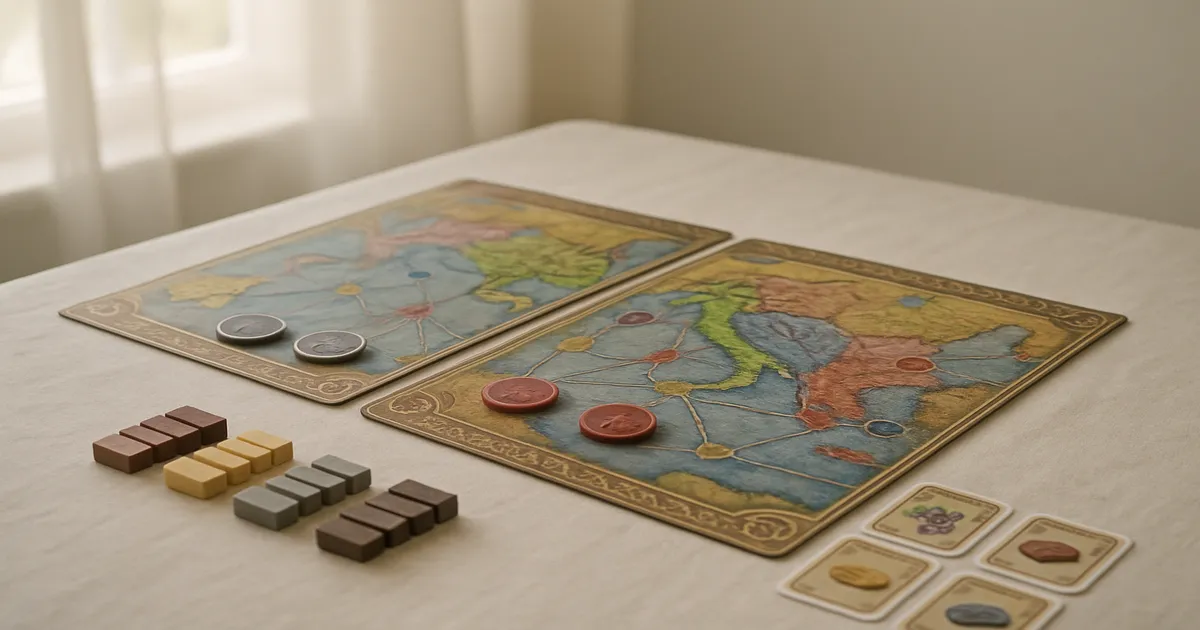
Quick Answer: For most new buyers, Concordia Venus is the better purchase — it includes everything in the base game plus the Venus expansion content, supports up to 6 players, has an official solo mode, and typically ships with the excellent Hellas and Cyprus maps. Only buy the base game if you find it significantly cheaper secondhand or specifically want the Italia and Gallia maps.
If you’re trying to sort out the Concordia base game vs Concordia Venus question, you’re not alone. The naming trips people up constantly — Venus sounds like an expansion, but it’s actually a standalone game that replaces the base game for most purposes. Below I’ll break down exactly what’s in each box and which one makes sense for your situation.
Concordia Base Game vs Venus: What’s the Actual Difference?
The One-Line Verdict
Buy Concordia Venus. It does everything the base game does and more, for a price premium that’s almost always worth it.
When to Buy the Base Game Instead
There are really only two good reasons to go with the original:
- You find it significantly cheaper secondhand (think 40–50% less)
- You specifically want the Italia or Gallia maps, which aren’t in Venus
Here’s how the two versions stack up:
| Feature | Base Game | Concordia Venus |
|---|---|---|
| Standalone? | Yes | Yes |
| Player Count | 2–5 | 2–6 |
| Solo Mode | No | Yes |
| Team/Partnership Variant | No | Yes |
| Maps Included | Italia + Gallia (typical) | Hellas + Cyprus (typical) |
| Venus Cards | No | Yes |
| Relative Price | Lower | Higher |
What Is Concordia? A Quick Overview
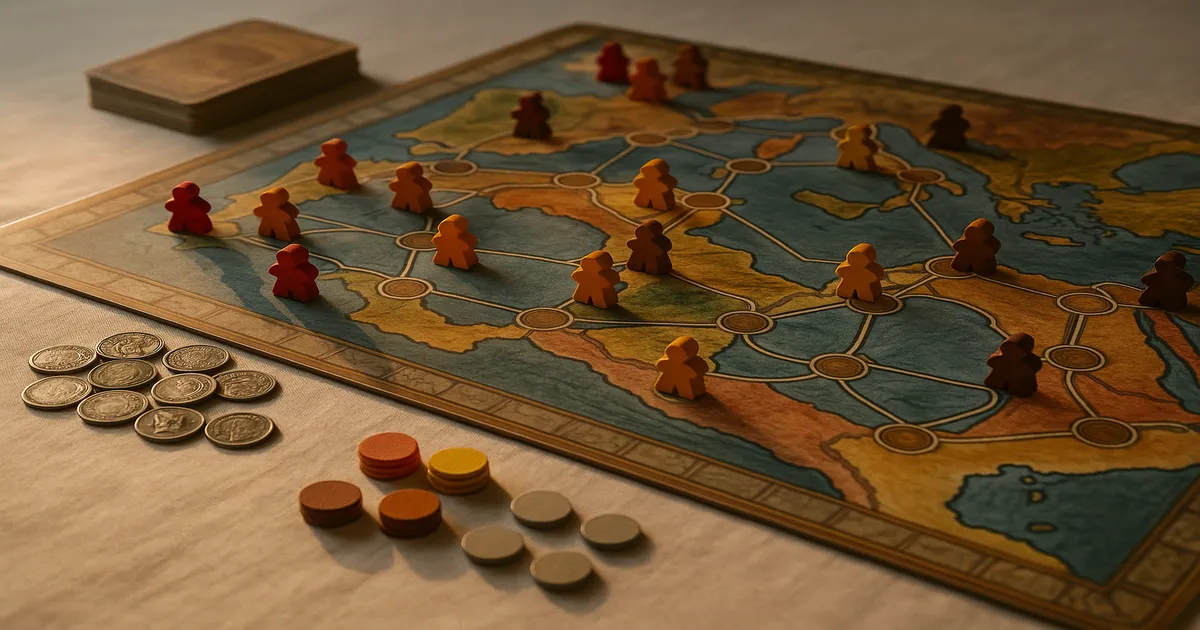
Concordia is a medium-weight euro game set in the Roman Empire, designed by Mac Gerdts and published by PD-Verlag. You’re playing as a Roman patrician family, expanding a trade network across the Mediterranean — building cities, shipping routes, collecting resources, and acquiring cards that score points at the end. It plays in 90–120 minutes and sits at a BGG weight of around 3.0/5.
It’s been in the BGG top 30 all-time since around 2014. That’s not hype. For a game published in 2013, that kind of staying power says something real.
How a Turn Works
Every turn you do exactly one of two things: play a card from your hand, or recall your entire discard pile back into your hand. That’s the whole turn structure. Simple to explain, genuinely deep in practice.
The cards you’ll use most:
- Senator — buy new Personality Cards from the shared display
- Consul — take resources from your storehouse
- Prefect — collect resources from all cities of a chosen type on the map (this benefits everyone with cities there, not just you)
- Architect — build a city or extend a trade route
- Mercator — trade resources at the market
How Scoring Works
Here’s what surprises most new players: zero points are tracked during the game. Everything scores at the end, based entirely on the Personality Cards in your deck. Each card’s god symbol determines how it scores — Jupiter gives points per province you have a presence in, Minerva rewards resource diversity, Saturnus scores per city of a specific type, and so on.
You genuinely can’t tell who’s winning mid-game. Some people find that unsettling. I find it one of the game’s best features.
What Concordia Venus Adds
It’s a Standalone, Not an Expansion
This is the point that causes the most confusion. You do not need the base game to play Concordia Venus. It ships with the complete core ruleset. Think of it as a deluxe edition that bundles in the Venus expansion content from day one.
Venus Cards and the Partnership Variant
Venus adds a new set of Personality Cards featuring the Venus goddess, with scoring conditions tied to the team variant. The partnership mode lets you play in pairs with communication restrictions that keep it from becoming trivial. It’s a genuinely interesting mode — not a gimmick bolted on for marketing purposes.
Six-Player Support and Solo Mode
If you ever want to play with six people, Venus is your only option — the base game caps at five. Six-player works best with the team variant and an experienced group, but it’s a real, functional mode.
The solo mode is Venus-exclusive too. I haven’t logged a ton of solo plays, but community reception has been solidly positive. It uses an automa-style opponent and gives solo players a legitimate way to engage with the game without house rules.
Maps — and Why They Matter More Than You’d Think
Maps aren’t just aesthetic. They fundamentally change how the game plays:
- Base game typically includes Italia and Gallia
- Concordia Venus typically includes Hellas and Cyprus
Italia rewards wide expansion across many provinces. Cyprus is tiny and tense — every colonist placement feels consequential, and it’s probably the best two-player map in the line. Hellas is widely considered one of the best maps full stop, with an island-heavy layout that forces real decisions about sea route investment. If you’re on the fence between versions, Hellas and Cyprus alone are a strong argument for Venus.
Note: map selection can vary by printing, so double-check what’s in the specific edition you’re buying.
Components and Production Quality
PD-Verlag’s production style is utilitarian elegance. No miniatures, no extravagant inserts — but the wooden pieces are solid, the card stock holds up, and the cartographic map art has a period-appropriate charm that suits the theme. It’s not a “wow” visual game on first impression, but the iconography is clean and functional, which matters a lot more after your first session.
Venus includes everything in the base game plus Venus Personality Cards, team variant components, a sixth player’s pieces, and solo mode materials. The box is slightly larger to fit it all.
If you’re planning to sleeve the cards — and with a game you’ll play this often, it’s worth considering — the Personality Cards are standard European size (59×92mm).
Strategy Tips
Commit to a Scoring Strategy Early
The biggest mistake new players make is buying cards reactively. By your third or fourth Senator action, you should have a clear sense of which two or three gods you’re building toward. A focused deck of eight synergistic cards will consistently beat a scattered deck of twelve.
Which Gods to Prioritise
Jupiter — scoring per province you have a presence in — is broadly applicable and almost always worth pursuing. It’s hard to build a winning deck without at least two Jupiter cards. Minerva rewards storing all five resource types, which pairs well with an active Mercator strategy. Saturnus quietly accumulates big points if you’re building aggressively. Don’t sleep on it.
Timing Your Recall
Recall costs you an action, so you want to squeeze maximum value out of your hand before you do it. Play your most impactful cards — Architect, Senator — just before Recall so you’re not wasting powerful actions. Recalling because you’re desperate is a tempo loss. Recalling because you’ve played everything valuable is good play.
Map-Specific Notes
- Italia: Spread wide early. The bonus cities in the south are valuable and contested.
- Cyprus: Resource efficiency is everything. There’s nowhere to hide.
- Hellas: Invest in sea colonists early. Land-only strategies struggle badly here.
- Gallia: Tighter and faster than Italia; good for smaller player counts.
Common Mistakes to Avoid
- Recall costs your entire turn. You cannot recall AND play a card. New players get this wrong constantly.
- The Prefect benefits everyone with cities of the chosen type — timing it to benefit yourself more than opponents is a skill, not a guarantee.
- Don’t forget the bonus token flip after using the Prefect. It changes future Prefect values and is easy to miss.
- Buying cards without a plan is the #1 way to lose. Watch what your opponents are taking. Sometimes buying a card you don’t need — purely to deny it — is the right call.
In the team variant, explain the communication restrictions before the game starts, not mid-play. Also, Venus Personality Cards score under specific conditions that differ from the standard gods — read them carefully before assuming they work like Jupiter or Minerva.
Final Verdict: Which Version Should You Buy?
Buy Concordia Venus If…
- You’re buying new at current market prices
- You want one box that covers all use cases
- You might ever play with 6 people
- You want a solo mode
- You want Hellas and Cyprus (you should — they’re excellent)
Buy the Base Game If…
- You find it significantly cheaper secondhand
- You only play 2–4 players and don’t care about solo or team modes
- You specifically want Italia or Gallia
Should You Own Both?
Only if you’re a dedicated fan who wants maximum map variety. For most people it’s redundant — the core game is identical in both boxes. A smarter route to more maps is Concordia Salsa, which adds new maps and a variant mode and works with both versions.
Frequently Asked Questions
Is Concordia Venus worth it if I already own the base game?
It depends what you’re missing. If you’re happy playing 2–5 players competitively, you might not need it. But if you want the solo mode, team variant, 6-player support, or the Hellas and Cyprus maps, Venus is worth the upgrade — just know you’ll have a lot of overlapping content.
What maps come with Concordia Venus?
Most editions include Hellas and Cyprus, though this can vary by printing. Hellas is widely considered one of the best maps in the entire Concordia line. Cyprus is a tight, tense map that’s particularly good for two players. Both are strong reasons to favour Venus over the base game.
Can you play Concordia with 2 players?
Yes, and it works well — though it plays very differently than at higher counts. Competition for cards and map positions becomes direct and tactical. Cyprus and Gallia are the recommended maps for two players.
How does the solo mode in Concordia Venus work?
It uses an automa-style simulated opponent. The solo rules are exclusive to Venus — the base game has no official solo variant. Community reception has been generally positive, though like most solo euro modes, it’s a different experience than the multiplayer game.
Is Concordia hard to learn?
The rules aren’t complicated — most people can learn the basics in 20–30 minutes, and the two-action turn structure keeps things mechanically simple. The challenge is building a coherent scoring strategy, which usually takes a full game or two to click. It’s a step up from gateway games like Ticket to Ride, but far more accessible than something like Terra Mystica.