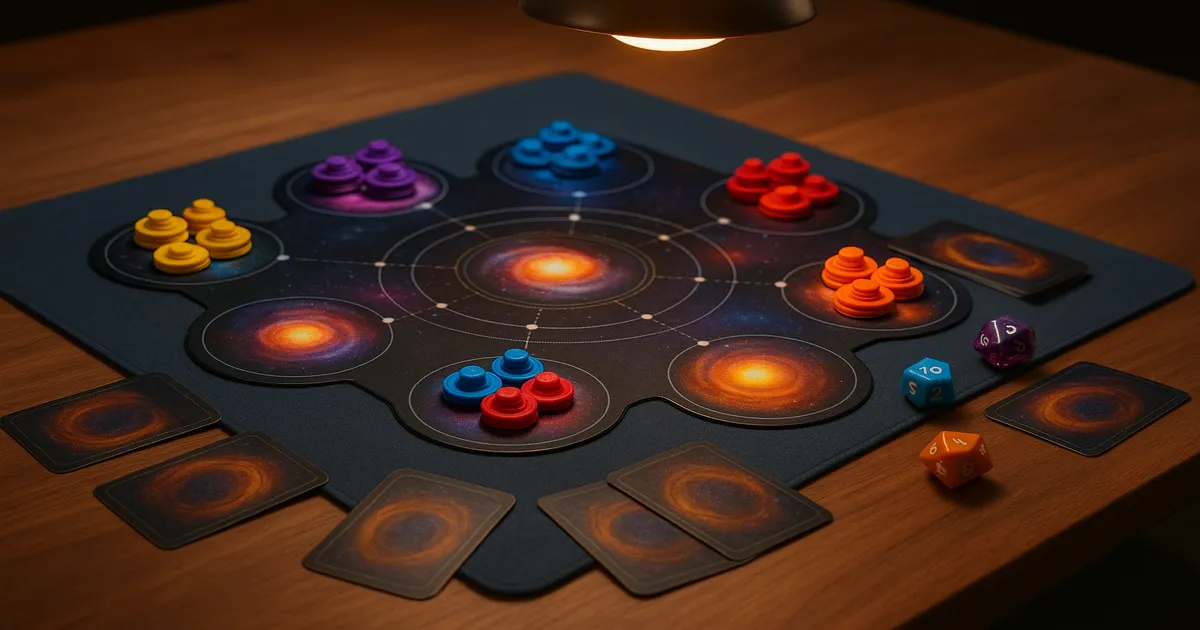
Quick Answer: Cosmic Encounter is a 3–5 player negotiation and bluffing game where each player controls a unique alien species racing to establish 5 foreign colonies on opponents’ planets. Every alien breaks a different game rule, making each session feel completely different. Multiple players can win simultaneously as allies — a design twist that drives every deal and betrayal at the table.
Cosmic Encounter has been warping brains since 1977, and if you want to know how to play Cosmic Encounter, the good news is that the core rules take about 20 minutes to absorb. The depth comes entirely from the alien powers and the social chaos they create. The Fantasy Flight Games edition (2008, designed by Bill Eberle, Jack Kittredge, Bill Norton, Peter Olotka, and Kevin Wilson) plays 3–5 players, runs 60–120 minutes, and sits at a BGG weight of roughly 2.5/5 — easy enough to teach in one sitting, impossible to fully master.
Cosmic Encounter in a Nutshell
You’re the leader of an alien civilization trying to spread colonies across the galaxy. Every player starts with 5 home planets, 20 ships, and one alien power card that lets you break a specific rule of the game — and no two aliens break the same rule. The result is a game that plays completely differently every single time.
The first player to establish 5 colonies on planets outside their own home system wins. That’s it. But getting there requires attacking opponents, forging alliances, bluffing with cards, and making deals — all while watching everyone else’s colony count like a hawk.
Components and Setup
What’s in the Box
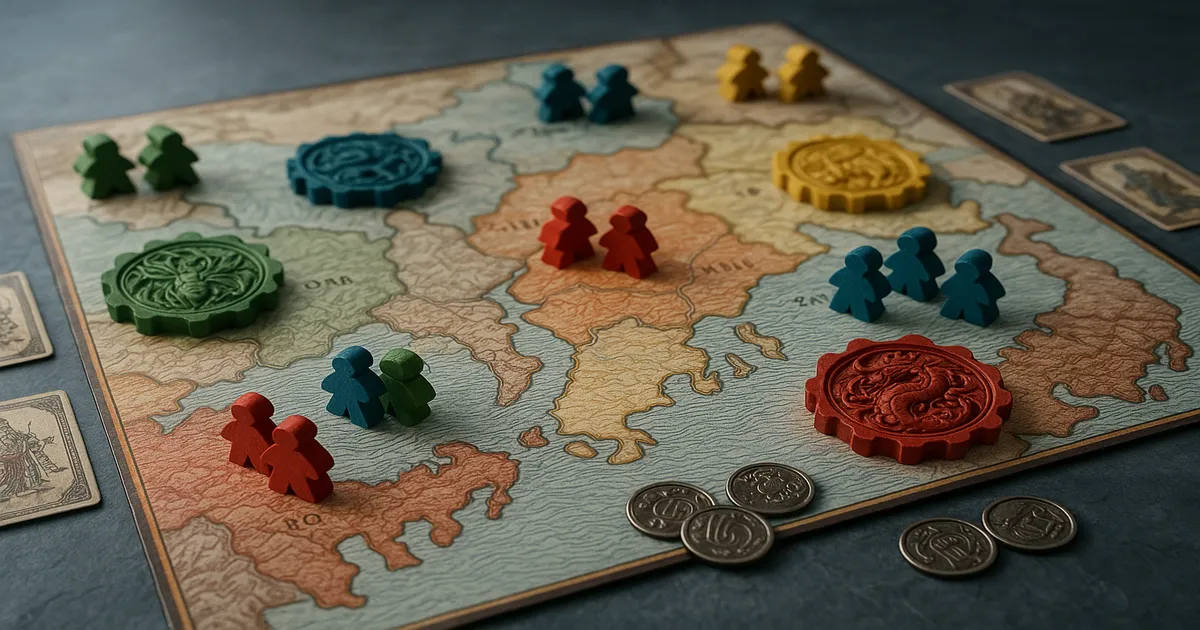
The FFG edition has a fun, campy sci-fi aesthetic that holds up well. Key components:
- 50 alien power cards (large-format with distinctive artwork)
- 5 colored sets of plastic cone ships (20 per player)
- 5 planet systems (cardboard discs in player colors)
- 1 Hyperspace Gate — the cardboard pointer used to declare attacks
- 1 Warp — the central structure where defeated ships go to die
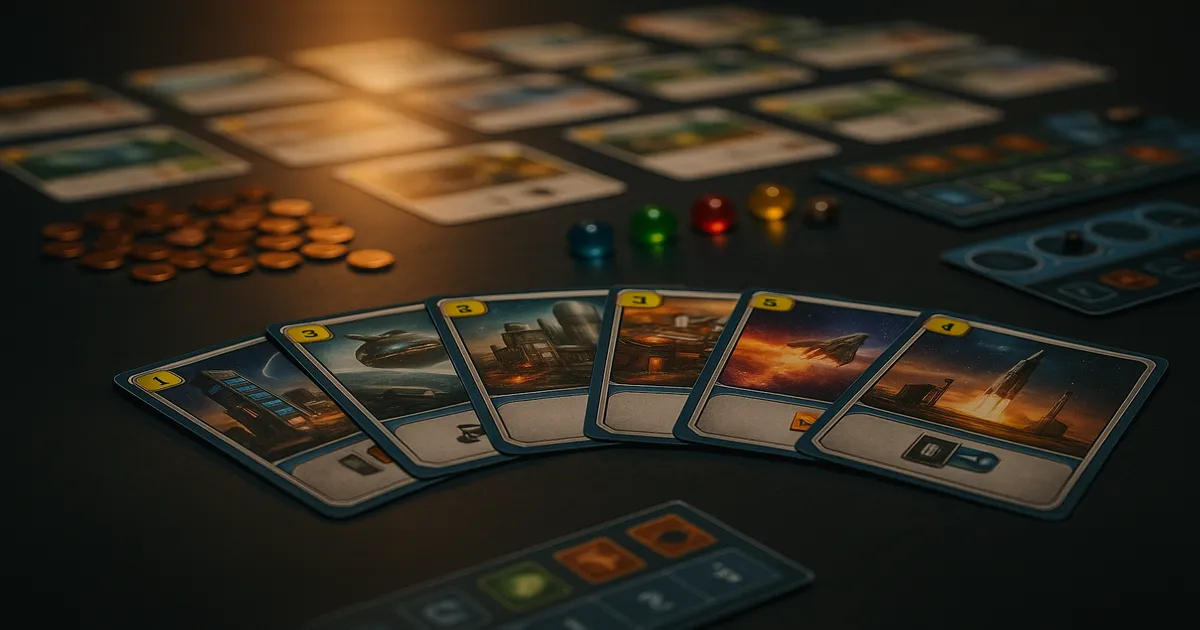
- 72 Cosmic cards — the main hand deck (Attack cards, Negotiate cards, Artifacts, Reinforcements, Morphs, Flares)
- 1 Destiny Deck — drives who gets attacked each turn
Setup
- Arrange each player’s 5 planet discs in a rough ring around the table
- Load 4 ships onto each planet (20 ships per player total)
- Place the Warp and Hyperspace Gate in the center
- Shuffle the Cosmic deck and deal 8 cards to each player
- Shuffle the Destiny Deck
- Deal each player 2 alien power cards — they pick 1 and keep it secret until revealed
Read your alien power carefully before play starts. Then read it again. These cards have specific trigger conditions that are easy to misremember mid-encounter when everyone’s staring at you.
How to Play Cosmic Encounter: Turn Structure
A turn has several phases, but they flow naturally after one round. Here’s what happens:
Regroup
The active player (the “offense”) retrieves one ship from the Warp back to any home colony. Lose enough ships to the Warp and this phase starts to feel painfully slow — which is exactly the pressure it’s designed to create.
Destiny: Who Gets Attacked?
The offense draws from the Destiny Deck. The card is color-coded to a specific player — that’s who you must attack this turn. Wild cards let you choose freely, which is a meaningful strategic tool, especially late in the game.
Launch
The offense points the Hyperspace Gate at a specific planet in the targeted system and commits 1–4 ships to the encounter. Ship count matters more than new players realize — more on that below.
Alliance: Choosing Sides
Both offense and defense can invite other players to join their side. Invited players send ships to support an ally and share in the rewards — or decline entirely. This is the most social phase of the game. Don’t rush it. This is where deals get made, promises get broken, and the game actually happens.
Planning and the Reveal
Both offense and defense secretly select one Cosmic card and place it face-down. Then they flip simultaneously. Three card types matter here:
- Attack cards (numbered 0–40): Add the number to your total ship count; highest combined total wins
- Negotiate cards: If both players reveal Negotiate, they have 60 seconds to make a deal. If only one player reveals Negotiate, that player loses — but draws cards from the winner’s hand as compensation
- Special cards (Morphs, Reinforcements, Artifacts): Modify the encounter in various ways
Resolution
If offense wins, they and their allies establish colonies on the targeted planet — defensive ships go to the Warp. If defense wins, offensive ships go to the Warp and defensive allies receive rewards (cards or ships from the offense). A successful offense earns a second encounter, up to 2 successful encounters per turn.
Alien Powers: The Heart of the Game
Every alien power card breaks one specific rule. The Virus multiplies ship count instead of adding. The Zombie never loses ships to the Warp. The Oracle sees the opponent’s card before playing their own. There’s no attempt to balance these against each other — the powers are intentionally weird and occasionally broken-feeling, and that’s the whole point. Half the fun is figuring out how to exploit your power before your opponents figure out how to play around it.
Flare cards add another layer: each Flare references a specific alien, and it does one thing if you are that alien, something different if you’re not. It’s a clever dual-use mechanic that rewards knowing the alien roster.
How to Win Cosmic Encounter
Five Foreign Colonies
A foreign colony is any colony on a planet outside your own home system. Multiple colonies on the same planet count as one. You need colonies on 5 different planets to win.
The Shared Victory Rule
This is the rule that makes Cosmic Encounter unlike almost anything else on the shelf. If two or more players reach 5 foreign colonies in the same encounter — typically as allies — they all win together. Immediately. The game ends with multiple winners.
This single rule changes everything about how you approach alliances. You’re not just helping someone for future favors — you might be winning right now alongside them. More dramatic table moments have come from this rule than from almost any other mechanic in any game I’ve played. When you realize mid-alliance that you’re both about to hit five colonies, the table erupts.
Alternate Win Conditions
Some aliens have completely different win conditions baked into their power. The Loser, for example, wins by losing encounters. These alternate conditions are rare but swing the entire table dynamic when they appear — suddenly everyone’s incentives flip.
Common Mistakes New Players Make
Rushing the Alliance phase. New players treat it like a formality. It isn’t. Slow down, negotiate, and think about who’s close to winning.
Misreading alien power triggers. “Once per encounter” and “only when defending” limits get misplayed constantly. Jot a quick note on paper if you need to — it’s worth it.
Forgetting the Negotiate card rules. When both players reveal Negotiate, you have 60 seconds to reach a deal or both lose 3 ships to the Warp. If you play Negotiate and your opponent plays Attack, you lose — but you draw cards from the winner’s hand as compensation. That compensation rule gets forgotten in probably half of all first games.
Letting the Warp swallow your fleet. Ships in the Warp can’t defend or join alliances. You only retrieve one per turn. Let enough pile up and you’re suddenly a spectator.
Playing too defensively against the leader. Sometimes the right move isn’t to stop them — it’s to ally with them and win together.
Strategy Tips
Send enough ships to attract allies. A 1-ship attack signals weakness. Four ships gives potential allies something worth joining. Bigger forces attract support.
Track colony counts constantly. Never let one player win alone when you could ally with them and win together. When you join a side, make your terms specific: “I’ll send 3 ships to your offense if you target Player 3 next turn.” Vague goodwill evaporates; specific deals stick.
Use Negotiate cards deliberately. Running out of Attack cards is a disaster. Play Negotiate cards to force deals you actually want, or to collect compensation when you expect to lose anyway. Don’t play them just to dodge a fight.
Expansions Worth Buying
- Cosmic Incursion — Start here. Adds 20 aliens, the Reward Deck (which gives defensive allies better incentives), and 6-player support without adding significant rules complexity
- Cosmic Conflict — Hazard cards and Moons add great variety
- Cosmic Alliance — Worth it if your group wants structured team play
- Cosmic Legion — Pure alien variety, 40 more powers
- Cosmic Odyssey — The Scenario system is excellent for groups who want more structure
- Cosmic Dominion — More aliens, more cards; for dedicated fans only
How Cosmic Encounter Compares to Similar Games
Diplomacy is the closest spiritual relative — pure negotiation, alliance-based — but has no cards or luck, which makes it more ruthless and considerably less fun for casual groups. Twilight Imperium 4E shares the space opera theme and asymmetric factions but runs 6–12 hours at a BGG weight of 4.3/5; it’s a completely different commitment. Root is also asymmetric but far more positional and strategic. Sidereal Confluence scratches a similar sci-fi negotiation itch but is cooperative trading rather than combat-focused.
What Cosmic Encounter does that none of these replicate is the combination of rule-breaking alien powers and shared victories and a play time under two hours. That’s a rare package.
Frequently Asked Questions About How to Play Cosmic Encounter
How many players do you need?
The base game supports 3–5 players, with 4–5 being the sweet spot. Three players works but feels less dynamic — alliances have fewer options and the politics thin out. Cosmic Incursion pushes the count to 6, which is loud and glorious.
What happens when both players reveal a Negotiate card?
Both players must reach a deal within 60 seconds or each loses 3 ships to the Warp. A valid deal can involve colonies, cards, or promises — but it must be agreed upon before time runs out. If only one player reveals Negotiate and loses, that player draws cards from the winner’s hand as compensation.
Can multiple players win at the same time?
Yes — and it’s one of the game’s best features. If two or more players reach 5 foreign colonies in the same encounter (typically as allies), they all win simultaneously and the game ends immediately. This is why alliances are never purely selfless.
How long does a game take?
Most games run 60–90 minutes with experienced players. With new players learning alien powers and negotiating deals, expect closer to 2 hours. Five-player games run noticeably longer than three-player ones.
What’s the best first expansion?
Cosmic Incursion, without question. More aliens, the Reward Deck, and 6-player support — all without meaningful added complexity. It’s essentially more of what makes the base game great.