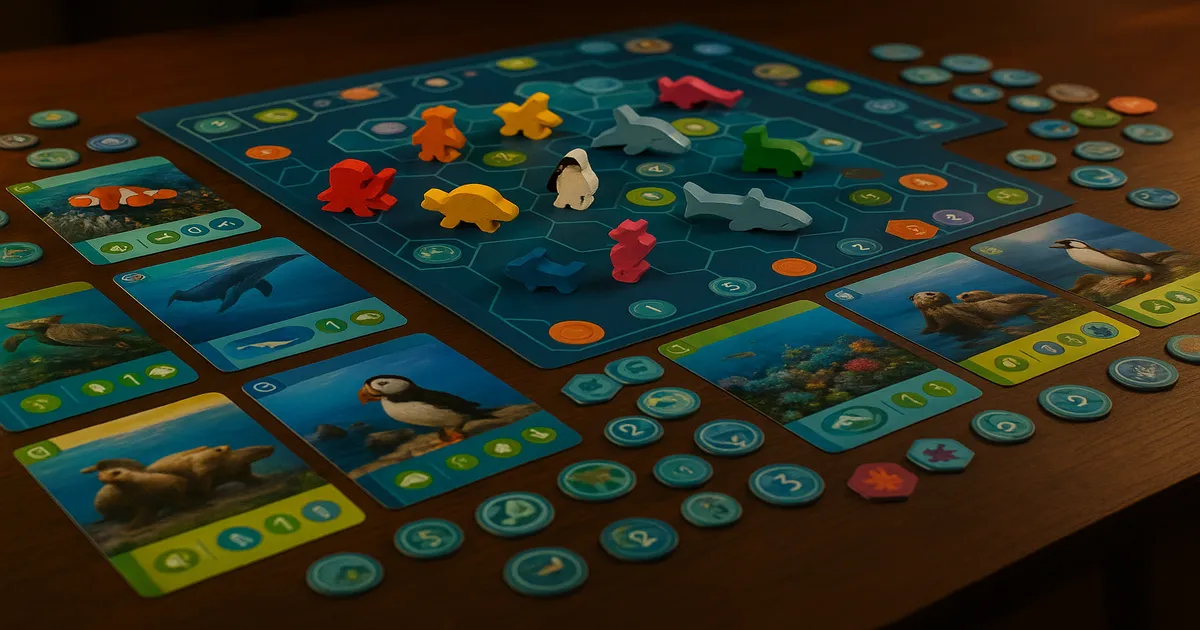
Quick Answer: Marine Worlds is the 2023 expansion for Ark Nova that adds aquarium enclosures, marine animals with the Aquatic keyword, water spaces on new zoo maps, and ocean-themed conservation projects. You must own the base game — this isn’t standalone. If you’ve got 5+ plays of Ark Nova under your belt and want fresh strategic decisions, it’s absolutely worth picking up.
Learning how to play Ark Nova Marine Worlds is really about learning one new spatial layer on top of a game you already know. The core action card system, the dual-track win condition, the polyomino zoo building — all of that carries over unchanged. What Marine Worlds does is drop water spaces and aquarium enclosures into the mix, forcing you to think about your zoo map differently from the very first turn.
The expansion nudges the BGG complexity weight from roughly 3.7 to around 3.8–3.9. That sounds minor, but it feels meaningful in play. The new decisions aren’t complicated — they’re just more interconnected. Get comfortable with the base game first, then come back here.
Ark Nova Base Game Rules You Must Know First
The Five Action Cards and the Cycling System
Every player has exactly five action cards: Animals, Association, Build, Cards, and Sponsors. They sit in a personal row numbered 1 through 5 — and here’s the thing most new players miss — the card in position 5 is your strongest, and position 1 is your weakest.
When you play a card, it drops back to position 1 and every other card shifts one spot to the right. So the more you use an action, the weaker it temporarily becomes. Deliberately cycling your cards so Build or Animals lands in position 4 or 5 when you need a big turn is genuinely a skill. It’s the core tempo puzzle of the whole game.
Appeal vs. Conservation: The Dual-Track Win Condition
Two markers sit on a shared scoring board. Your Appeal marker moves right; your Conservation marker moves left. The game ends the moment any player’s markers meet or cross — and everyone scores immediately.
Your final score is the lower of your two track values at that point. Neglecting either track is fatal. I’ve watched plenty of new players build gorgeous, high-Appeal zoos and then lose badly because their Conservation marker barely moved.
Building Your Zoo with Polyomino Enclosures
Each player has a personal zoo map — a grid where you place polyomino-shaped enclosure tiles using the Build action. Efficient space use matters because empty squares cost you at end game. Think of it like a spatial puzzle you’re solving across 90–150 minutes.
Marine Worlds introduces new maps with pre-printed water spaces, which adds another constraint to that puzzle. More on that in a moment.
What’s New in Marine Worlds: Components and Setup
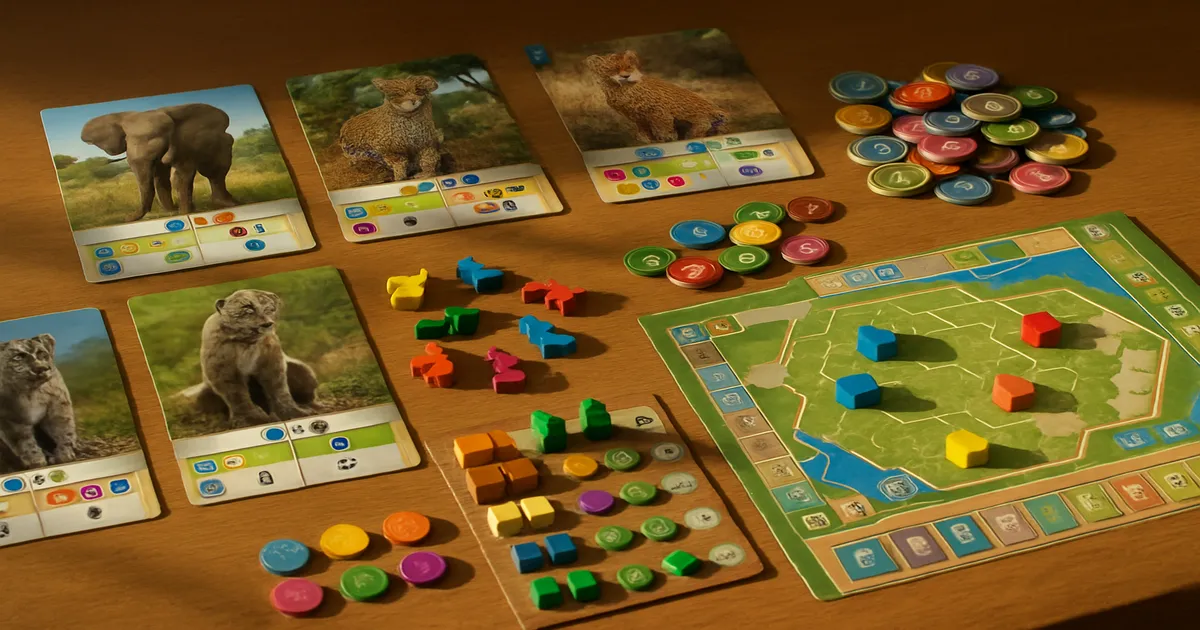
Marine Worlds ships with new double-sided zoo map boards, aquarium enclosure tiles, 100+ new zoo cards (a big chunk of which are marine animals), and new conservation project tiles. If you want to protect your investment, sleeving the combined card pool is worth doing before your first session. (Mayday Games Premium Sleeves)
New Zoo Maps with Water Spaces
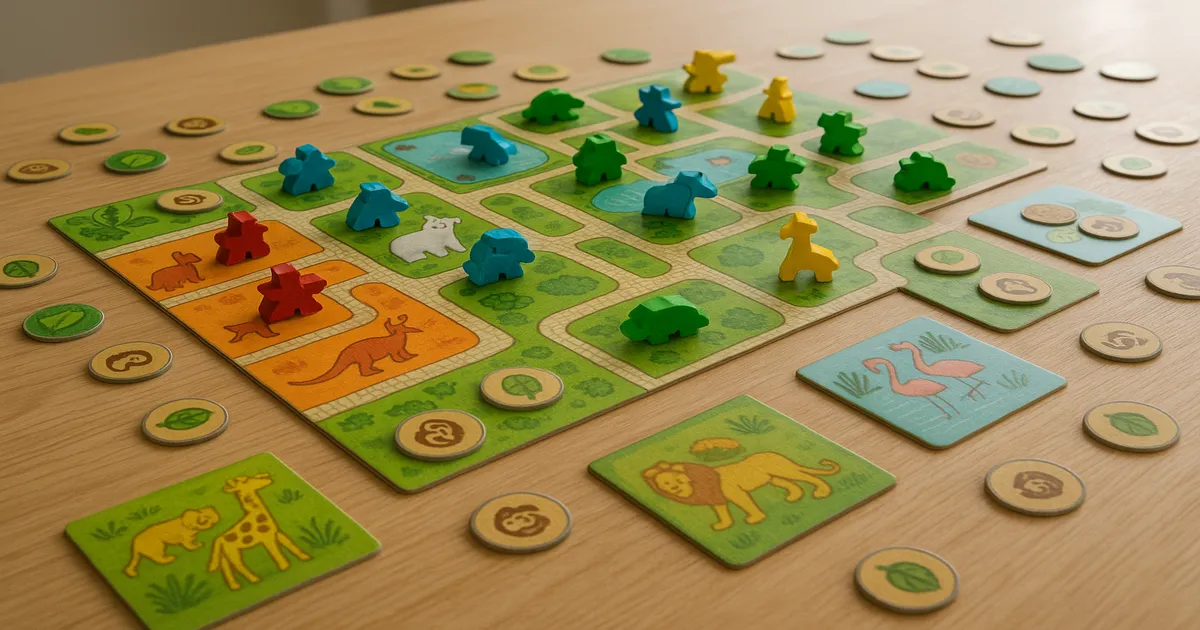
Each new map has pre-printed water spaces scattered across the grid, reserved exclusively for aquarium enclosures. Standard enclosures cannot go there. Maps vary in how many water spaces they include and where they’re positioned — some are aquarium-heavy, others more balanced. Choosing the right map for your intended strategy is a genuine pre-game decision, not an afterthought.
Aquarium Enclosure Tiles
Aquariums are built with the Build action, just like standard enclosures, but they follow their own capacity rules and can only be placed on water spaces. Some carry special abilities that trigger when you house certain animals, which can create nice synergies if you plan around them.
Marine Animal Cards and the Aquatic Keyword
The new animal cards include sharks, rays, dolphins, whales, corals, and more. Many carry the Aquatic keyword, meaning they require an aquarium — not a standard enclosure. Some animals are Amphibious, meaning they’ll fit in either. Always check the keyword before you acquire an animal. Filling your hand with Aquatic cards before you’ve built any aquarium capacity is one of the most common traps in the expansion.
Marine Conservation Projects
New conservation project tiles focus on ocean ecosystems and typically require marine animals or aquariums to complete. These aren’t just reskinned base game cards — they have distinct requirements and payouts that reward building around marine infrastructure. If you’re investing in aquariums, you should be completing marine projects. Skipping them is leaving points on the table.
Setup
Shuffle the marine cards into the appropriate base game decks, pick a Marine Worlds map, and you’re ready. You can control how much marine content hits the table by adjusting how many expansion cards you include, but for a first session I’d recommend full integration — it’s cleaner to learn from than a partial mix.
One practical note: the combined component count is significant. A good insert makes setup and teardown much faster.
How to Play Ark Nova Marine Worlds: Aquariums and Aquatic Animals
How Aquarium Enclosures Work
Build aquariums with the Build action, exactly like standard enclosures. The key differences are placement (water spaces only) and capacity (governed by the expansion’s own rules). Read the aquarium section of the rulebook separately before your first game — applying standard enclosure logic to aquariums is one of the most common errors I see.
Water Spaces: Placement Rules
Water spaces are fixed on the map. You can’t move them or build over them with standard tiles. They must hold aquariums, and aquariums must go on them. Plan your zoo layout before you start building. Getting boxed out of your own water spaces mid-game is frustrating and completely avoidable.
Aquatic vs. Amphibious Animals
Any animal tagged Aquatic requires an aquarium. Full stop — you can’t house it in a standard enclosure even if the size and habitat type match. Amphibious animals are more flexible and can go in either type. New players often unnecessarily restrict amphibious animals to aquariums, which blocks housing options you might need later. If an aquarium slot is more valuable for a strict Aquatic animal, put your amphibious animal in a standard enclosure instead.
Strategy Guide: Winning with Marine Worlds
Choose Your Zoo Map Carefully
This is the most underrated pre-game decision. A water-heavy map rewards going deep on aquariums; a balanced map suits hybrid builds. Look at where the water spaces are clustered before you commit — a map with water spaces in awkward corners will fight your zoo layout all game.
Build the Marine Engine Early
The marine engine runs like this: build aquariums early → acquire Aquatic animals → complete marine conservation projects → accelerate your conservation track. Each step unlocks the next. If you’re going marine-focused, get your first aquarium down by turn 3 or 4. Waiting too long means your Aquatic animals sit unplayable in hand.
Don’t Let Appeal Stagnate
A marine-heavy game can accelerate your conservation track significantly, but you still need zoo popularity to win. Make sure your sponsor cards and animal placements are generating Appeal even while you’re building aquarium infrastructure. The dual-track win condition doesn’t care how elegant your aquarium setup is if your Appeal marker is lagging.
Hybrid Strategies Are Safer for New Players
For your first few Marine Worlds sessions, a hybrid approach is the safest bet. Two or three aquariums alongside standard enclosures lets you access marine conservation projects without betting your entire zoo layout on water spaces. Less explosive than a full marine engine, but much more forgiving if the right cards don’t show up.
Action Card Sequencing
You’ll need Build in a strong position (4 or 5) when you’re ready to drop aquariums. Plan 2–3 turns ahead. Don’t burn Build on a minor kiosk this turn if you know you want to place an aquarium next turn — let it cycle up first.
Watch the Display in Multiplayer
In a 3–4 player game, marine animals get picked up fast. If you see an Aquatic animal you need and you have aquarium capacity, take it. Don’t wait for a “better” turn. Someone else will.
Common Mistakes When Playing Ark Nova Marine Worlds
- Building standard enclosures on water spaces — illegal, and surprisingly common in the flow of a game. Double-check every Build action.
- Acquiring Aquatic animals before building aquariums — those cards are dead weight until you have capacity. Build first, acquire second.
- Ignoring marine conservation projects — if you’ve already built aquariums and housed marine animals, you’ve done the hard work. Skipping the projects anyway is a real mistake.
- Picking a map without studying its water layout — every map has a different water space configuration. Some cluster them (great for adjacent aquariums); others scatter them. Don’t pick at random.
- Neglecting the conservation track — still the #1 error in the full game, expansion or not.
- Misreading card position strength — position 1 is weak, position 5 is strong. This trips up returning players more than you’d think.
Is Ark Nova Marine Worlds Worth Buying?
The action card system, the dual-track win condition, and the overall flow of the game are all identical to the base game. What changes is the spatial dimension of zoo building — water spaces create constraints that don’t exist in the base game — and the strategic layer of aquarium infrastructure.
For context, here’s how Ark Nova with Marine Worlds sits against similar heavy euros:
| Game | BGG Weight | Key Similarity | Key Difference |
|---|---|---|---|
| Wingspan | 2.4 | Engine building, animal theme | Much lighter; no spatial element |
| Terraforming Mars | 3.2 | Card-driven engines, track advancement | Space theme; different action system |
| Underwater Cities | 3.6 | Spatial planning, card synergy | Different win condition |
| Carnegie | 3.8 | Heavy euro, action selection | Industry theme; no animals |
Ark Nova with Marine Worlds sits comfortably at the heavier end of the euro spectrum — comparable to Carnegie, but with a much warmer theme.
Bottom line: if you’ve played the base game five or more times and still want more, buy it. The expansion adds genuine strategic depth, not just more cards. If you’re still learning the base game, hold off. Marine Worlds rewards players who already have a solid grasp of action cycling and dual-track management — it’s not the place to learn those fundamentals. You can pick up Ark Nova Marine Worlds at most game retailers.
Frequently Asked Questions About Ark Nova Marine Worlds
Do you need the Ark Nova base game to play Marine Worlds?
Yes, absolutely. Marine Worlds is an expansion, not a standalone. You need the base game’s boards, tokens, cards, and rulebook. There’s no way to use Marine Worlds on its own.
Can marine animals go in standard enclosures?
It depends on the keyword. Animals tagged Aquatic require an aquarium — standard enclosures won’t work. Amphibious animals are the exception and can go in either type. Always check the keyword on the card before placing an animal.
How do water spaces work in Ark Nova Marine Worlds?
Water spaces are pre-printed on the new zoo maps and can only hold aquarium enclosures. You can’t build standard enclosures on them, and aquariums can’t be built anywhere else. Planning your zoo layout around the water space positions on your chosen map is one of the key spatial decisions the expansion adds.
How long does a game of Ark Nova Marine Worlds take?
The base game runs 90–150 minutes. Marine Worlds adds roughly 15–30 minutes depending on player familiarity with the expansion rules. Budget around 2–3 hours, especially for your first few sessions.
Is Ark Nova Marine Worlds worth buying if you already own the base game?
If you’ve played at least five times and still enjoy it, yes. It’s a well-designed expansion that adds meaningful new decisions without bloating the core rules. If you’re still getting comfortable with the base game, wait — the expansion rewards players who already understand action cycling and dual-track management.